

Last updated: October 7, 2026
Quick Answer
The American Express Platinum Card now carries an $895 annual fee, and Amex markets it against roughly $3,000 to $3,500 in listed credits. Almost nobody captures that. After applying realistic usage rates to each credit, a typical frequent traveler nets roughly $1,100 to $1,600 in genuine value, which clears the fee but not by a landslide. The card is worth keeping if you fly often enough to use lounges 8+ times a year, book paid hotel stays through Amex Travel, and already shop at the specific merchants tied to the credits. If you have to change your behavior to use a credit, that credit is worth close to zero.
Key Takeaways
The consumer Platinum annual fee is $895. New applicants pay it immediately; existing consumer cardmembers saw it apply at their first renewal on or after January 2, 2026.
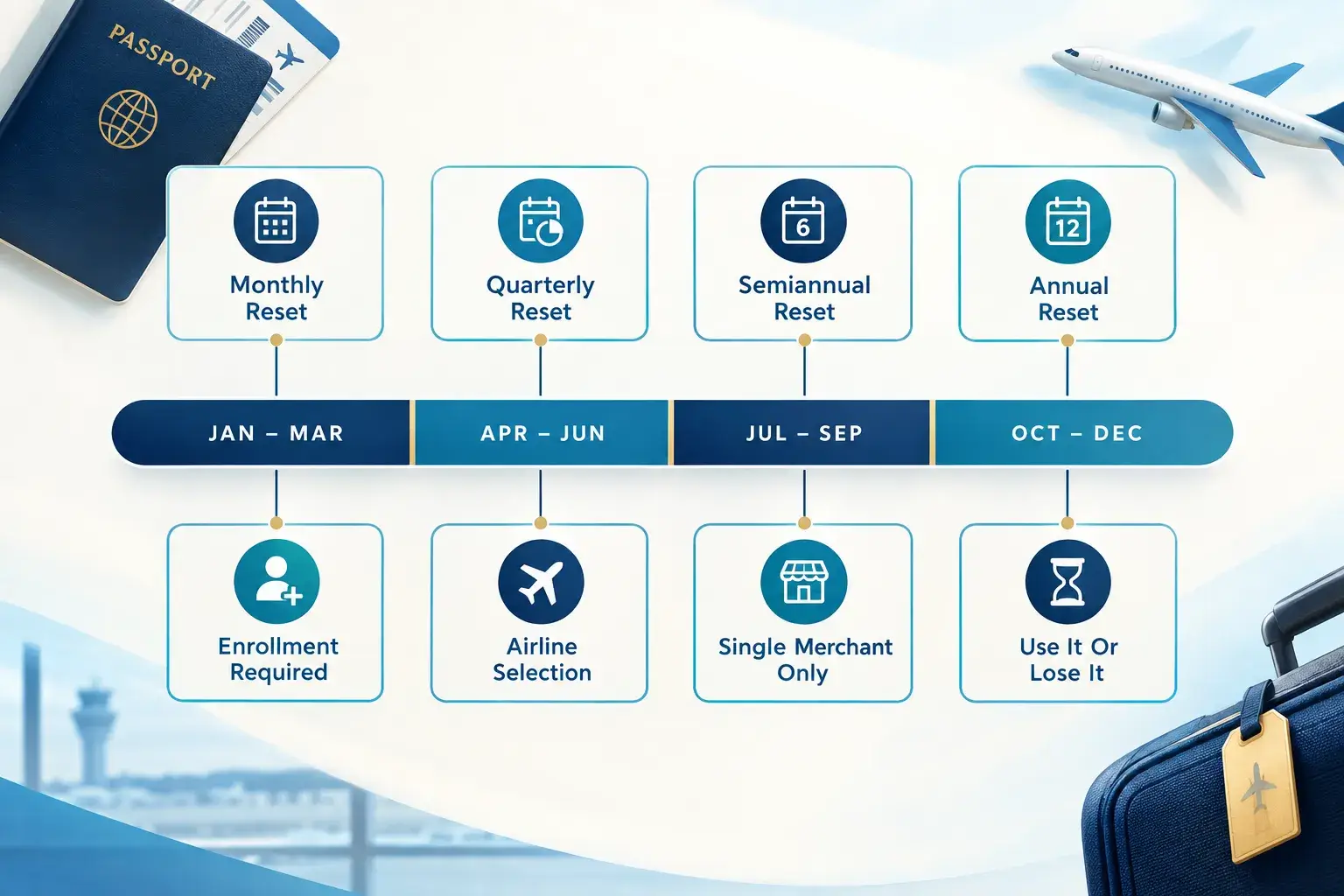
Credits now reset on four different cadences: monthly, quarterly, semiannual, and annual. Missing a reset window is the single most common way cardholders lose value.
The hotel credit expanded to $600 per year, delivered as $300 semiannually on prepaid Fine Hotels + Resorts and The Hotel Collection bookings through Amex Travel.
New and refreshed lifestyle credits include $100 quarterly Resy dining, $75 quarterly Lululemon, $200 annual Oura Ring hardware, and $120 annual Uber One membership.
Nearly every credit requires enrollment in your Amex account and is locked to a single merchant or a pre-selected airline. Nothing is automatic.
Lounge access is the benefit least dependent on merchant behavior. Use our airport lounge access cost-per-visit math to price your own access honestly.
You may be interested
Discounted for real usage, the effective cost for a moderate traveler often lands between $150 and $400 per year, and for an infrequent traveler it stays firmly negative.
If the math fails, product-change to Gold or Green rather than cancel, so your Membership Rewards balance and transferable points survive intact.



The Annual Fee and What It Has to Clear
The Platinum Card’s consumer annual fee is $895, the highest of any mainstream U.S. consumer travel card. That number is the hurdle every other section of this audit has to clear.
Two timing details matter if you are a current cardholder:
New cardmembers pay $895 from the point of the 2025-2026 refresh onward.
Existing consumer cardmembers were moved to the higher fee at their next renewal on or after January 2, 2026. If your card anniversary falls in, say, October, your 2026 statement is the first one at the new number.
Business Platinum pricing follows a separate schedule and separate credits, so treat any business-card comparison as a different product.
Why the marketed “$3,500 in value” number is not usable
Reviewer coverage in 2026, including CNBC Select, frames the $895 fee as offset by “over $3,500 in benefits.” That figure is arithmetically real and practically misleading. It assumes:
You spend at every named merchant anyway.
You remember every monthly and quarterly reset.
You enroll in each credit before using it.
A $300 prepaid luxury hotel credit is worth $300 in cash to you.
Only the first assumption fails for most people, and it fails hard. A credit is only worth what you would have spent at that merchant without the credit. Everything below is scored on that basis.
Rule of thumb: value a statement credit at what you’d have paid the merchant anyway, minus any upcharge the credit pushes you into.
The three buckets
For a clean audit, split the card into:
Travel credits that only pay out when you travel or ride.
Lifestyle credits locked to specific consumer brands.
Access and status benefits that require no spending at all.
Most people massively overweight bucket two when applying and massively underweight bucket three.
Travel Credits: Airline Fee, Hotel, and Ride-Hailing
The travel credits are the strongest block on the card for anyone who flies more than a few times a year, but each has a restriction that quietly caps real-world capture.
Airline fee credit: up to $200 per calendar year. You must select one qualifying U.S. airline in your Amex account, and you can change it only once a year during the designated window. Coverage is limited to incidental fees such as checked bags, seat assignments, and in some cases certain same-airline gift card or partial-payment workarounds that shift year to year. It does not cover airfare. Realistic capture depends almost entirely on whether you check bags on a carrier where you lack elite status. Our guide to maximizing the Amex Platinum airline fee credit covers the selection timing in detail.
Hotel credit: up to $600 per year, as $300 semiannually. This is the biggest structural change in the refresh. It applies to prepaid bookings in Fine Hotels + Resorts or The Hotel Collection made through Amex Travel. The Hotel Collection requires a two-night minimum. The semiannual split means you need two separate qualifying stays, in two different halves of the year, to capture the full $600.
Uber Cash: $200 per year, released as monthly credits with a December bump. Monthly, use-it-or-lose-it, U.S. only, and it must be loaded to an Uber account linked to the Platinum Card. Balances do not roll over.
Uber One membership credit: up to $120 per year. Covers the Uber One subscription and is subject to auto-renewal being active on the account.
Digital Entertainment and Clear Plus. The Clear Plus credit has been aligned upward to match Clear’s current membership price, so it fully covers a standard individual membership if you use Clear.
Decision rule for the hotel credit
Use the hotel credit only when the Fine Hotels + Resorts rate is within roughly 10 to 15 percent of the cheapest refundable rate you’d otherwise book, because FHR adds daily breakfast, a property credit, and late checkout on top. If FHR is 40 percent more expensive than the hotel’s own rate, you are paying real money to harvest a credit. That is a loss dressed as a win.
Common mistake: booking a $340 prepaid FHR night you did not want, purely to clear a $300 credit. Net value of that move is about $40, not $300, and the rate is non-refundable.
Lifestyle Credits: Dining, Entertainment, Retail, and Wellness
Lifestyle credits inflate the headline value the most and deliver the least, because each one is locked to a single brand. Score them at zero unless you were already a customer.

Resy dining credit: up to $100 per quarter ($400 per year). Valid at U.S. restaurants that both take Resy reservations and participate in the program. The quarterly reset is the trap. Four separate qualifying meals across four separate quarters are required. Miss one quarter and the annual figure drops to $300 immediately. Participating restaurant lists change, so verify before you book. The 2026 Resy credit changes for Gold and Platinum walk through which restaurants qualify and how the enrollment step works.
Lululemon credit: up to $75 per quarter ($300 per year). U.S. stores and lululemon.com only, outlets excluded. Quarterly reset, so capture requires four transactions spread across the year. If you buy athletic apparel a couple of times a year, treat this as $150, not $300.
Oura Ring credit: up to $200 per year. Applies to hardware only, not the monthly membership. This is a one-time-value credit for most people. You are unlikely to buy a new ring every year, so score it at $200 in the year you buy and near zero after.
Digital Entertainment credit. Monthly, and only for the specific list of participating services. If you already subscribe to qualifying services, this is close to full value. If not, adding a subscription to harvest a credit is break-even at best.
Walmart+ monthly membership credit. Covers a standard Walmart+ membership. Useful if you shop Walmart; otherwise ignore it.
Best for / Not for
Lifestyle credits are best for:
Urban cardholders who already dine at Resy restaurants monthly
Existing Lululemon, Uber Eats, and Walmart+ customers
Anyone buying an Oura Ring in the next 12 months anyway
Lifestyle credits are not for:
Rural or suburban cardholders with few or no participating Resy restaurants nearby
People who dislike calendar-driven spending
Anyone who would have to change brands to capture the credit
Lounge Access: Valuing Centurion, Priority Pass, and Delta Sky Club
Lounge access is the most honestly valuable Platinum benefit because it does not require you to spend at a specific merchant. Its worth scales directly with how often you actually fly.

The Global Lounge Collection includes:
Centurion Lounges, with a $50 guest fee per guest unless you hit the annual spend threshold that restores complimentary guest access. Children and policy details vary by location.
Priority Pass Select (enrollment required), covering contract lounges worldwide. Restaurant and non-lounge benefits have been trimmed over the years, so check what your specific airport offers.
Delta Sky Club access when flying Delta on a same-day ticket, subject to an annual visit cap that is lifted only at a high annual spend threshold on the card.
Escape, Plaza Premium, and Airspace lounges, plus Lufthansa lounges when flying Lufthansa Group in a qualifying cabin.
Which airports actually matter
Centurion Lounge coverage is concentrated in large U.S. hubs, including Atlanta, Charlotte, Dallas-Fort Worth, Denver, Las Vegas, Los Angeles, Miami, New York (LaGuardia and JFK), Phoenix, San Francisco, Seattle, and Washington-Dulles, with international locations in London Heathrow, Hong Kong, and elsewhere. If your home airport has no Centurion Lounge and thin Priority Pass options, your lounge value drops sharply. Check your home airport and your two most-flown connecting airports before you bank on this benefit.
The cost-per-visit math
Honest lounge valuation uses your realistic avoided cost, not the lounge’s walk-up rate:
A standalone Priority Pass membership with unlimited visits runs a few hundred dollars annually.
Walk-up day passes typically run $50 to $79 per person where sold.
The practical substitute for many travelers is a $20 airport meal, not a $60 lounge pass.
Decision rule: value each solo lounge visit at $25 to $40, not $60. At 10 solo visits a year, that is $250 to $400 of real value. At 25 visits with occasional family in tow, it can exceed $800. At three visits, it is under $120 and the fee math gets very hard. Our premium card annual fee keep-or-cancel framework uses the same per-visit discipline across cards.
Edge case: Centurion Lounges in Dallas, Las Vegas, and a few other hubs regularly hit capacity during peak windows. A lounge you cannot enter is worth nothing that day. Do not build your break-even on 30 flawless visits.
Elite Status and Benefits You Get Without Spending
The Platinum Card grants automatic Marriott Bonvoy Gold Elite and Hilton Honors Gold status, plus Hertz President’s Circle, Avis Preferred Plus, and National Emerald Club Executive car rental status. All require enrollment.
Standalone value, realistically:
Hilton Gold is the strongest of the set. It includes free breakfast or a food and beverage credit at most brands plus room upgrades when available. For someone with 10 paid Hilton nights a year, that can be worth $200 to $400.
Marriott Gold gets you 25 percent bonus points, 2 p.m. late checkout, and upgrades subject to availability. No breakfast. Worth perhaps $50 to $100 for a moderate Marriott guest, near zero otherwise.
Car rental status mostly saves counter time and delivers occasional free upgrades. Call it $25 to $75 depending on rental frequency.
If hotel status is your main draw, compare against direct routes first. Our guide to hotel status shortcuts via credit cards and loyalty programs shows cheaper paths to comparable tiers.
Other no-spend benefits worth counting
Global Entry or TSA PreCheck credit, available on a multi-year cycle. Amortized, roughly $20 per year.
No foreign transaction fees on purchases abroad. On $8,000 of overseas spending, that avoids roughly $240 versus a 3 percent card.
Amex Offers, which can be genuinely lucrative but are account-specific and cannot be projected reliably.
Membership Rewards earning: 5x on flights booked directly with airlines or through Amex Travel (up to $500,000 per calendar year) and 5x on prepaid hotels via Amex Travel. Everything else earns 1x, which is weak for a card at this price.
Purchase and travel protections, including trip delay and baggage coverage, subject to terms.
The 1x base rate matters. Platinum is an access-and-credits card, not a spending card. Pair it with a higher-earning everyday card and route category spend there. See Amex travel cards compared for 2026 for how the Gold and Platinum earning rates interact.
Discounting Credits for Real-World Usage Rates
Here is the audit that matters. Each credit is scored at a realistic capture rate for a frequent traveler (15 to 25 flight segments a year, several paid hotel stays, urban address) and for a moderate traveler (6 to 10 segments, mostly domestic, occasional paid hotel).
Those capture rates are estimates, not promises. The assumptions behind them:
Oura is scored at $0 because most cardholders will not buy a ring this year.
Walmart+ is $0 for both profiles because neither is assumed to shop there.
Lounge value uses $25 to $40 per visit, not walk-up rates.
The hotel credit assumes FHR rates were competitive, not that you overpaid to harvest it.
Change one input and the conclusion flips. A frequent traveler who never dines at Resy restaurants, skips Clear, and does not use Lululemon loses about $659 from that column. A moderate traveler who misses two quarterly resets and one hotel half drops below break-even outright.
That is the real finding of this audit: the Platinum’s value is not fragile because the credits are small. It is fragile because capture requires calendar discipline across four different reset cadences. A monthly credit-usage plan, reviewed at the start of each quarter, is the difference between a $1,800 win and a $200 loss. Our list of card perks to activate in January is a reasonable starting checklist.
The Break-Even Verdict by Traveler Type
The Platinum clears its fee for high-frequency travelers with urban spending patterns, breaks roughly even for moderate domestic travelers who stay organized, and loses money for everyone else.
Keep the American Express Platinum Card if you:
Take 12 or more flights a year through airports with Centurion or strong Priority Pass lounges
Book at least two paid hotel stays a year where FHR rates are competitive
Already spend at Resy restaurants, Uber, and the other named merchants
Fly Delta regularly and value Sky Club access
Will actually set calendar reminders for monthly and quarterly credits
Do not keep it if you:
Fly fewer than six times a year
Live where no participating Resy restaurants or lounges exist
Book hotels almost exclusively with points rather than cash
Have historically let monthly Uber Cash expire unused
Resent spending at specific merchants to chase credits
Amex Platinum vs Chase Sapphire Reserve
Both cards now sit in the $795-plus tier. The split is about what kind of value you want.
If you want value without a merchant calendar, Sapphire Reserve is the lower-effort card. If you want the widest U.S. lounge footprint and Delta access, Platinum wins. Many readers hold both and route spend by category. Compare the point sides using our transfer partner value rankings for 2026.
Who should get the American Express Platinum Card, and approval requirements?
Amex does not publish a minimum score, but approvals for Platinum generally cluster in the good-to-excellent range (roughly 700+ FICO) with established credit history and manageable existing balances. As a charge card, it has no preset spending limit, and Amex evaluates your pay-over-time and payment history heavily. Applicants should also account for Amex’s once-per-lifetime welcome bonus rule per card product and its family-of-cards restrictions before applying.
Can you use Platinum for everyday purchases? You can, but you probably should not. At 1x on non-bonus spend, everyday purchases earn poorly. Put groceries, dining, and gas on a card built for it and reserve Platinum for airfare and prepaid Amex Travel hotels. Platinum also has no foreign transaction fees, which makes it a strong card abroad for large travel purchases even though Amex acceptance is thinner outside the U.S. Carry a Visa or Mastercard as a backup.
Common mistakes to avoid
Skipping enrollment. Most credits require you to click enroll in your Amex account. Unenrolled spending does not trigger the credit.
Treating quarterly credits as annual. Resy and Lululemon reset four times a year. There is no catch-up.
Missing the airline selection window. You get one change per year during a specific window. Choose the airline you’ll actually pay bag fees on.
Overpaying on FHR to harvest the hotel credit.
Forgetting the Centurion guest fee. Family of four on a non-qualifying spend year means $150 in guest fees per visit.
Cancelling with a Membership Rewards balance still on the account. Forfeiting points is the most expensive mistake on this list.
Alternatives for business travelers
Business travelers with company-reimbursed airfare often get better economics elsewhere:
The Business Platinum Card offers different credits plus a rebate on high-value pay-with-points bookings, which suits heavy paid-travel volume.
Capital One Venture X has a far lower fee, an easy-to-use travel credit, anniversary miles, and free authorized users, which frequently makes it the better lounge-and-credit value for two-to-four-trip-a-year travelers.
Airline co-brands beat Platinum on bags and priority boarding if you’re loyal to one carrier. See our Delta card comparison if Sky Club access is the main draw.
Downgrade Paths If the Math Does Not Work
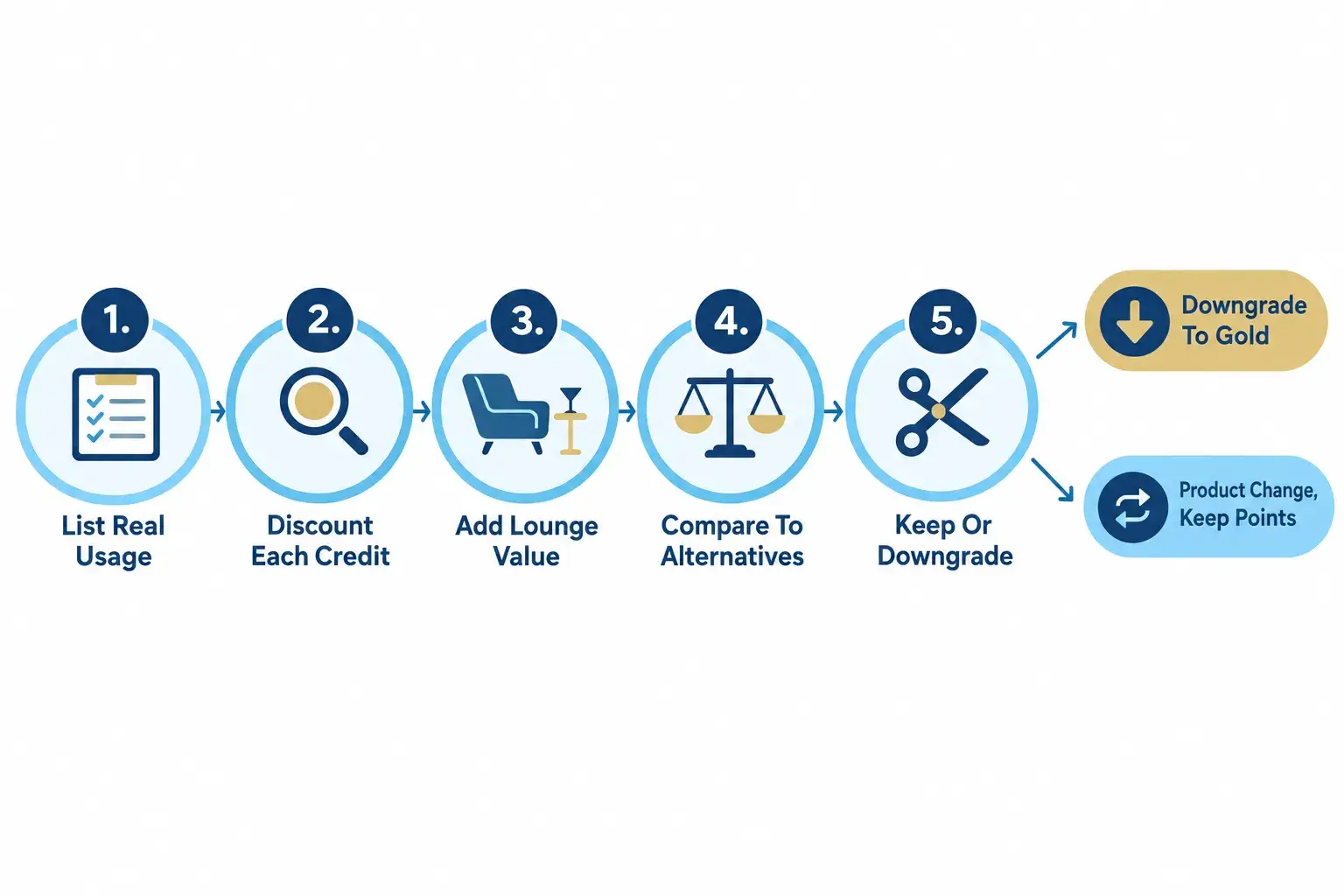
If your honest capture total lands under $895, product-change rather than cancel. A product change preserves your Membership Rewards balance and your account history; closing the last Membership Rewards-earning card in your setup forfeits the points.
Practical sequence:
Call retention before your renewal date posts. Amex sometimes offers statement credits or points offers in exchange for spending. These are account-specific and not guaranteed, but the call costs you 10 minutes.
Harvest remaining credits first. Use the current half’s hotel credit and the current quarter’s Resy and Lululemon credits before you make any change.
Product-change to Amex Gold if you value dining and grocery earning plus the smaller monthly credits.
Product-change to Amex Green or a no-fee Membership Rewards card if you want to keep the points with minimal cost.
Only close the account if you hold another Membership Rewards card and no longer want the relationship at all.
Note that a product change usually makes you ineligible for the new card’s welcome bonus, and Amex may impose a waiting period before you can apply for Platinum again. Our downgrade guide for keeping your points covers the timing and eligibility details.
Frequently Asked Questions
How much does the Amex Platinum card cost per year in 2026?
The consumer Platinum Card annual fee is $895. New cardmembers pay it from approval. Existing consumer cardmembers moved to $895 at their first renewal on or after January 2, 2026. Authorized user fees are separate.
Is the Amex Platinum worth it in 2026?
It is worth it for travelers who fly at least a dozen times a year through lounge-equipped airports, book paid hotels through Amex Travel, and already spend at the named merchants. For travelers with fewer than six flights a year, or those who book hotels with points, the $895 fee generally does not clear.
Does the Amex Platinum have foreign transaction fees?
No. The Platinum Card charges no foreign transaction fees on purchases made abroad or in foreign currencies. Amex acceptance is narrower than Visa or Mastercard internationally, so carry a backup card.
What restaurants qualify for the Amex Platinum dining credit?
The credit applies at U.S. restaurants that take Resy reservations and participate in the Amex program. The participating list changes, so confirm a restaurant’s eligibility in the Resy app or your Amex account before booking. The credit is up to $100 per quarter and requires enrollment.
Which airports have Amex Platinum lounge access?
Centurion Lounges operate in major U.S. hubs including Atlanta, Dallas-Fort Worth, Denver, Los Angeles, Miami, New York, Phoenix, San Francisco, and Seattle, plus select international locations. Priority Pass Select adds several hundred contract lounges worldwide. Delta Sky Club access applies on same-day Delta tickets subject to an annual visit cap.
What credit score do you need for the Amex Platinum?
Amex publishes no minimum, but approvals typically require good-to-excellent credit, generally around 700 FICO or higher, with established history and low delinquency risk. Amex also applies once-per-lifetime welcome bonus rules per card product.
Can you downgrade the Amex Platinum instead of cancelling?
Yes. Amex generally allows a product change to Gold, Green, or a no-annual-fee Membership Rewards card, which preserves your points balance and account age. Use any remaining credits first, and expect to be ineligible for the new card’s welcome bonus.
Conclusion and Next Steps
The 2026 Platinum is a legitimate card with an illegitimate marketing number. The $3,000-plus headline figure assumes perfect capture across a dozen merchant-locked credits on four different reset schedules. Real capture for an engaged frequent traveler lands closer to $2,700, which still clears $895 comfortably. Real capture for a moderate traveler who forgets two quarters lands below it.
Do this before your next renewal:
Pull your last 12 months of statements. Count actual Uber, Resy, Lululemon, and Amex Travel hotel charges. Not intended charges.
Count your lounge visits and price them at $25 to $40 each, not walk-up rates.
Total the two numbers and subtract $895. If the result is negative, move to step 4.
Compare against Sapphire Reserve, Venture X, or an Amex Gold downgrade using our travel credit card comparison framework.
Set four calendar reminders if you keep the card, one per quarter, to sweep the quarterly and semiannual credits.
The Platinum rewards organized travelers and quietly penalizes everyone else. Decide which one you are, then act before your renewal posts.




Content on Award Travel Hub is independently created by Award Travel Hub Editorial Desk and, where noted, reviewed by Award Travel Hub Review Desk. Some pages may contain affiliate links, but compensation does not determine our coverage, opinions, or methodology.