

Last Updated: August 20, 2026
The average domestic lounge day pass now costs $75–$100 at the door. If you’re paying a $795 annual fee for a premium card and visiting a lounge four times a year, your effective cost per visit is nearly $200 — more than double what you’d pay walking in off the street. That’s the math most lounge access roundups skip.
In 2026, lounge access has become one of the most contested battlegrounds in the premium airport lounge access credit cards market. Networks are tightening guest policies, annual fees are climbing, and overcrowding has pushed several programs to add new restrictions mid-year. At the same time, Capital One’s lounge network quietly crossed a milestone: 15 U.S. locations, surpassing Amex Centurion’s 14 domestic lounges for the first time.
This guide doesn’t just list which cards include lounge access. It builds a cost-per-visit framework so you can decide whether any of these cards actually pays off for your travel pattern.
Key Takeaways
Cost-per-visit math is the only honest way to evaluate lounge access cards — annual fee minus usable credits, divided by realistic visit count.
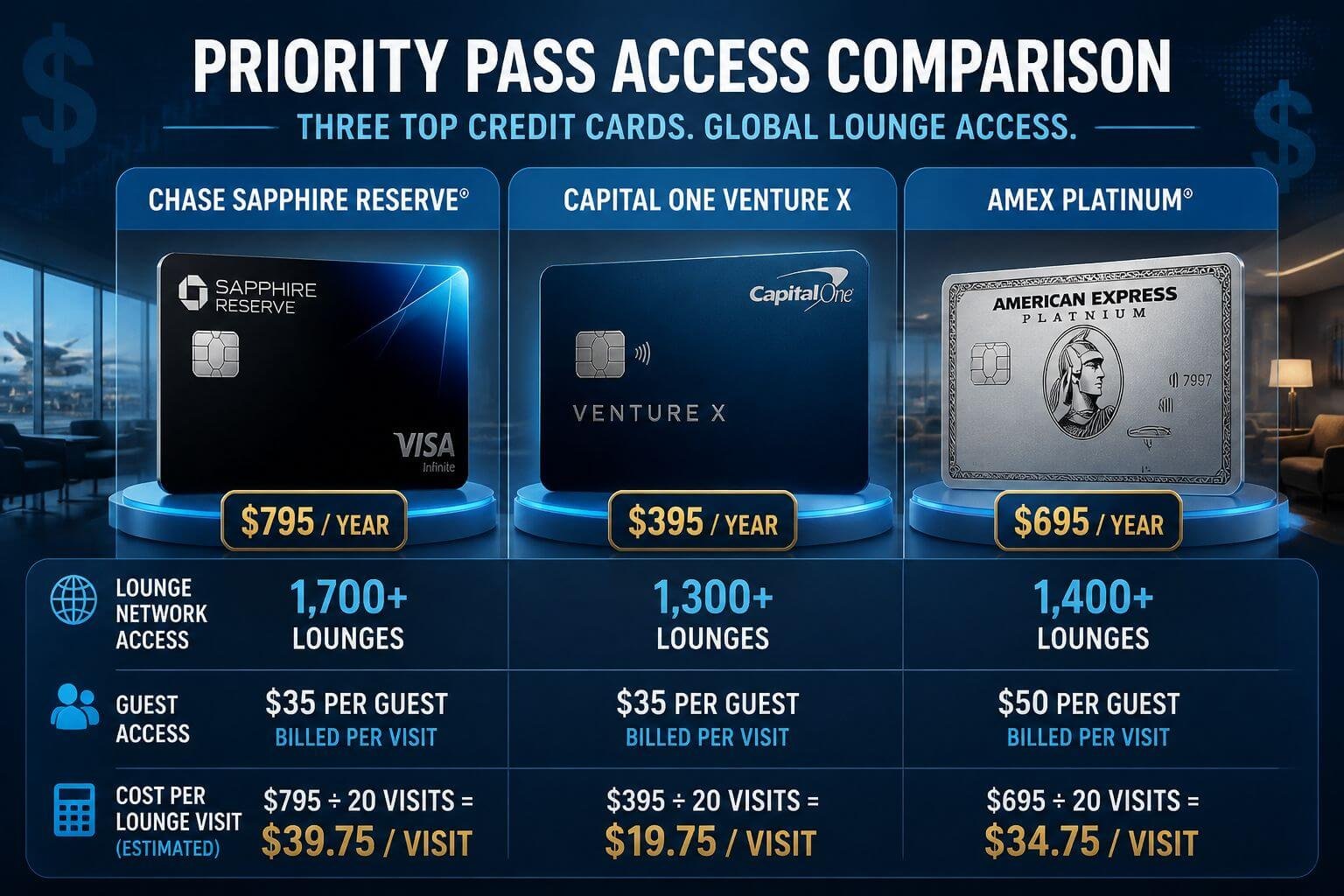
Chase Sapphire Reserve ($795 fee) offers the broadest Priority Pass network (1,300+ lounges) with unlimited guests at $35 each, but the fee requires heavy use to justify.
Amex Platinum remains the top card for international lounge access via the Global Lounge Collection (158 U.S. lounges, 62 airports), but Centurion guest fees and a new 5-hour layover cap starting July 2026 add friction.
Capital One Venture X ($395 fee) is the lowest-cost entry point for lounge access, but February 2026 changes made authorized users and guests significantly more expensive.
You may be interested
Delta Sky Club and United Club cards only make sense if you’re a loyal flyer on those specific airlines — the math rarely works for mixed-carrier travelers.



Why Lounge Access Math Matters in 2026
Lounge access used to be a straightforward perk: pay a premium annual fee, show your card, walk in. That simplicity is gone.
In 2026, every major lounge network has added or tightened restrictions:
Amex Centurion added a 5-hour layover minimum for access (effective July 2026) and charges $50 per adult guest ($30 for children 2–17), unless you spend $75,000 on the card annually.
Capital One Venture X now charges authorized users $125/year for lounge access — ending what was once a standout family benefit. Guest fees are $45 per adult, $25 for children 2–17, unless you hit $75,000 in annual spend.
Chase Sapphire Reserve raised its annual fee to $795 in 2026, though it added up to $500 in The Edit hotel credits and a $250 luxury hotel credit through December 31, 2026 to offset the increase.
Priority Pass removed restaurant credits from most card partnerships years ago, and that policy hasn’t reversed.
The result: effective lounge access cost is no longer just the annual fee. It’s the annual fee minus the credits you’ll actually use, divided by realistic annual lounge visits.
The formula:
Effective cost per visit = (Annual fee − Usable annual credits) ÷ Expected lounge visits per year
Run this number before choosing a card. The sections below do it for you across four usage profiles.
For a broader look at how these cards stack up on overall travel value, see our best travel credit cards 2026 comparison.
Priority Pass Cards: Sapphire Reserve, Venture X, Amex Platinum
Priority Pass is the largest independent lounge network, covering 1,300+ lounges across 148 countries. Three major cards include it — but the terms differ meaningfully.
Chase Sapphire Reserve
Annual fee: $795
Priority Pass: Unlimited visits + unlimited guests at $35/person
Other usable credits: $300 travel credit (broad, easy to use), up to $500 The Edit hotel credit, $250 luxury hotel credit (through Dec 31, 2026)
New lounges in 2026: DFW and LAX Sapphire Lounges opened, adding proprietary access on top of Priority Pass
Net fee after $300 travel credit: ~$495. If you also use the hotel credits, net cost drops further — but those require booking through Chase Travel, which limits flexibility.
Cost per visit at 10 visits/year: ~$49.50 (after $300 credit only). At 20 visits: ~$24.75.
The Sapphire Reserve’s Priority Pass is one of the most generous in the market — guests are $35 each rather than free, but there’s no annual cap on visits or guests. For international travelers who hit Priority Pass lounges regularly, this card’s network depth is hard to beat. See the full breakdown in our Venture X vs. Sapphire Reserve comparison and the Sapphire Preferred vs. Reserve $795 math guide.
Capital One Venture X
Annual fee: $395
Priority Pass: Unlimited visits; guests cost $35 each (as of Feb 1, 2026)
Other usable credits: $300 Capital One Travel credit (portal bookings only), 10,000 anniversary miles (~$100 value)
Authorized users: Now $125/year per AU for lounge access — a significant change from free
Net fee after $300 travel credit + anniversary miles: ~$0 to negative for some users. But that assumes you use the portal credit and value miles at 1 cpp.
Cost per visit at 10 visits/year: Near $0 if credits offset the fee. At 5 visits: ~$19/visit.
The Venture X remains the best value lounge card on paper if you’re a solo traveler who uses the travel portal. The February 2026 changes make it notably less attractive for couples or families. For a full breakdown of those changes, see our Venture X lounge changes February 2026 guide and the Venture X benefits 2026 overview.
Amex Platinum
Annual fee: $695
Priority Pass: Included via Global Lounge Collection (158 U.S. lounges, 62 airports)
Centurion access: Included (see next section)
Other usable credits: Up to $200 airline fee credit, $200 hotel credit, $240 digital entertainment credit, $155 Walmart+ credit, and more — but these require deliberate use
Net fee after realistic credits: $200–$400 depending on which credits you actually use.
Cost per visit at 10 visits/year (Priority Pass only): $20–$40. With Centurion access factored in, the per-visit value increases substantially for frequent flyers.
Centurion Lounges: Amex Platinum and Business Platinum
Centurion Lounges are widely regarded as the best proprietary lounge network in the U.S. — full-service bars, hot food, spa services at select locations. As of mid-2026, Amex operates 14 domestic Centurion Lounges.
Current access rules (2026):
Amex Platinum and Business Platinum cardholders get complimentary access
Guests: $50/adult, $30/child (ages 2–17)
Complimentary guests: 2 free guests if you spend $75,000+ on the card annually
New July 2026 rule: Access requires a flight departing or arriving within 5 hours of lounge entry — designed to reduce overcrowding
The 5-hour layover cap is a meaningful restriction for travelers who previously used Centurion Lounges during long layovers or early arrivals. It won’t affect most standard itineraries, but it’s worth noting if you have irregular travel patterns.
For Amex Platinum holders who also fly internationally, the Amex Platinum Lufthansa Lounge access guide covers expanded partner lounge access added in 2026.
Best for: Frequent domestic flyers based near a Centurion Lounge city (NYC, LAX, SFO, ORD, DFW, MIA, etc.) who travel solo or can absorb guest fees.
Not for: Families who need free guest access, or travelers based in cities without a Centurion location.
Capital One Lounges: Venture X and Venture X Business
Capital One now operates 15 U.S. lounges — crossing Amex’s 14 Centurion locations for the first time in 2026. The network includes Capital One Lounges (flagship, full-service) and Capital One Landing locations (smaller, grab-and-go format).
Access rules (2026):
Venture X and Venture X Business cardholders: unlimited complimentary access
Authorized users: $125/year fee for lounge access (Capital One Lounges, Landings, and Priority Pass)
Guests: $45/adult, $25/child (ages 2–17); 2 complimentary guests if $75,000+ annual spend
The flagship Capital One Lounges (Dallas DFW, Denver, Washington Dulles, Las Vegas, JFK, and others) are genuinely competitive with Centurion in quality. The Landing locations are more limited but still useful for quick visits.
The network expansion is notable, but the February 2026 authorized user changes significantly reduce the card’s value for households where a spouse or partner was previously a free AU with full lounge access. See the full policy breakdown in our Capital One Lounge locations 2026 guide.
Delta Sky Club via Reserve and Delta Co-Brands
Delta Sky Club access through credit cards became significantly more restricted in 2024–2025, and those rules remain in place in 2026.
Current access rules:
Delta SkyMiles Reserve Amex: 15 complimentary visits per year (Medallion members get unlimited); guests cost $50 each
Delta SkyMiles Reserve Business Amex: Same 15-visit cap
Delta SkyMiles Platinum Amex: 3 visits per year (Medallion members: 10)
The visit caps make Sky Club access through co-branded cards a poor value for frequent travelers. A Delta Medallion member who also holds the Reserve card gets unlimited access, but that requires both elite status and a $650 annual fee.
Cost-per-visit math: At 15 visits/year on the Reserve ($650 fee, ~$200 in usable credits), effective cost is roughly $30/visit. That’s reasonable if you’re a loyal Delta flyer — but not competitive with Centurion or Capital One Lounge quality at that price.
Best for: Delta loyalists with Medallion status who want a backup access path.
Not for: Mixed-carrier travelers or anyone who won’t hit 10+ visits annually.
United Club, Admirals Club, and Other Single-Airline Lounges
Single-airline lounge cards follow the same logic as Delta: they only make sense if you’re deeply loyal to that carrier.
The Citi AAdvantage Executive stands out here: 10 complimentary guest visits per year is the most generous guest policy in the single-airline lounge category. For American Airlines families, this card’s guest access math often beats the Amex Platinum’s $50/guest Centurion fee.
For United Club card decision-making, see our United Club card cancellation decision guide.
Cost-Per-Visit Calculator: How Many Lounge Visits Pay Off Each Card?
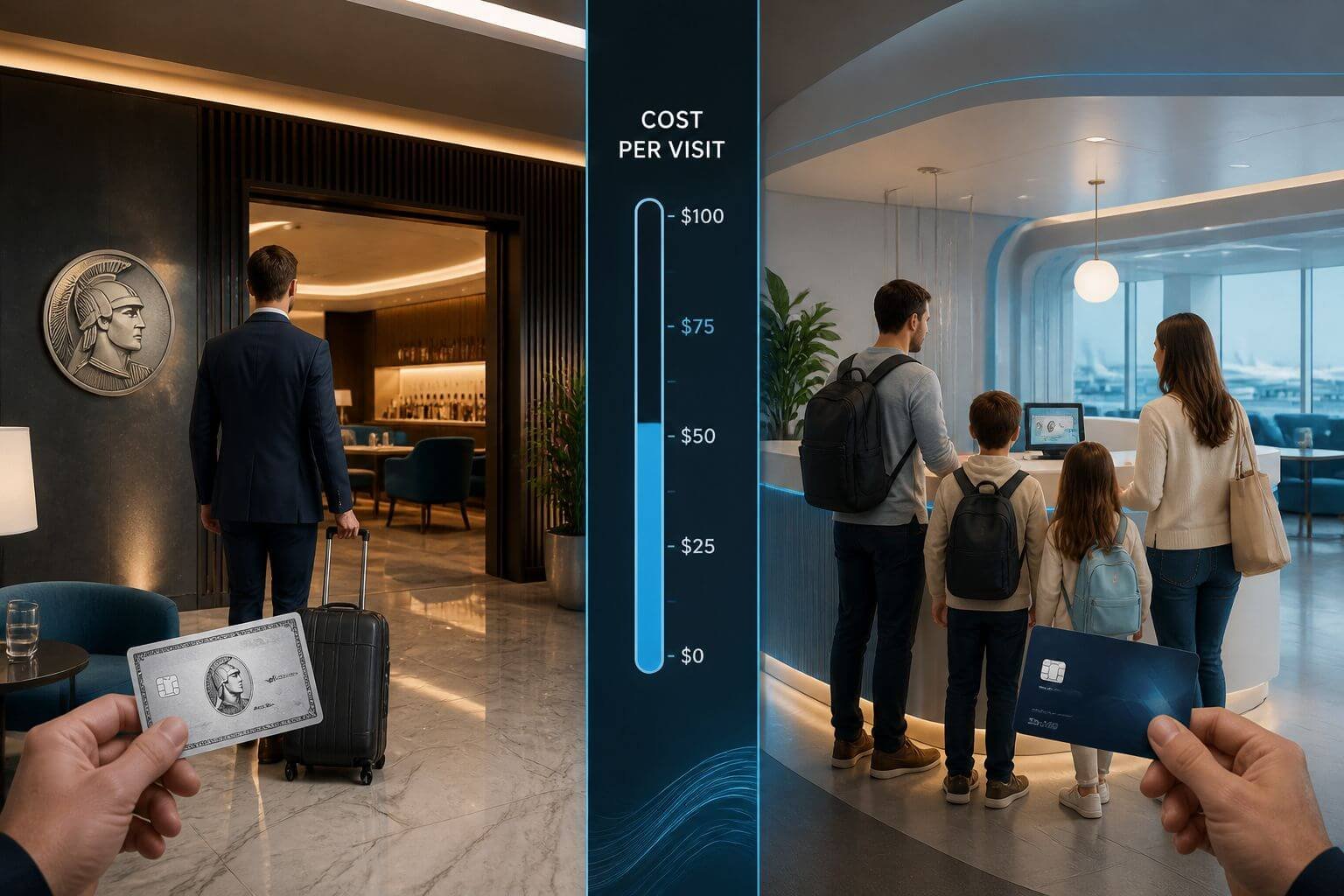
Key insight: Venture X wins on pure cost-per-visit math for solo travelers who use the travel portal credit. Amex Platinum wins on network breadth and quality. Sapphire Reserve wins on Priority Pass guest flexibility and the broadest international network.
For a deeper look at whether premium cards justify their fees overall, see our premium travel cards break-even guide.
Best Lounge Card by Traveler Profile
🧳 Solo Business Traveler (10–20 domestic flights/year)
Best card: Capital One Venture X
The $395 fee is nearly offset by the $300 portal credit and anniversary miles. At 10–15 lounge visits, cost per visit approaches zero. The Capital One Lounge network quality is strong at hub airports.
👨👩👧 Family Traveler (2 adults + children, 6–10 trips/year)
Best card: Citi AAdvantage Executive (AA flyers) or Chase Sapphire Reserve
The AAdvantage Executive’s 10 free guest visits is the only card that doesn’t penalize families. For non-AA flyers, Sapphire Reserve’s $35/guest Priority Pass is more predictable than Centurion’s $50/adult or Venture X’s $45/adult.
✈️ Frequent International Traveler (15+ trips/year, mix of domestic and international)
Best card: Amex Platinum
The Global Lounge Collection’s 1,400+ international lounges — including Centurion, Delta One, Priority Pass, and Escape Lounges — is unmatched for international routing. The per-visit cost at 20+ visits drops below $15 after credits.
🏠 Occasional Traveler (4–6 flights/year)
Best card: None of these — or Venture X if you’ll use the portal credit
At 4–6 lounge visits per year, even the Venture X’s near-zero net cost doesn’t justify the card purely for lounge access. Consider a standalone Priority Pass Select membership ($299/year, 10 free visits) or per-visit day passes instead.
🔵 Delta Loyalist with Medallion Status
Best card: Delta SkyMiles Reserve Amex
Unlimited Sky Club access with Medallion status, plus the card’s companion certificate and upgrade priority, makes this the right choice for committed Delta flyers — but only if you’re already earning Medallion status organically.
Conclusion
Lounge access in 2026 is a math problem, not a marketing pitch. The right card depends on how many times per year you’ll actually walk through a lounge door, whether you travel with guests, and which credits you’ll realistically use.
Practical next steps:
Count your actual lounge visits from the past 12 months. Be honest — most travelers overestimate this number.
Identify which credits you’d use on each card. A $200 airline fee credit you won’t spend is worth $0 in the math.
Check the lounge network at your home airport. If your hub has a Capital One Lounge, Venture X’s math is hard to beat. If it’s a Centurion city, Amex Platinum earns its fee faster.
Factor in guests. If you regularly travel with a partner or children, the guest fee structure changes the calculation significantly — often enough to flip the recommendation.
Revisit annually. Lounge policies changed three times in the past 18 months across major networks. Set a calendar reminder to re-run the math when your renewal date approaches.
For more context on how lounge policies have shifted and what workarounds still exist, see our airport lounge access 2025 policy changes guide. If you’re evaluating the Sapphire Reserve’s full value beyond lounges, the Chase Sapphire Preferred vs. Reserve $795 math breakdown is the right next read.


Content on Award Travel Hub is independently created by Award Travel Hub Editorial Desk and, where noted, reviewed by Award Travel Hub Review Desk. Some pages may contain affiliate links, but compensation does not determine our coverage, opinions, or methodology.