

Last updated: November 22, 2026
The most common Platinum retention offer reported in 2026 is 15,000 Membership Rewards points after $3,000 in spending over three months. At a conservative valuation, that covers less than a fifth of the $895 annual fee. If your American Express Platinum Card renewal is coming up, the retention offer should be a tiebreaker, not the reason you keep the card. The real decision depends on how many of the credits you will actually use in the next 12 months, and whether you protect your points before you change or close anything.
This guide walks through the math, the timing, what to say, what other cardholders are getting, and what to do if Amex offers nothing.
Is Your Platinum Card Still Worth $895 to You?
The American Express Platinum Card is worth $895 only if the credits and perks you will realistically use add up to more than the fee, plus the earning you give up on other cards. Amex advertises more than $3,500 in potential annual value, but that figure assumes you use every credit in full. Most cardholders do not.
The fee jumped from $695 to $895 (about a 29% increase) with the 2025 refresh. Existing cardholders began seeing the higher fee at renewals on or after January 2, 2026. So for many people, late 2026 is the second $895 renewal, and the first one where they have a full year of data on what they actually used.
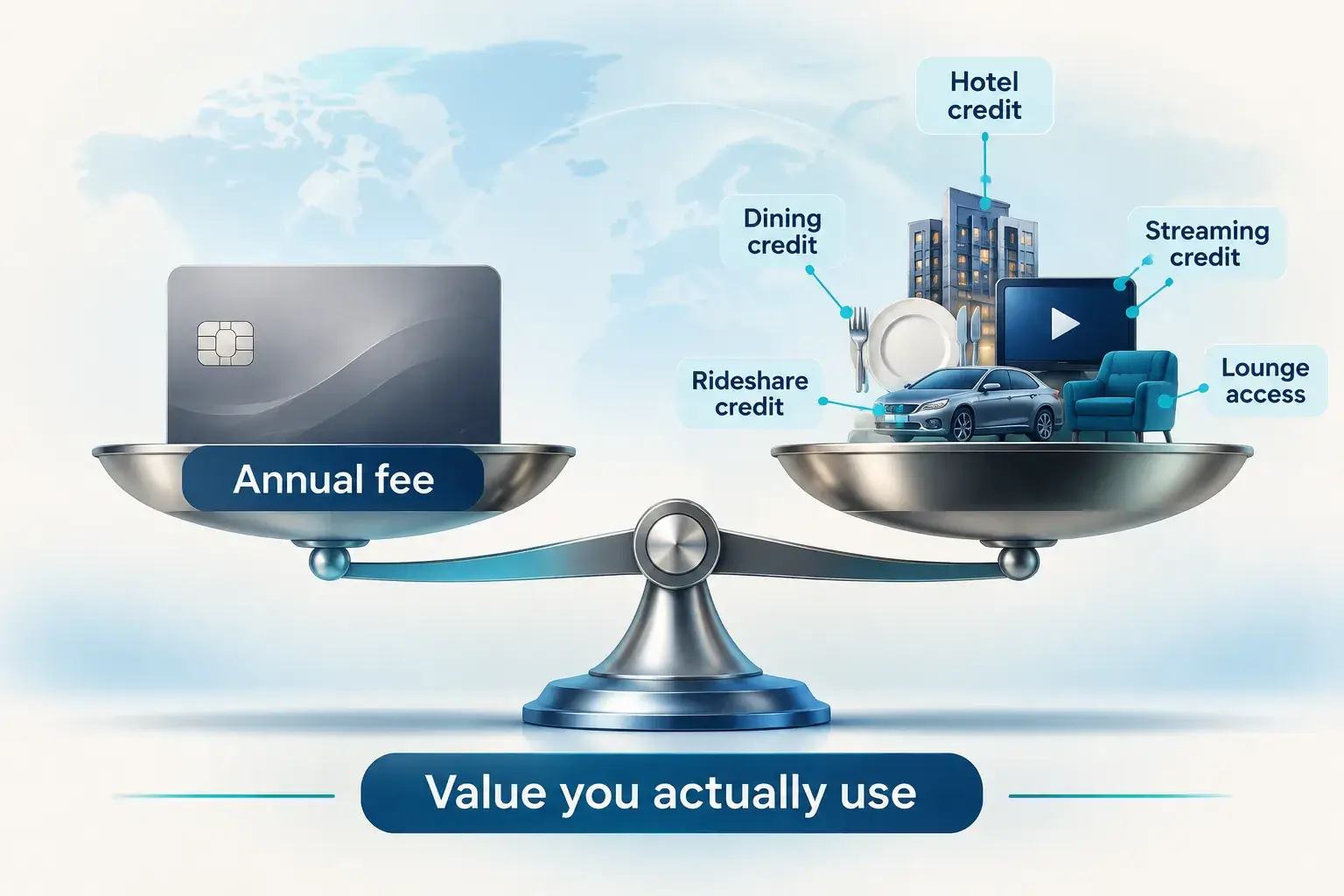
The questions that decide it
Answer these honestly before you contact Amex:
- Did you use the lodging credit both halves of 2026? It is the largest single credit, and it requires prepaid Fine Hotels + Resorts or The Hotel Collection bookings through Amex Travel.
- Do you fly enough to value lounge access? The card currently covers more than 1,550 lounges, including Centurion Lounges, Priority Pass locations, and up to 10 Delta Sky Club visits a year on eligible Delta itineraries. Guest access can be costly, so families may get less than expected.
- Would you pay for the subscriptions anyway? Streaming, Uber One, Walmart+, and similar credits only count as value if they replace spending you already do.
- Where do your Amex points go? If you transfer Amex points to partner airlines for premium cabin awards, the card’s 5x on flights booked directly or through Amex Travel has more value than if you redeem for statement credits.
Best for / Not for
A key change for 2027: Starting January 1, 2027, Fine Hotels + Resorts bookings will require a minimum two-night stay to qualify for the lodging credit. If you used the credit on one-night stays in 2026, your next year’s value may drop. Factor that into a late-2026 renewal.
The retention offer is a discount on a decision. It should not be the decision.
Is the card worth it if you don’t travel? Usually not. Without lounges, the lodging credit, and travel earning, you are paying $895 mostly for lifestyle credits, and a lower-fee card will almost always come out ahead. For a broader fit test, see who should get the Amex Platinum Card in 2026.
Adding Up the Credits You Actually Use
Count only the credits you used last year and will use again, at the value you would have paid in cash. A $300 credit for a store you would never shop at is worth zero, not $300. This one adjustment usually cuts the advertised value by more than half.
You may be interested



Here is the main credit lineup after the refresh, with a column for your own number:
Enrollment is required for many of these, and terms change. Confirm current details in our American Express Platinum benefits 2026 breakdown before you count anything.
A realistic example
Assume a cardholder who travels about six times a year:
- Hotel credit: used both halves, but the FHR rate ran about $60 higher than booking direct each time. Value: $480.
- Resy: used three of four quarters. Value: $300.
- Digital entertainment: already pays for one eligible service. Value: $180.
- Uber Cash: used about two-thirds. Value: $130.
- Airline fee credit: seat fees and bag fees. Value: $150.
- CLEAR Plus: would pay anyway. Value: $209.
- Lounges: they would pay about $250 a year for comparable access. Value: $250.
Total: roughly $1,700 in real value. That clears $895 comfortably. Now remove lounges and the hotel credit, and the same person lands near $970, which is barely above the fee once you subtract what a cheaper card would earn.
Common mistake: Counting the hotel credit at face value when the Amex Travel price is higher than the direct rate. Your value is the savings versus the cheapest comparable booking, not the credit amount.
Opportunity cost matters too. If the Platinum earns 1x on your everyday spending while a Gold or Chase card would earn 3x or 4x, that lost earning is a real cost. Our credit card annual fee ROI calculator helps you run the full math, and a month-by-month Platinum perks plan helps you actually capture the monthly and quarterly credits if you renew.
Can you stack Platinum benefits with other cards? Yes. Many people pair the Platinum with the Gold for dining and grocery earning, or with a Chase or Capital One card for non-bonus spend. Stacking only helps if each card earns its own fee.
How and When to Ask for a Retention Offer
Ask for a retention offer after the annual fee posts to your statement, not before, and make sure the conversation happens well inside the 30-day refund window. The fee is refundable if you close the account within 30 days after the closing date of the billing statement on which the fee appears. That window is your negotiating safety net.

A retention offer is a discretionary incentive Amex may give an existing cardholder to keep the account open. It is usually bonus points tied to a spending requirement, and sometimes a statement credit. American Express has not published any retention schedule, minimum offer, or eligibility formula, so results vary.
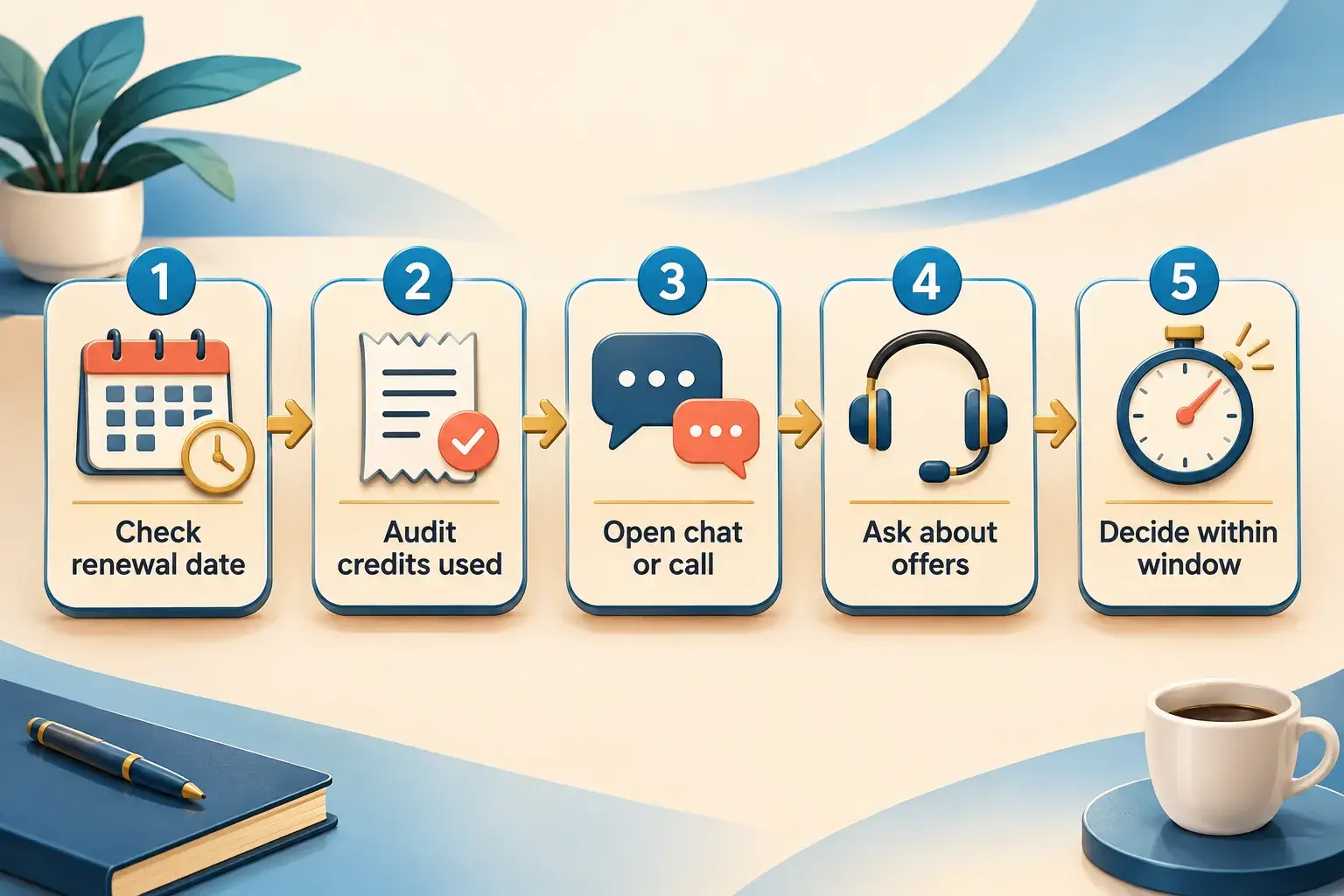
Step-by-step guide
- Find your renewal statement. Note the statement closing date and count 30 days forward. Put that date on your calendar.
- Run your credits audit first. Know your real number from the table above so you can make a decision on the spot.
- Use chat or phone. Many cardholders start in the app chat and ask to be connected to a card specialist. Phone works too, and some reports show different results by channel.
- State your reason clearly. Keep it factual and specific.
- Ask directly. Ask whether any offers are available to help you keep the card.
- Decide, then confirm the terms. Get the point amount, spending requirement, and deadline in writing, ideally in chat or a confirmation in your account.
What to say
A simple, honest script works best:
“My annual fee just posted, and I’m reviewing whether the card still makes sense. I found several of the credits hard to use this year, and Amex Travel hotel rates were sometimes higher than booking direct. Are there any offers available on my account before I decide whether to keep it?”
This matches how cardholders described successful calls in 2026. Avoid threats you won’t follow through on, and don’t claim you’ve already applied for a competitor’s card.
Can you negotiate for more?
Sometimes, within limits. If the first answer is “no offers,” some cardholders politely ask whether a different department can review the account, or end the chat and try again a few days later. A first offer is rarely improved by pushing, though. If the offer doesn’t change your math, decline it and move to your backup plan.
How often can you get one? There is no published limit. Many cardholders report roughly one offer per 12 months, and taking one may affect future eligibility. Also note that accepting a retention offer and then closing the card soon after can lead Amex to claw back the points. Read more on general tactics in our guide to travel credit card annual fee waivers and retention offers.
Retention Offers Cardholders Are Reporting in 2026
The most common 2026 Platinum retention offer is 15,000 points after $3,000 in spend over three months, with occasional higher offers in the 20,000 to 35,000 range. These are user-reported data points from cardholder communities, not an official Amex table, so treat them as a range rather than a promise.
What these offers are actually worth
Use your own cents-per-point (CPP) target. Assuming 1.5 CPP for transfers to partner airlines:
- 15,000 points is about $225 in value, or roughly 25% of the fee.
- 20,000 points is about $300, while the $200 statement credit is guaranteed cash. Take the points only if you reliably redeem above 1 CPP.
- 35,000 points is about $525, which can change the decision for someone near break-even.
Spending requirements also have a cost. If $3,000 of spend would otherwise earn 2x on another card, you lose about 6,000 points of alternative earning. A 15,000-point offer then nets closer to 9,000 to 12,000 points.
The 1 CPP fee offset
The 89,500-point offer to cover the $895 fee is worth understanding. That is 1 cent per point, compared with the usual 0.6 cents per point when paying the fee with points (about 149,166 points). It is still a weak use of transferable points if you regularly book business class deals at 1.5 to 2 CPP or more. Take it only if you have a large idle balance and no near-term award plans.
Decision rule: Keep the card with a retention offer only if your realistic credit value plus the offer value exceeds $895. If you are $400 short, a 15,000-point offer will not close the gap.
Edge case: Offer inventory varies by product. If Platinum has no offer, ask whether other cards on your account do. One April data point showed a much stronger Gold offer, which matters if you plan to downgrade.
If There Is No Offer: Downgrade, Product Change, or Cancel
If Amex has no offer, or the offer doesn’t close the gap, product change to a lower-fee Membership Rewards card if you want to keep your points alive; cancel only after protecting your points. Both moves should happen inside the 30-day refund window to recover the $895.
Your three options
Product change options are set by Amex and can vary by account. The most common targets are the Amex Gold and Amex Green cards, which keep your Membership Rewards account and transfer access. Ask the representative which cards are available to you; no-fee MR options are not always offered on a direct switch. For a full walkthrough, see our guide on how to downgrade a travel credit card and keep your points.
Pros and cons of product changing
Pros:
- Keeps your points, transfer partners, and account age
- No new hard credit inquiry in most cases
- Gold earns strong points on dining and U.S. supermarkets
Cons:
- A product change can affect your eligibility for future welcome bonuses on that card under Amex’s family and lifetime rules
- You lose lounge access and the larger Platinum credits
Review Amex application rules for 2026 before choosing, especially if you might want a Gold or Platinum welcome bonus later. Applying fresh for a card you’ve never held is sometimes more valuable than a product change into it.
Common mistake: Waiting until the refund window closes “to use one more credit.” If you use credits and then cancel, Amex may reverse them. Make the decision early and keep the timeline simple.
Alternatives worth comparing: Capital One Venture X, Chase Sapphire Reserve, and the Bilt Palladium cover similar ground at different price points. Our comparison of premium travel card annual fees and credits lays out the tradeoffs.
Protecting Your Membership Rewards Points Before Cancelling
If the Platinum is your only Membership Rewards card, closing it can forfeit your points, so transfer, redeem, or move them to another MR card before you cancel. Amex generally requires an open MR-earning card to keep your points balance. Product changing to Gold or Green avoids this problem entirely.
Pre-cancellation checklist
- Confirm your other MR cards. If you hold a Gold, Green, Business Platinum, or other MR-earning card, your points usually stay in the shared account. Verify this before closing.
- Check pending points. Points from recent purchases may still be posting. Wait for them to land.
- Plan transfers carefully. Transfers to points transfer partners are one-way. Only move points for a specific award with confirmed award space. Check current credit card transfer bonuses first, since a 20% to 30% bonus can change which program you pick.
- Mind transfer delays. Most airline transfers are instant or same-day, but some take days. Don’t cancel while a transfer is in progress.
- Account for surcharges and fees. Some partner airlines add high fuel surcharges. A cheap points price with $900 in fees may be worse than a cash ticket.
- Avoid fire-sale redemptions. Cashing out at 0.6 CPP or less is the most common way to waste points. Parking points in a frequent-flyer account with low devaluation risk is often better than a poor redemption.
Quick example: You hold 120,000 Amex points and no other MR card. You have a business class trip planned next spring but no dates yet. The better move is a product change to Gold, keeping the points flexible, rather than transferring everything to one airline and exposing yourself to a devaluation before you book.
Frequently asked questions
What is the Amex Platinum annual fee in 2026?
The U.S. consumer Platinum annual fee is $895, raised from $695. Existing cardholders began seeing it at renewals on or after January 2, 2026.
How long do I have to get the annual fee refunded?
The fee is refundable if you close the account within 30 days after the closing date of the statement on which it appears. After that, it is generally nonrefundable.
What retention offer should I expect?
Most 2026 reports show 15,000 points after $3,000 in spend over three months. Some cardholders reported 20,000 to 35,000 points or a $200 statement credit. Offers are not guaranteed.
What if Amex says there is no offer?
Decide based on your credit math. Product change to Gold or Green if you want to keep points alive, or cancel after protecting your points.
Can I ask again if I’m denied?
Some cardholders report different results on a later attempt or through a different channel. Stay polite and keep your 30-day deadline in mind.
Will I lose points if I cancel?
You may, if the Platinum is your only Membership Rewards card. Transfer, redeem, or product change first.
Next steps
Start with the credits audit, because it settles most decisions before you call. Then mark your 30-day refund deadline, contact Amex once the fee posts, and judge any offer against your real shortfall. If the numbers don’t work, product change before canceling, and only transfer points when you have a specific award booked. For a final gut check on the bigger picture, read Amex Platinum 2026: is the $895 annual fee worth it?




Content on Award Travel Hub is independently created by Award Travel Hub Editorial Desk and, where noted, reviewed by Award Travel Hub Review Desk. Some pages may contain affiliate links, but compensation does not determine our coverage, opinions, or methodology.