

Last updated: October 5, 2026
Quick Answer
The Capital One Venture Rewards Card charges a $95 annual fee, earns a flat 2 miles per dollar on every purchase, and lets holders redeem miles at a fixed 1 cent each toward travel or transfer them to more than a dozen airline and hotel partners. For 2026, an elevated welcome bonus makes the card worth a closer look, but the underlying value proposition has not changed: it rewards simplicity over category optimization. This Capital One Venture rewards card review breaks down where that tradeoff helps you and where it costs you.
Key Takeaways
The annual fee is $95, unchanged for 2026, with no foreign transaction fees on any purchase.
Base earning is a flat 2 miles per dollar on everything, with 5 miles per dollar on hotels and rental cars booked through Capital One Travel.
Miles redeem at a fixed 1 cent each against past travel purchases or through the Capital One Travel portal.
Transfers to airline and hotel partners can push redemption value above 1.5 cents per mile, but only when award space exists on the transfer date.
A new elevated welcome bonus launched September 8, 2026, replacing the offer that had been in place since January.
A 48-month rule blocks the bonus for anyone who has opened a Venture or Venture X card in the prior four years.
You may be interested
Venture X, at a higher annual fee, is the better fit for travelers who want lounge access and an annual travel credit that offsets much of the cost.



The Card at a Glance: Fee, Earning, and Welcome Bonus
The Capital One Venture Rewards Card carries a $95 annual fee and earns a flat 2 miles per dollar on every purchase, with no rotating categories to track. As of September 2026, Capital One elevated the welcome offer, and third-party analysts including The Points Guy have called the current bonus especially compelling compared with the offer that ran from January through early September.
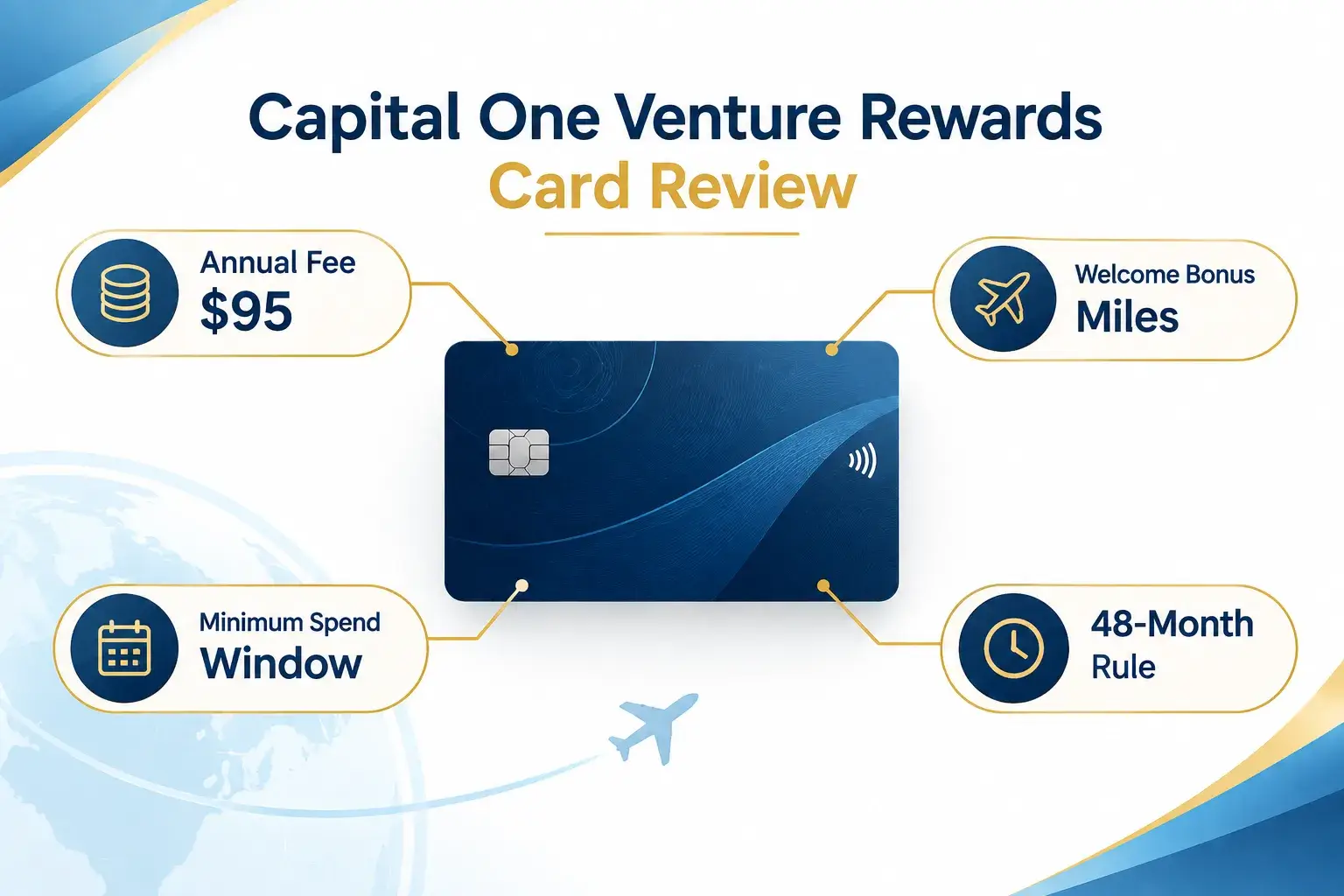
Depending on how the bonus is valued, most estimates place it between $1,000 and $1,688. The wide range reflects the gap between a conservative 1 cent per mile valuation (Capital One Travel portal or erase-travel redemptions) and a more optimistic valuation based on transfer partner sweet spots, where a mile can be worth 1.5 to 2 cents or more.
One detail matters more than the headline number: Capital One enforces a 48-month welcome-bonus restriction. Anyone who has opened a Venture or Venture X card, or received a new-cardmember bonus on either, within the past four years is not eligible for the current offer. This is a hard eligibility rule, not a soft guideline, so check account history before applying.
Is the Capital One Venture Card Annual Fee Worth It?
The $95 fee is worth it for anyone who spends enough on the card that 2 miles per dollar, redeemed near 1 cent each, produces more value than a free or lower-fee alternative. As a rule of thumb, spending roughly $5,000 to $6,000 a year covers the fee through flat earning alone, before counting the welcome bonus.
The calculation changes for occasional travelers who rarely carry a travel-specific card. If most annual spending already goes on a no-fee cash-back card earning 2 percent, Venture’s flat 2X only pulls ahead once miles are transferred at better than 1 cent of value, which requires some routine engagement with transfer partners. For a broader framework on deciding whether a fee-bearing card earns its keep, see this annual fee keep, downgrade, or cancel guide.
Flat-Rate Miles: What Simplicity Costs You
Venture earns 2 miles per dollar on virtually every purchase, with an elevated 5 miles per dollar on hotels and rental cars booked directly through Capital One Travel. That flat structure is the card’s biggest selling point and its biggest limitation at the same time.
A flat-rate card removes the need to track bonus categories, but it also means cardholders leave value on the table compared with category-optimized cards. A grocery-heavy household earning 2X on Venture is earning less than a card paying 4X or 5X on supermarkets. The math only favors Venture when:
Spending is spread evenly across categories with no dominant one.
The cardholder does not want to manage multiple cards.
Redemption flexibility (transfer options) matters more than raw earning rate.
Best for: travelers who want one card that performs reasonably well everywhere.
Not for: people who already maximize category cards and would earn more with a dedicated dining, grocery, or gas card layered alongside a flat earner.
How to Maximize Capital One Venture Miles
The single highest-leverage move is transferring miles to an airline partner for a premium cabin redemption instead of redeeming at the fixed 1 cent rate. A business class transfer that lands at 2 to 3 cents per mile roughly doubles or triples the value of the same miles used to erase a coach fare.
Practical steps to get more from Venture miles:
Check transfer partner award availability before deciding how to redeem, since transfers are generally irreversible.
Reserve the flat 1 cent portal redemption for last-minute or low-value trips where transfer timing won’t work.
Use the welcome bonus for one premium cabin transfer rather than spreading it across several cash-value redemptions.
Track transfer bonuses, which periodically boost ratios on select partners and can lift effective value by 20 to 50 percent.
For a broader look at how redemption value compares across programs, this cents-per-point valuation guide is a useful reference point before committing to a transfer.
Redemption Paths: Erase Travel, Book the Portal, or Transfer
Venture miles can be redeemed three ways: erasing a past travel purchase at 1 cent per mile, booking directly through the Capital One Travel portal at the same fixed rate, or transferring to an airline or hotel partner at variable value. Each path suits a different situation.

Erase travel: Charge any travel purchase to the card, then use miles to offset it within a set window after the transaction posts. Simple, flexible on where you book, but capped at 1 cent per mile.
Capital One Travel portal: Book flights, hotels, or rental cars directly with miles at the same fixed rate, plus the elevated 5X earning rate on hotel and car bookings made this way.
Transfer to partners: Move miles to an airline or hotel loyalty program to book award space directly, unlocking higher value but introducing partner-specific rules, award availability limits, and no refund once the transfer is complete.
Decision rule: transfer when a strong award seat is confirmed and the effective value clears 1.5 cents per mile. Use erase travel or the portal when booking something the miles won’t stretch further on, such as a domestic economy fare with no premium upgrade path. A closer side-by-side on when each approach wins is covered in this Capital One Travel versus transfer partners comparison.
Common mistake: transferring miles speculatively before confirming award space. Capital One transfers are typically final, and a mile sitting in an airline account with no usable redemption is a mile that lost flexibility for no gain.
The Transfer Partner List and Where Miles Go Furthest
Capital One miles transfer to more than 15 airline loyalty programs and a handful of hotel programs, with most airline transfers at a 2:1.5 ratio and a smaller group of partners at 1:1. The partner list was refreshed through 2026, and quality varies more than breadth suggests.
Representative partners include:
PartnerTypeTypical Transfer RatioAir France-KLM Flying BlueAirline2:1.5Avianca LifeMilesAirline2:1.5British Airways Executive ClubAirline2:1.5Virgin Red (Virgin Atlantic)Airline1:1Turkish Airlines Miles&SmilesAirline1:1Emirates SkywardsAirline1:1Wyndham RewardsHotel2:1Choice PrivilegesHotel2:1
Analysts differ on how to weigh this list. NerdWallet has noted the partner roster is strong on paper but mixed on ratios, since several high-demand programs transfer below par. Business travel and loyalty analysts generally agree the real value driver is partner quality for a specific route, not the total count of partners.
Can You Transfer Capital One Venture Miles to Airlines?
Yes, Venture miles transfer to the same airline and hotel partner list available to other Capital One miles-earning cards, since transfers are tied to the Capital One rewards program rather than a specific card product. This makes Venture a genuine entry point into partner-airline award booking, not just a cash-back-style travel card.
The tradeoff is timing. Transfers post within a few minutes to a couple of days depending on the partner, and award space can disappear during that window, particularly for popular business and first class awards. Before committing, review current best transfer partner uses for Capital One miles and confirm the specific route has open award inventory.
Benefits Worth Noting: Credits, Protections, and No Foreign Fees
Venture includes no foreign transaction fees, a Global Entry or TSA PreCheck application fee credit of up to $120 every four years, and standard purchase protections, but it does not include the richer trip delay or trip cancellation coverage found on some competing $95 cards.

Confirmed benefits include:
No foreign transaction fees on any purchase, anywhere.
Up to $120 statement credit for Global Entry or TSA PreCheck application fees, once every four years.
Auto rental collision damage waiver (secondary in most cases).
Travel accident insurance and extended warranty protection on eligible purchases.
24-hour travel and emergency assistance services.
What Venture does not include, compared with some premium travel cards: trip delay reimbursement, trip cancellation and interruption insurance, and airport lounge access. Those gaps are the main reason travelers with more complex itineraries look at Venture X or competing premium cards instead.
Is the Venture Card Good for International Travel?
Yes, for straightforward international travel where the main concerns are fees and basic protection. The lack of foreign transaction fees and broad airline transfer partner access cover the essentials for someone booking flights and paying for meals and hotels abroad.
It is a weaker fit for travelers who want built-in trip cancellation or interruption coverage, or airport lounge access during long international connections. Those needs point toward Venture X or a premium card with dedicated travel insurance.
Capital One Venture vs Chase Sapphire Preferred
Venture and the Chase Sapphire Preferred share the same $95 annual fee, but they reward different spending patterns and transfer at different ratios. Sapphire Preferred earns bonus categories (commonly travel and dining) and transfers Chase points to airline and hotel partners at a 1:1 ratio, while Venture earns a flat 2X and transfers at ratios that are often below 1:1.
FeatureCapital One VentureChase Sapphire PreferredAnnual fee$95$95Base earning2X everything1X on most purchases, higher on select categoriesTransfer ratioMostly 2:1.5, some 1:11:1 across the boardTrip delay/cancellation coverageNot includedIncludedBest forUncomplicated flat earningCategory spenders who value included insurance
Choose Venture if spending is spread evenly across categories and simplicity matters more than maximizing every dollar. Choose Sapphire Preferred if dining and travel spending are significant and built-in trip protections have real value. A deeper look at how the major transfer ecosystems stack up is available in this Chase versus Amex versus Citi versus Capital One transfer partner comparison.
Venture vs Venture X: The Upgrade Threshold
Venture X charges a $395 annual fee but offsets much of it with a $300 annual travel credit and 10,000 anniversary bonus miles worth roughly $100, bringing the effective fee closer to $0 to $95 for travelers who use the credit. It also adds airport lounge access, which base Venture does not offer.

FeatureVentureVenture XAnnual fee$95$395Annual travel creditNone$300Anniversary bonusNone10,000 milesLounge accessNoYes (Capital One Lounges, Priority Pass)Base earning2X2XTravel portal earning5X hotels/cars10X hotels, 5X flights
Upgrade to Venture X if the $300 travel credit will realistically be used every year and lounge access fits the travel pattern. Stay with Venture if lounge visits are rare and the extra several hundred dollars a year isn’t offset by real usage. For a full breakdown of what changed with lounge access rules in 2026, see this Venture X benefits guide.
Approval Requirements: Credit Score and Application Tips
Capital One typically approves Venture Rewards applicants with good to excellent credit, generally a FICO score of 690 or higher, along with sufficient income relative to existing debt. It is not marketed or underwritten as a card for building credit from a thin or damaged file.
Applicants with limited or rebuilding credit are better served by a secured or starter card until scores and history improve. Capital One does offer other products aimed at that segment, but Venture is not one of them. A common mistake is applying for Venture shortly after a string of new credit inquiries or account openings, which can lower approval odds even with a decent score, since issuers weigh recent credit activity heavily.
Common Complaints and Issues
The most frequent complaints about Venture Rewards involve customer service response times, the 1 cent per mile ceiling on non-transfer redemptions, and confusion about the 48-month bonus eligibility rule. None of these are unique to Venture, but they show up consistently in cardholder feedback.
Other recurring issues:
Cardholders expecting category bonuses similar to competing cards are sometimes disappointed by the flat 2X structure once they see how it performs against a dedicated grocery or dining card.
The erase-travel redemption has a limited window after a purchase posts, and some cardholders miss it.
Transfer partner award space for popular routes and dates can be thin, especially in premium cabins, which is a limitation of the airline programs themselves rather than of Capital One.
None of these amount to a fundamental flaw. They are largely a function of what a flat-rate, moderate-fee travel card is designed to do, and cardholders who understand those limits going in tend to report higher satisfaction.
Who This Card Is Genuinely Right For
Venture Rewards fits travelers who want one uncomplicated card that earns a solid flat rate everywhere and occasionally transfers miles for a stronger redemption, without tracking rotating categories or paying a premium annual fee. It is a reasonable starting point for an intermediate points strategy, not an endpoint for someone chasing maximum value on every dollar.
Best for:
Travelers who want a single card instead of a stack of category cards.
Occasional international travelers who value no foreign transaction fees.
Cardholders who will use the elevated 2026 welcome bonus for one meaningful transfer, rather than a string of small cash-value redemptions.
Not for:
Heavy category spenders who would out-earn Venture with dedicated dining, grocery, or gas cards.
Travelers who need built-in trip cancellation and delay coverage.
Frequent flyers who want lounge access without a separate premium card.
For a broader view of how Venture compares against other flat-rate and category cards in a full points strategy, see this flat-rate versus category card breakdown and this Capital One miles transfer partner reference guide.
FAQ
What is the Capital One Venture Rewards card annual fee in 2026?
The annual fee is $95, unchanged from prior years, with no foreign transaction fees on purchases.
How many miles do you get per dollar spent on Venture?
Venture earns a flat 2 miles per dollar on every purchase, with 5 miles per dollar on hotels and rental cars booked through Capital One Travel.
Can you transfer Capital One Venture miles to airlines?
Yes. Venture miles transfer to more than 15 airline partners and several hotel programs, typically at a 2:1.5 ratio, with some partners at 1:1.
Is the Capital One Venture card good for someone with bad credit?
No. Venture generally requires good to excellent credit, roughly a 690 FICO score or higher, and is not designed as a credit-building card.
Does the Venture card include trip cancellation or delay insurance?
No. Base Venture includes rental car coverage, travel accident insurance, and extended warranty protection, but not trip delay or cancellation reimbursement.
Is Venture or Venture X the better upgrade for frequent travelers?
Venture X, at $395, makes sense for travelers who will use its $300 annual travel credit and want lounge access. Travelers without those needs are usually better off staying on Venture.
Conclusion
The Capital One Venture Rewards card remains a solid, uncomplicated choice for travelers who want flat 2X earning, no foreign transaction fees, and real access to airline transfer partners for a modest $95 fee. The elevated welcome bonus launched in September 2026 adds a strong reason to apply now, provided the 48-month rule doesn’t block eligibility.
Next steps: confirm eligibility for the current bonus, check whether typical annual spending clears the fee through flat earning alone, and before transferring a single mile, verify award availability on the intended route. If lounge access and a larger annual travel credit matter more than keeping the fee low, compare this review against the Venture X benefit breakdown before applying.


Content on Award Travel Hub is independently created by Award Travel Hub Editorial Desk and, where noted, reviewed by Award Travel Hub Review Desk. Some pages may contain affiliate links, but compensation does not determine our coverage, opinions, or methodology.