

Last updated: August 31, 2026
Quick Answer
The Citi AAdvantage Executive Card 125,000 bonus requires $15,000 in purchases within the first 5 months and comes attached to a $695 annual fee for new cardmembers who applied on or after August 23, 2026. The offer makes sense primarily for travelers who fly American Airlines often enough to use Admirals Club access repeatedly, since a standalone membership now runs $1,200 to $1,400 depending on AAdvantage status. If lounge access is not a real part of the travel pattern, the fee is hard to clear on rewards alone.
Key Takeaways
- Bonus: 125,000 AAdvantage miles after $15,000 in purchases in the first 5 months.
- Annual fee: $695 for new cardmembers as of August 23, 2026.
- Lounge access: Full Admirals Club membership privileges for the primary cardmember, plus access for eligible traveling companions.
- Authorized users: $175 covers up to three authorized users, then $175 for each additional one. AUs get lounge access privileges, not standalone memberships.
- Loyalty Points: The 2026 refresh added milestones at 165,000 and 240,000 Loyalty Points, raising the annual bonus cap from 20,000 to 40,000 Loyalty Points.
- 48-month rule: No welcome bonus if a Citi / AAdvantage Executive new account bonus was received in the past 48 months.
- Eligibility: U.S. residents and territories, excluding Puerto Rico and the U.S. Virgin Islands.
- Break-even: Roughly 8 to 12 lounge visits per year, or fewer if traveling with companions, is where the math usually turns positive.
- $15,000 is a real hurdle. That is $3,000 a month for five months, which not every household can hit organically.
What Is the Citi AAdvantage Executive Card 125,000 Bonus?
The Citi AAdvantage Executive Card 125,000 bonus is the elevated welcome offer American Airlines and Citi announced on August 3, 2026, alongside a card refresh. New cardmembers earn 125,000 AAdvantage miles after spending $15,000 on purchases within the first five months of account opening.
At a conservative 1.4 cents per mile valuation for AAdvantage miles, 125,000 miles is worth roughly $1,750 in redemption value. That is a genuinely large bonus for an airline co-brand card, though you only realize the value if you use the miles on award space that prices reasonably. AAdvantage uses dynamic pricing on its own metal, so the redemption value swings widely depending on route and date.
What the offer includes:
- 125,000 bonus AAdvantage miles
- Admirals Club membership privileges for the primary cardmember
- Free first checked bag for the cardmember and up to eight companions on the same reservation
- Priority check-in, security screening (where available), and boarding
- Loyalty Point earning that counts toward AAdvantage elite status
Who is eligible: The offer terms limit availability to individuals residing in the United States and its territories, excluding Puerto Rico and the U.S. Virgin Islands. That exclusion catches applicants off guard every year.
The 125,000-Mile Offer: Terms, Spend Requirement, and Deadline
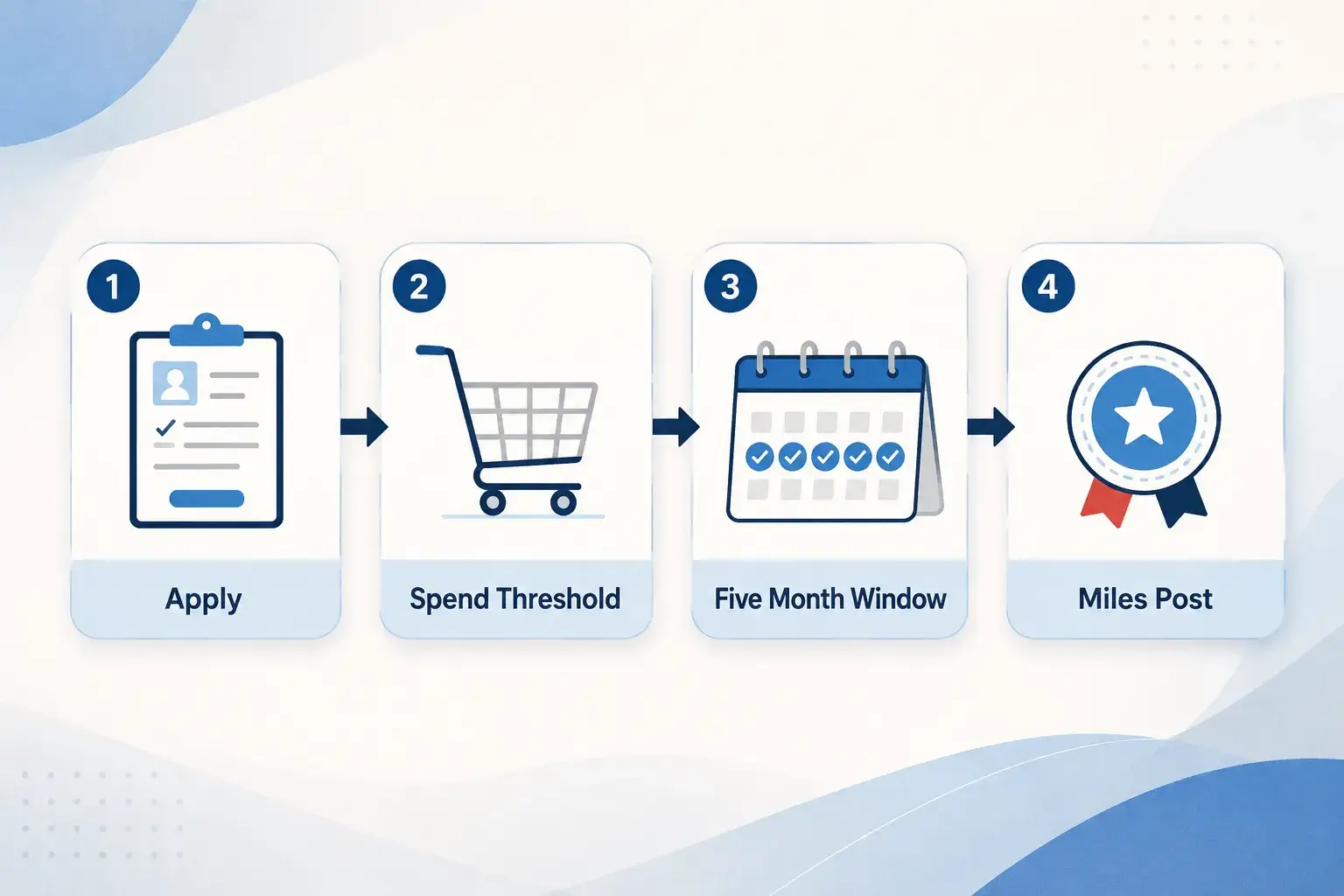
Approved applicants must put $15,000 on the card within five months of account opening. That works out to $3,000 per month, which is meaningfully higher than the typical $3,000-to-$6,000 total spend on mainstream travel cards.
How long do you have to meet the spending requirement?
Five months from account opening, not from card activation or first use. The clock starts when the account opens, so the first statement cycle can quietly eat a few weeks if the card sits in a drawer.
You may be interested



Spend that typically counts:
- Everyday purchases, travel, dining, groceries
- Recurring bills that accept credit cards
- Business expenses on a personal card, where permitted
Spend that typically does not count:
- Balance transfers and cash advances
- Purchases of cash equivalents, including money orders
- Annual fee charges, interest, and fees
- Account activity that Citi classifies as manufactured spend
Before applying, run the plan honestly: list out five months of expected charges and see whether $15,000 appears without stretching. Financing a purchase you would not otherwise make to hit a bonus destroys the value quickly. Our guide on how to maximize credit card sign-up bonus rewards covers timing tactics for large minimum spends.
A $15,000 requirement is not a “put your rent on it” bonus. It is a bonus for people with genuine, predictable monthly volume.
Citi AAdvantage Executive card sign-up bonus not working: what to check
If the miles have not posted, work through these in order:
- Confirm the spend window. Five months from account opening, and only qualifying purchases count. Pending transactions do not.
- Check the 48-month clock. If a Citi / AAdvantage Executive new account bonus posted within the prior 48 months, the bonus will not pay out, and Citi generally does not notify applicants in advance.
- Allow posting time. Airline co-brand bonuses commonly post 8 to 12 weeks after the requirement is met, and they land in the AAdvantage account, not the Citi account.
- Verify the AAdvantage number on the application. A mismatched or missing number delays posting.
- Watch for clawback triggers. Product changes, early cancellation, and returned purchases can reverse a bonus. Our breakdown of credit card welcome bonus clawbacks to avoid explains the common traps.
If everything checks out and the miles are still missing, call Citi with statement dates and the qualifying-purchase total in hand.
How This Offer Compares to Historical Executive Card Bonuses
The 125,000-mile bonus is at the high end of what this card has historically offered, but the annual fee climbed at the same time, so the net improvement is smaller than the headline suggests.
| Element | Prior structure | Current (from Aug. 23, 2026) |
|---|---|---|
| Welcome bonus | Typically 50,000-100,000 miles | 125,000 miles |
| Minimum spend | Commonly $5,000,$10,000 | $15,000 |
| Spend window | Typically 3 months | 5 months |
| Annual fee | $595 | $695 |
| Loyalty Point milestone cap | 20,000 | 40,000 |
How to read the table: The bonus went up, but so did the required spend and the fee. The longer five-month window is a real concession that makes $15,000 more achievable. The bigger structural change is the Loyalty Point milestone cap doubling, which matters more to status chasers than to one-time bonus hunters.
Decision rule: If the primary goal is the miles alone, compare the effective return per dollar. 125,000 miles on $15,000 of spend, minus a $695 fee, is a strong first-year return but not an outlier compared with premium transferable-points cards that carry lower spend hurdles.
Admirals Club Membership: What It Is Worth in Cash
American’s published Admirals Club annual membership pricing now runs $1,200 to $1,400 depending on AAdvantage status. On paper, that alone exceeds the $695 annual fee. In practice, most people should not credit themselves the full retail price.

What’s included with Admirals Club membership
- Access to Admirals Club locations and select partner lounges within the oneworld network when flying eligible itineraries
- Complimentary food, including soup, salad, and snacks, plus house beverages
- Agent-staffed service desks for rebooking during irregular operations
- Wi-Fi, workspaces, and power outlets
- Showers at select larger locations
- Guest privileges for immediate family or a limited number of traveling companions
How much is Admirals Club membership actually worth?
The honest answer: worth what you would otherwise pay, not what it retails for. Independent analysts have valued a membership closer to $700 to $850, reflecting the fact that few travelers would voluntarily buy a $1,400 membership at list price.
A more useful method is per-visit valuation:
- Assign a lounge visit a value between $30 and $60, reflecting what a day pass or a comparable meal and workspace would cost.
- Multiply by realistic annual visits, counting each departure and connection separately.
- Add value for companions, since access extends to eligible traveling companions.
Example: A traveler making 10 round trips a year through a hub with an Admirals Club, with one connection on half of them, generates roughly 30 lounge entries. At $40 each, that is about $1,200 of value. That comfortably clears the fee. A traveler taking three round trips a year generates about six entries, or roughly $240, which does not.
Common mistake: Counting lounge value at airports where American has no Admirals Club, or on itineraries flown on other carriers. Access is tied to eligible American and oneworld travel, so a Delta-heavy flyer gets nothing from this benefit. Compare the footprint against alternatives in our review of Venture X changes and their impact on lounge access.
Authorized Users and Lounge Access for Companions
Authorized users cost $175 for up to three, then $175 for each additional user. Authorized users receive lounge access privileges but not a full standalone Admirals Club membership.
What that distinction means in practice:
- Authorized users can enter Admirals Club locations under the account’s access privileges when traveling on eligible itineraries.
- Authorized users are not treated as members for every purpose, including some partner-lounge and guesting scenarios.
- The primary cardmember holds the membership; AUs hold access rights derived from it.
When adding authorized users makes sense:
- A traveling spouse or partner who flies American separately from the primary cardmember
- Adult family members who fly American on their own itineraries
- Two frequent flyers in one household who would otherwise buy separate lounge access
When it does not:
- Companions who always travel on the same reservation as the primary cardmember, since they can usually be brought in as guests anyway
- Occasional flyers who would use the access once or twice a year
Quick math: $175 for three authorized users is roughly $58 per person. If each of those three uses the lounge even twice a year, the cost is easy to justify. Adding a fourth user at a full $175 requires more usage to break even.
Loyalty Point Earning and the Path to AAdvantage Status
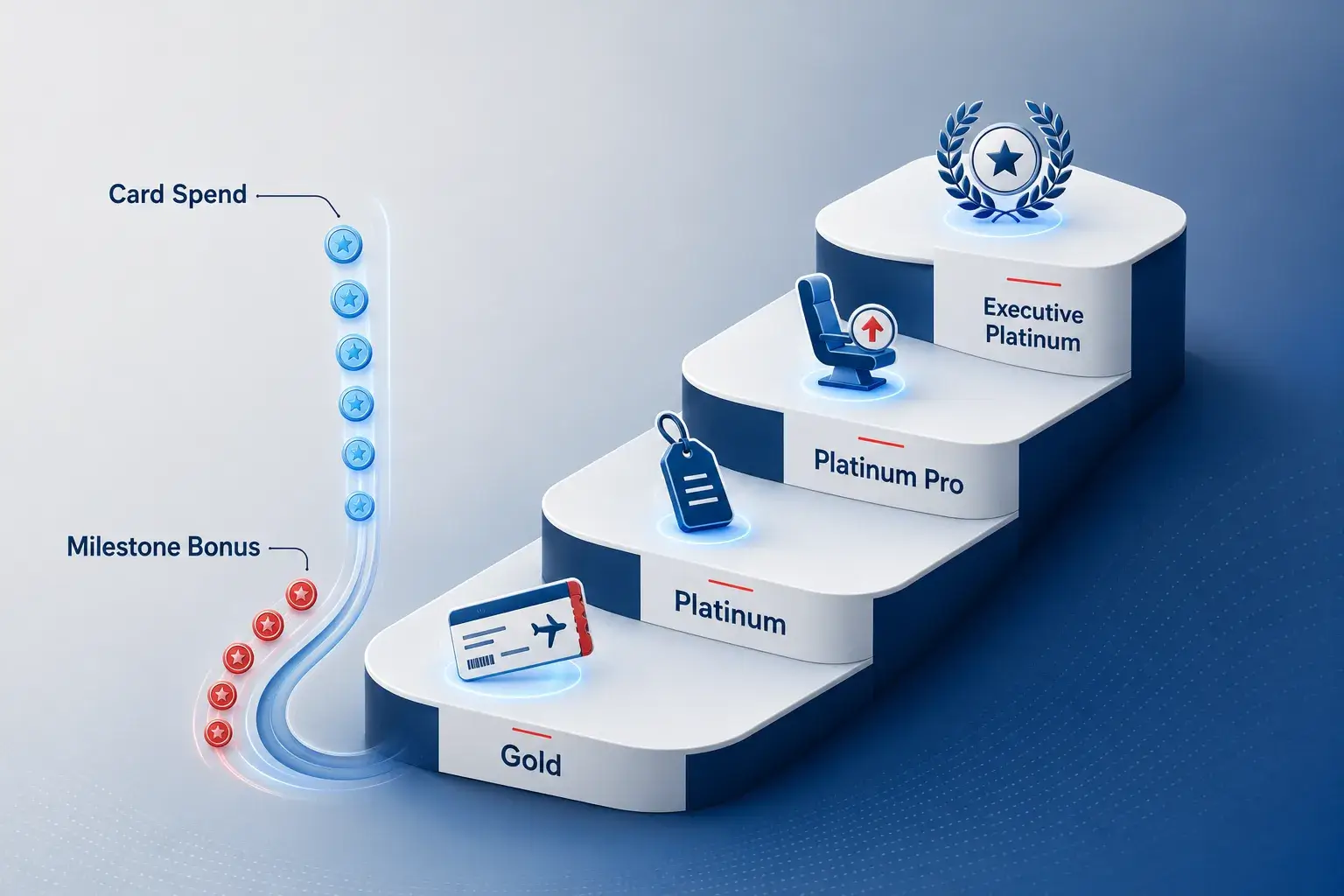
Card spend earns Loyalty Points, which are what actually drive AAdvantage elite status. The 2026 refresh added milestone bonuses at 165,000 and 240,000 Loyalty Points and doubled the annual bonus cap from 20,000 to 40,000 Loyalty Points.

Why this matters: AAdvantage is one of the few major U.S. programs where credit card spend counts fully toward elite status. Loyalty Points accrue from flying, card spend, and partner activity, so a high-spend cardholder can reach status without flying an enormous number of segments.
How the milestones change the math:
- The old cap contributed up to 20,000 Loyalty Points a year in bonuses.
- The new structure can contribute up to 40,000, which is a meaningful head start toward a mid-tier status threshold.
- Milestones reward sustained annual spend, not a single burst, so the benefit compounds for people who keep the card long term.
Decision rule: If AAdvantage status is a genuine goal and the household already puts significant spend on cards, the Loyalty Point earning can be worth more than the welcome bonus over three years. If status is not a goal, treat Loyalty Points as a secondary perk and evaluate the card on lounge access alone.
For the full status framework, see the AAdvantage program guide for 2026 and our broader look at earning airline elite status through credit card spend.
Citi Application Rules That Could Block You
The most important restriction is the 48-month rule: the welcome bonus is not available if a new account bonus was received for a Citi / AAdvantage Executive account in the past 48 months, or if another Citi card that earned a new account bonus in that window was converted into this account.
Can you get the 125,000 bonus if you had this card before?
Only if the prior Executive card bonus posted more than 48 months ago. Holding the card previously does not disqualify you by itself; receiving the bonus does. Someone who held the card without a bonus, or whose bonus posted five years ago, generally remains eligible.
Other rules that regularly cause problems:
- Product change trap. Converting an existing Citi card that earned a bonus within the 48-month window into an Executive card blocks the new bonus.
- Citi velocity rules. Citi generally limits how frequently it approves applications across its card portfolio, so recent Citi applications can trigger a denial regardless of AAdvantage history.
- Separate card families. AAdvantage cards issued by Citi and by other banks follow different bonus clocks. Do not assume one history covers the other.
- Geography. Residents of Puerto Rico and the U.S. Virgin Islands are excluded from the offer terms.
Common mistake: Applying without checking when a prior AAdvantage Executive bonus posted. The credit inquiry still happens, the account still opens, and the bonus still does not pay. Pull old AAdvantage statements before applying. Our guide to card churning rules and risks covers how to track these windows across issuers.
Citi AAdvantage Executive Card vs Regular AAdvantage Cards
The Executive card is a lounge-first product. The mid-tier AAdvantage cards are baggage-and-boarding products. Choosing between them comes down to whether Admirals Club access gets used.
| Feature | Executive card | Mid-tier AAdvantage card |
|---|---|---|
| Annual fee | $695 | Typically under $100 |
| Admirals Club access | Full membership privileges | None |
| Free checked bag | Cardmember plus up to 8 companions | Cardmember plus limited companions |
| Priority boarding | Yes, earlier group | Yes, standard preferred boarding |
| Loyalty Point milestones | Up to 40,000 annually | Lower or none |
| Best for | Frequent AA flyers who use lounges | Occasional AA flyers who check bags |
Choose the Executive card if: you fly American at least twice a month, connect through hubs with Admirals Clubs, or currently pay for lounge access.
Choose a mid-tier AAdvantage card if: you fly American a handful of times a year, mainly want the free checked bag, and rarely have time to sit in a lounge.
Consider neither if: your travel is split across airlines. A premium transferable-points card may serve better. For context, the Chase Sapphire Reserve now carries a $795 annual fee, so premium cards are not automatically cheaper alternatives. Compare across issuers using our framework for choosing the best travel credit card.
Does the Citi AAdvantage Executive Card Have Travel Credits?
The card’s ongoing value comes mostly from lounge access, baggage, and boarding benefits rather than a large stack of statement credits. American and Citi have publicized total potential value figures approaching $2,300 per year, but that number assumes heavy, near-perfect usage of every included benefit.
How to evaluate credit-style benefits honestly:
- Count only credits tied to spending you already do. A credit that requires a new purchase is a discount, not cash.
- Discount any credit with narrow merchant or timing restrictions by at least half.
- Ignore benefits that duplicate coverage from cards already in the wallet.
Realistic view: For most cardholders, the durable annual value is Admirals Club access plus checked bags. Everything else should be treated as a bonus, not as part of the break-even calculation. If a card’s pitch requires you to use eight separate credits perfectly, the effective value is lower than advertised. Our note on credit card travel insurance coverage explains which protections are worth counting and which overlap.
Break-Even: Who Clears the Annual Fee and Who Does Not
The $695 fee is cleared primarily through lounge visits and checked bags, not through earning rates. A reasonable break-even is 8 to 12 Admirals Club visits per year when traveling solo, and fewer when traveling with companions.
Break-even checklist:
- Estimate annual American Airlines departures and connections through airports with Admirals Clubs.
- Value each entry at $30 to $60, not at the retail membership price.
- Add checked-bag savings: count bags actually checked, at standard first-bag rates, across the cardmember and companions.
- Add Loyalty Point milestone value only if status is realistically within reach.
- Subtract the $695 fee, plus $175 if adding authorized users.
- Compare the remainder against what a lower-fee card would deliver on the same travel.
Best for:
- Travelers based at or connecting through Charlotte, Dallas/Fort Worth, Miami, Philadelphia, Phoenix, or Chicago
- Households where two or more people fly American independently
- Anyone currently paying cash for an Admirals Club membership
- High-spend households targeting AAdvantage status through Loyalty Points
Not for:
- Travelers who fly American fewer than six or seven times a year
- Flyers whose home airport lacks an Admirals Club
- Anyone who cannot reach $15,000 in five months without manufactured or unnecessary spending
- Travelers who need broad, airline-agnostic flexibility from transferable points
Best Ways to Spend 125,000 American Airlines Miles
125,000 AAdvantage miles go furthest on oneworld partner awards priced from published award charts, not on American’s own dynamically priced flights. Partner space is the sweet spot because pricing is fixed and premium cabins can be exceptional value.
Redemption ideas worth checking first:
- Japan Airlines business class to Asia. Partner pricing is fixed and surcharges are modest, which makes cents-per-point values strong when space opens.
- Qatar Airways Qsuite to Doha and beyond. Award space appears in waves; when it does, this is among the best uses of AAdvantage miles.
- Short-haul domestic and Caribbean awards. Web specials can price low, though availability is inconsistent.
- Iberia or British Airways to Europe. Iberia typically carries lower surcharges than British Airways, which levies significant fuel surcharges on transatlantic awards.
Watch for these pitfalls:
- Surcharges. British Airways and some partners add substantial carrier-imposed fees that can erase value.
- Dynamic pricing on AA metal. The same route can price at 12,500 miles or 60,000 miles depending on the date.
- Limited partner space. Two seats per flight is common in premium cabins, so flexible dates matter.
Before transferring anything, run the numbers using our travel points calculator for valuing miles in 2026, and review current AAdvantage transfer partner options through Citi ThankYou so miles are not stranded in one program.
FAQ
How much do you need to spend to get the 125,000-mile bonus? $15,000 in qualifying purchases within the first five months of account opening. That averages $3,000 per month. Balance transfers, cash advances, and fees do not count.
What is the Citi AAdvantage Executive card annual fee? $695 for new cardmembers who applied on or after August 23, 2026, up from $595 previously. Authorized users cost $175 for up to three, then $175 per additional user.
Is the Citi AAdvantage Executive card worth it? It is worth it for travelers who fly American often enough to use Admirals Club access roughly 8 to 12 times a year, or who currently pay for a membership outright. For occasional American flyers, the fee is difficult to clear.
Can you get the 125,000 bonus if you had this card before? Only if you did not receive a new account bonus for a Citi / AAdvantage Executive account in the past 48 months. Converting another Citi card that earned a bonus within that window also disqualifies you.
Do authorized users get full Admirals Club membership? No. Authorized users receive lounge access privileges under the primary account, not a standalone membership. The distinction matters for guesting and certain partner-lounge situations.
How much is Admirals Club membership actually worth? American lists annual membership at $1,200 to $1,400 depending on AAdvantage status, but independent analysts value it closer to $700 to $850. A per-visit valuation of $30 to $60 is more realistic for break-even math.
Does the card come with travel credits? The card’s ongoing value comes mainly from lounge access, free checked bags, and priority services rather than large statement credits. Marketing figures near $2,300 in annual value assume heavy use of every benefit.
Conclusion and Next Steps
The Citi AAdvantage Executive Card 125000 bonus is a strong offer, but it is a targeted one. The card exists to sell lounge access to frequent American Airlines flyers, and the bonus is the incentive to make the higher $695 fee feel worthwhile in year one. Year two is where the honest math starts.
Do this before applying:
- Check the 48-month clock. Look up when any prior Citi / AAdvantage Executive bonus posted. If it was within 48 months, stop.
- Count lounge visits. Estimate real annual Admirals Club entries at airports you actually use. Under eight, reconsider.
- Verify the $15,000 is reachable. Map five months of planned spend before applying, not after.
- Decide on authorized users. Three users for $175 is efficient if each will actually fly American.
- Plan the redemption. Identify at least one target partner award before the miles post, since AAdvantage award space rewards early planning.
If lounge access is not central to the travel pattern, a premium transferable-points card or a mid-tier AAdvantage card will usually deliver more value per dollar. Start with the AAdvantage program guide for 2026 to confirm where status and redemption goals actually stand.


Content on Award Travel Hub is independently created by Award Travel Hub Editorial Desk and, where noted, reviewed by Award Travel Hub Review Desk. Some pages may contain affiliate links, but compensation does not determine our coverage, opinions, or methodology.