

Last updated: July 14, 2026
Quick Answer
The best no foreign transaction fee credit cards 2026 are the cards that remove the standard 3% international surcharge and still give strong travel value through transferable points, lounge access, or primary rental car coverage. For most travelers, the strongest starting points are Capital One Venture X, Capital One Venture Rewards, Chase Sapphire Preferred, Chase Sapphire Reserve, Bilt Mastercard, Wells Fargo Autograph, and Capital One SavorOne because they pair fee-free international purchases with flexible rewards or useful travel protections.
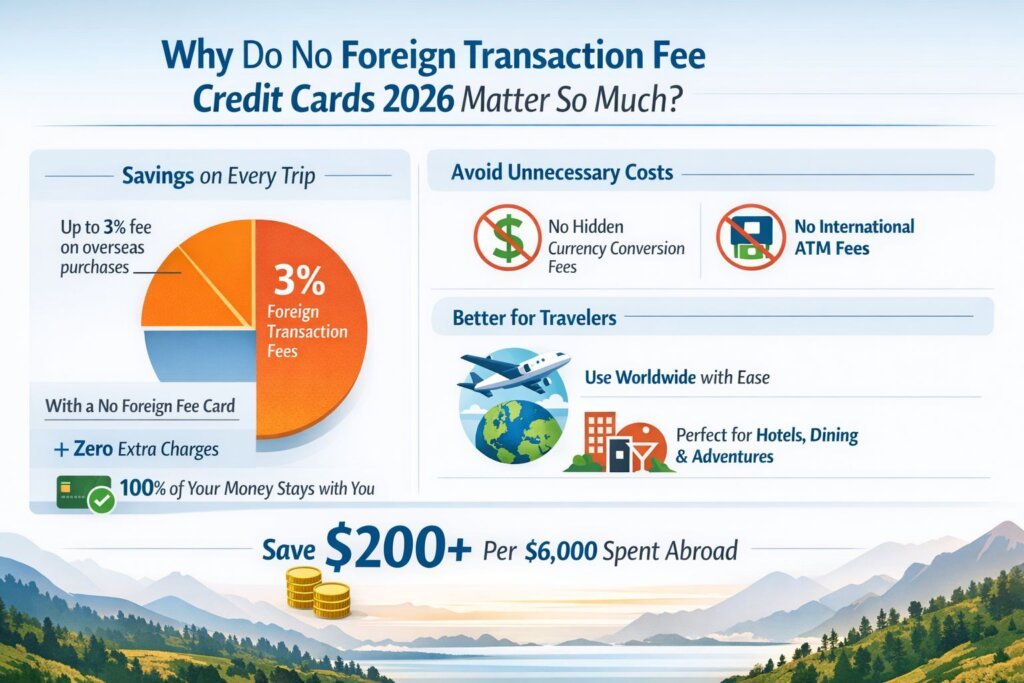
If a traveler spends even $5,000 abroad each year, avoiding a 3% foreign transaction fee can save about $150 before rewards. Those savings are often the difference between a card that looks expensive on paper and one that easily pays for itself.
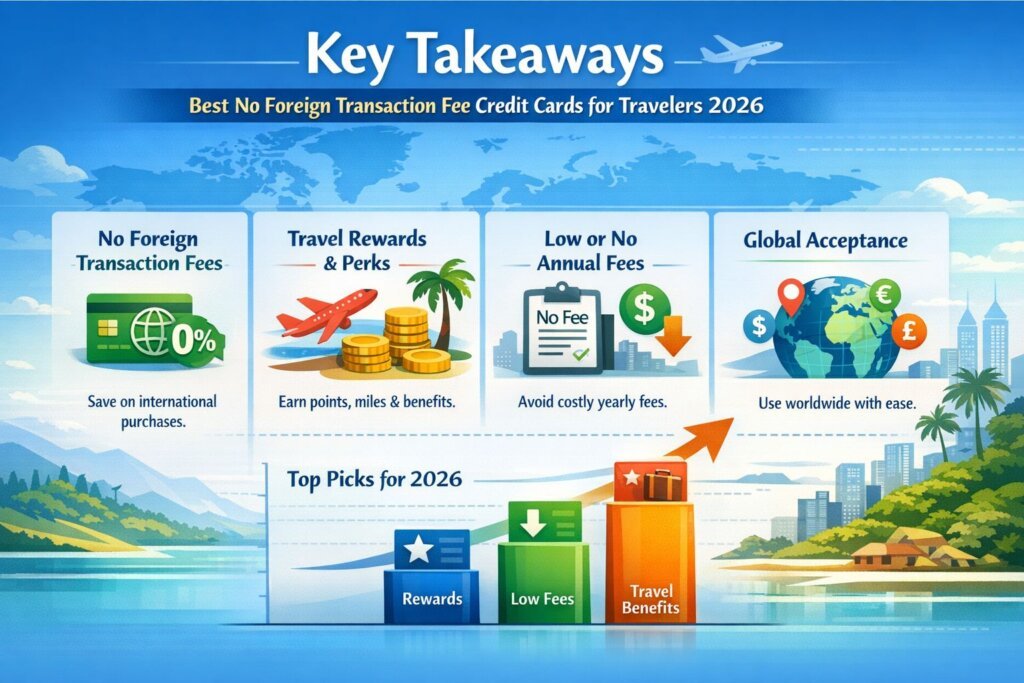
Key Takeaways
A typical foreign transaction fee is 3%, which means $30 per $1,000 spent abroad.
The best cards for international travelers are not always the best for domestic spending.
Capital One Venture X is one of the strongest all-around picks for frequent travelers who want lounge access.
You may be interested
Chase Sapphire Preferred remains a practical middle-ground card for travelers who want transferable points and primary car rental coverage.
Wells Fargo Autograph and Capital One SavorOne are strong $0 annual fee options for travelers who still want no FX fees.
Bilt Mastercard is unusually useful for travelers who value transfer partners and want no annual fee.
Primary rental car coverage matters more on overseas trips than many travelers expect. For more details, see this rental car insurance guide.
Dynamic currency conversion is a common mistake. Always choose to pay in the local currency, not U.S. dollars.
Travelers who earn transferable points should prioritize cards with good points transfer partners, not just high headline multipliers.
Welcome offers can outweigh annual fees in year one, but long-term value depends on actual travel habits and redemption skill.



Why do no foreign transaction fee credit cards matter so much in 2026?
They matter because most travel cards without this feature quietly add about 3% to every overseas purchase. That fee reduces the value of any rewards earned and can erase the benefit of an otherwise decent card.
For international travelers, the math is simple:
$1,000 abroad = about $30 in foreign transaction fees
$3,000 abroad = about $90
$5,000 abroad = about $150
$10,000 abroad = about $300
That is the baseline savings before counting points, miles, statement credits, lounge access, or insurance benefits.
Quick example
A traveler spends $5,000 abroad on a card with no FX fee:
Avoided FX fees: $150
Rewards earned on a 2x card: roughly 10,000 points/miles
If those rewards are redeemed well through transfer partners, the value can materially exceed cash back
Using the article’s example framework:
Chase Sapphire Preferred on $5,000 abroad
FX savings: $150
Rewards: 15,000 Ultimate Rewards points
Assuming 2.0 cents per point (CPP) through strong transfer partner use, value = $300
Less $95 annual fee
Estimated net value: $355
That valuation assumes the traveler can use Chase points effectively with partner airlines or hotel partners. If points are cashed out at a lower rate, the value drops.
Rule of thumb: If overseas spend is at least $3,000 per year, a no-FX-fee card is usually the default choice, even before considering perks.
Common mistake
The most common mistake is paying in U.S. dollars at the terminal or checkout screen. That practice is called dynamic currency conversion, and experts regularly warn that it can produce a worse exchange rate than simply paying in local currency.
Which no foreign transaction fee credit cards 2026 are the best overall?
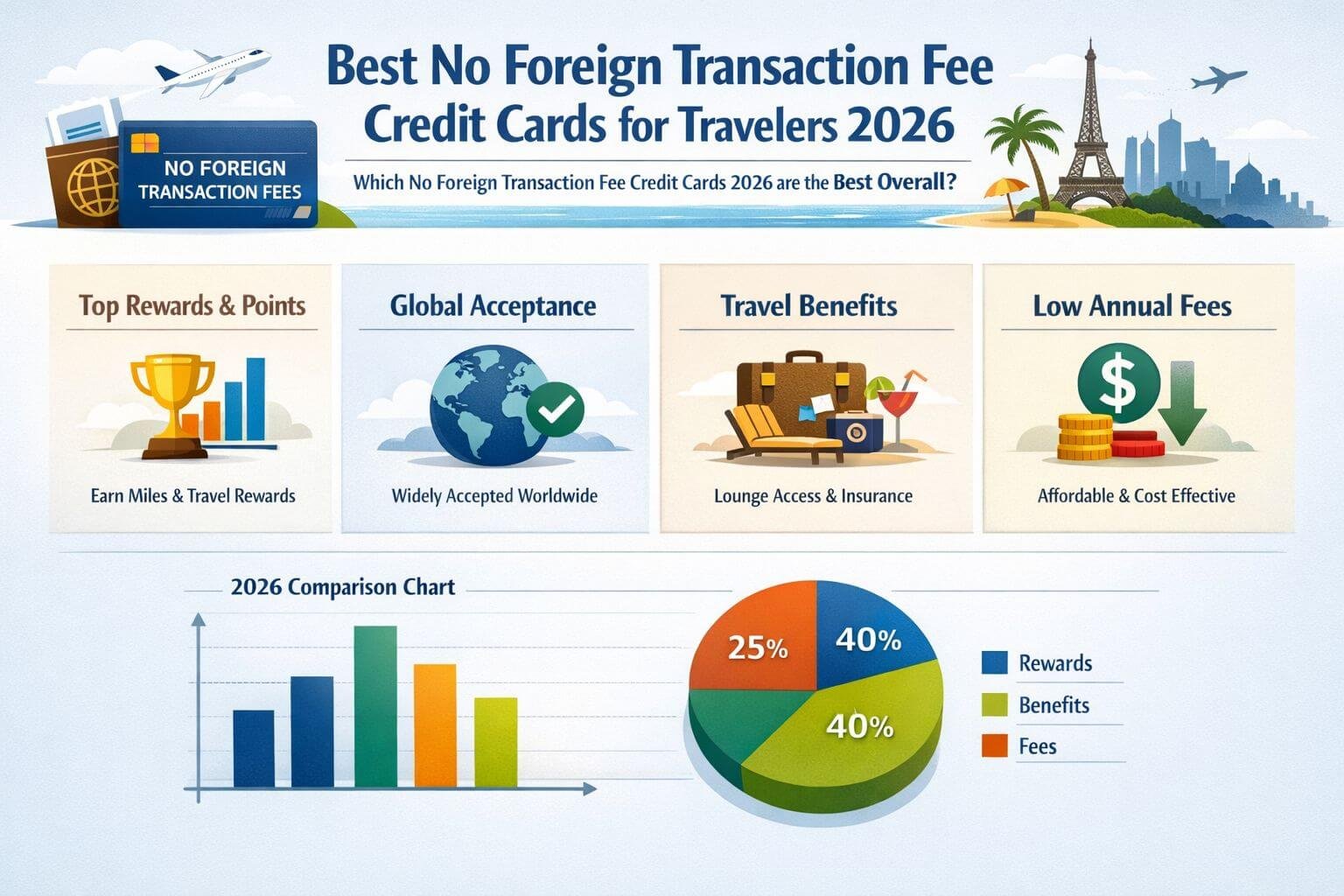
The best overall cards are those that combine no foreign transaction fees with useful rewards, broad acceptance, and traveler-friendly perks. For most readers, the top tier is built around Capital One Venture X, Capital One Venture Rewards, Chase Sapphire Preferred, Chase Sapphire Reserve, and Bilt Mastercard.
Top 12 cards ranked for travelers
| # | Card | Annual Fee | Why It Stands Out |
|---|---|---|---|
| 1 | Capital One Venture X Rewards | $395 |
Lounge accessNo FX fees Strong travel credits, 2× on general spend |
| 2 | Chase Sapphire Preferred | $95 |
Transfer pointsPrimary CDW Balanced fee/perk ratio |
| 3 | Capital One Venture Rewards | $95 |
2× earning Solid welcome offer, easy for beginners |
| 4 | Chase Sapphire Reserve | $795 |
Lounge accessTravel perks Strong point flexibility |
| 5 | Bilt Mastercard | $0 |
Transfer partnersNo FX fees No annual fee — rare combo |
| 6 | Wells Fargo Autograph | $0 |
TravelDining Good category bonuses, no annual fee |
| 7 | Capital One SavorOne Rewards | $0 |
No FX fees Strong food & entertainment earnings |
| 8 | Bank of America Premium Rewards | $95 |
No FX fees Best for BofA Preferred Rewards members |
| 9 | Capital One VentureOne | $0 |
No FX fees Entry-level travel card, no annual fee |
| 10 | Discover it Miles | $0 |
No annual fee — weaker overseas acceptance in some markets |
| 11 | U.S. Bank Altitude Connect | $0 or varies |
Useful perks, depends on current product terms |
| 12 | Marriott Bonvoy Boundless / similar hotel cards | Varies |
Hotel perks Better if hotel rewards matter more than flexible points |
Best for / Not for
Best for:
Travelers to Europe, Asia, and the Caribbean
People who want to maximize points
Renters who value primary car rental coverage
Travelers who use airport lounges often
Not for:
People who never travel abroad
Cardholders who carry balances and pay interest
Travelers who redeem points poorly and get low CPP
If the goal is flexibility first, this article pairs well with how to choose the best travel credit card for you and our breakdown of top travel cards for transfer power.
Which no foreign transaction fee credit cards 2026 fit each traveler type?
The right card depends more on travel style than on marketing labels. A family heading to the Caribbean needs different features than a traveler positioning to Asia for premium cabin awards.
Best for the international beginner: Capital One Venture Rewards
Choose Capital One Venture Rewards if the goal is simplicity. It earns a flat 2x miles on purchases, has no foreign transaction fees, and avoids the complexity of category management.
Why it works:
Simple earning on all spend
Good welcome offer in 2026 context
Miles can be used as travel eraser value or transferred to partners
Easier entry point than some premium cards
Best for frequent Europe travel: Chase Sapphire Preferred
Choose Chase Sapphire Preferred if the traveler wants a lower annual fee, strong transfer options, and primary rental coverage. Europe trips often involve rail, rental cars, and a mix of hotels and flights, so flexibility matters.
Why it works:
Strong Chase points ecosystem
Useful travel protections
Primary CDW is particularly relevant for overseas rentals
Good fit for travelers booking through partner airlines and Hyatt
For readers building a redemption plan, start with this guide to credit card transfer partners.
Best for Asia business travel: Capital One Venture X
Choose Capital One Venture X if lounge access and premium travel perks matter most. Asia itineraries often involve long-haul flights, overnight layovers, and airport time, so lounge benefits can justify the annual fee.
Why it works:
Lounge access can materially improve long-haul trips
2x on general purchases keeps earning simple
Strong travel portal earning for hotels and rental cars
Pairs well with Capital One miles transfer partners
Best for family vacation travel: Wells Fargo Autograph or Sapphire Preferred
Choose Wells Fargo Autograph if the priority is no annual fee and broad travel/dining value. Choose Sapphire Preferred if rental coverage and transferable points matter more.
Family travel decision rule:
Lower fee and simple setup: Wells Fargo Autograph
Better protections and long-term points strategy: Chase Sapphire Preferred
Best no annual fee winner: Bilt Mastercard
Bilt stands out because it combines $0 annual fee, no foreign transaction fees, and access to several valuable transfer partners. That makes it unusually strong for a traveler who wants flexible points without paying to keep the card.
Edge case: Discover abroad
Discover can be useful in some destinations, but international acceptance is less reliable than Visa or Mastercard. For Europe and much of Asia, a Discover card should usually be a backup rather than the only card.
What should travelers compare beyond the no-FX feature?
The no-FX feature is only the starting point. The better comparison is annual value, protections, and whether the rewards currency helps book the trips the traveler actually takes.
Compare these five items
Rewards type
Cash back is simple
Transferable points are usually better for premium cabin awards and high-value hotel bookings
Annual fee
A $95 fee can be justified easily
A $395 or $795 fee needs real use of lounges, credits, or insurance perks
Rental car coverage
Primary CDW is better than secondary for many international rentals
See the full credit card CDW vs auto policy guide
Airport lounge access
Most useful on long-haul and multi-segment trips
Less important for one short annual vacation
Transfer partner quality
The best currencies give access to alliance partners, stopovers, and occasional sweet spots
Transfer bonuses can improve value, but only with confirmed award availability
For current strategy around moving points, see transfer bonuses and this example of a live partner move in the Chase to Avios transfer bonus guide.
Common pitfall
A traveler may overpay for lounge access they barely use. If there are only one or two international trips a year, a lower-fee card plus occasional lounge day passes can be better math.
How do you calculate the annual value on no foreign transaction fee credit cards in 2026?
Calculate the annual value by adding FX fee savings, points value, and perks actually used, then subtract the annual fee. This gives a clearer answer than looking at reward rates alone.
Simple formula
Annual value = FX savings + rewards earned + perks used – annual fee
Example 1: Chase Sapphire Preferred
Assumptions:
$5,000 foreign spend
3x on travel and dining blended average on that spend
Value of Ultimate Rewards points at 2.0 CPP through transfer partners
Calculation:
FX savings: $150
Rewards: 15,000 points = about $300
Annual fee: -$95
Estimated net annual value: $355
Example 2: Capital One Venture Rewards
Assumptions:
$5,000 foreign spend
2x miles on all spend
Miles valued at 1.7 CPP with strong transfer use
Calculation:
FX savings: $150
Rewards: 10,000 miles = about $170
Annual fee: -$95
Estimated net annual value: $225
Example 3: Wells Fargo Autograph
Assumptions:
$5,000 foreign spend
blended 3x in common travel categories
points valued conservatively at 1.0 to 1.5 CPP depending on redemption path
Calculation:
FX savings: $150
Rewards: about 15,000 points
Annual fee: $0
Estimated net value: $300 or more, depending on redemption quality
Decision framework
Choose:
$0 annual fee card if international spend is modest and lounge access does not matter
$95 card if you want stronger protections and better transfer options
Premium card if you will use lounges, credits, and premium-trip protections several times a year
Are premium cards with lounge access worth it for international travelers?
Yes, premium cards can be worth it, but only if the traveler uses the perks enough to offset the annual fee. Lounge access, statement credits, and stronger travel protections create real value on frequent international trips.
Premium cards that stand out
Capital One Venture X
Good all-around premium value
Lounge access is a major selling point
Easier to justify than some ultra-premium cards for travelers who use the travel credit and airport perks consistently
Very strong for travelers who value the Chase ecosystem
Better fit for someone already deep in Chase points
Higher fee means it needs more active use
American Express premium options
Some Amex products waive foreign transaction fees, but acceptance abroad can be less consistent than Visa or Mastercard in certain countries
Best if the traveler already earns significant Amex points and understands transfer partner value
For lounge-heavy travelers, see Global Entry credit cards for 2026 and maximizing lounge access benefits.
Not for
Premium cards are usually not worth it for:
One-trip-a-year travelers
Travelers who do not use portal credits
People who prefer simple cash back and no annual fee
How should points travelers use these cards with transfer partners?
The best strategy is to pair no-FX-fee spending with transferable points that can be moved only when award availability is confirmed. That protects flexibility and reduces the risk of devaluation.
Step-by-step guide
Use a no-FX-fee card abroad
Avoid the immediate 3% loss
Accumulate flexible rewards
Chase points, Amex points, Capital One miles, Citi points, and Bilt points all have use cases
Search partner airlines first
Look for saver-level pricing, alliance partner access, and lower surcharges and fees
Transfer only after confirming seats
Transfers are often one-way and irreversible
Watch for transfer bonuses
These can improve travel rewards math, but only when the underlying redemption is strong
Real-world booking example
A traveler spends abroad on a Sapphire Preferred, earns Chase points, then waits for a transfer bonus to Avios or Aeroplan. If Business Class deals are available at good rates, the same overseas spend that saved on FX fees can also count toward a premium cabin award.
That is where no-FX-fee cards become more than fee-avoidance tools. They become the front end of a booking strategy.
Useful follow-up reading:
What mistakes should travelers avoid when choosing no foreign transaction fee credit cards in 2026?
Most mistakes come from focusing on a single feature while ignoring the full use case. The best card on a generic list may be the wrong card for a specific trip pattern.
Common mistakes
Choosing a card only for the welcome offer
Great in year one, weak in year two if benefits go unused
Also avoid bonus mistakes covered in welcome bonus clawbacks to avoid
Ignoring acceptance overseas
Visa and Mastercard are generally safer than Discover abroad
Amex can be excellent, but not universal
Overvaluing points
If transferable points are redeemed poorly, CPP can fall sharply
Paying in USD abroad
Dynamic currency conversion often costs more than local-currency billing.
Ignoring downgrade paths
A premium card may be worth opening for the first year and downgrading later
Quick rule
Choose the card that fits:
the number of international trips,
the need for lounge access,
whether rental cars are part of the trip,
and whether the traveler can actually use transfer partners well.
Conclusion
The best no foreign transaction fee credit cards 2026 do two jobs at once: they stop the automatic 3% loss on overseas purchases, and they create useful travel value through rewards, protections, and flexibility.
For most travelers:
Capital One Venture X is the best premium all-around pick
Chase Sapphire Preferred is the best balanced mid-tier choice
Capital One Venture Rewards is the best simple travel card
Bilt Mastercard, Wells Fargo Autograph, and Capital One SavorOne are the strongest no-annual-fee options
Next steps
Estimate annual foreign spend.
Decide whether lounge access and primary rental coverage matter.
Pick a rewards currency with transfer partners you will actually use.
Check current welcome offers and application rules.
Before transferring points, confirm award availability and compare surcharges.
Travelers who want the best long-term value should start with the card that matches their trip pattern, then build around a flexible points strategy. That approach usually beats chasing the highest advertised bonus without a redemption plan.
FAQ
What is a foreign transaction fee on a credit card?
A foreign transaction fee is a surcharge, often around 3%, added when a purchase is processed outside the United States or in a foreign currency.
How much can a no foreign transaction fee card save?
A no-FX-fee card can save about $30 per $1,000 spent abroad if the alternative card charges a 3% fee.
Is a no annual fee card good enough for international travel?
Yes, a no annual fee card can be enough for many travelers, especially if the goal is simply avoiding FX fees and earning basic rewards.
Which network is best for overseas acceptance?
Visa and Mastercard are usually the safest choices for broad international acceptance.
Is Chase Sapphire Preferred good for Europe travel?
Yes, Chase Sapphire Preferred is one of the best Europe-friendly options because it has no foreign transaction fees, strong travel protections, and useful transfer partners.
Is Capital One Venture X worth it for one international trip a year?
Usually only if that one trip is large enough for the lounge access, travel credit, and other benefits to offset the annual fee.
Do debit cards work better than credit cards abroad?
Debit cards can be useful for ATM access, but credit cards usually provide better rewards and purchase protections for everyday travel spending.
Should travelers choose local currency or U.S. dollars abroad?
Travelers should usually choose the local currency to avoid dynamic currency conversion markups.
Are transferable points better than cash back for international travel?
Transferable points are usually better for travelers booking Business Class deals, Premium Cabin awards, or high-value hotel stays. Cash back is better for simplicity.
Can a welcome offer outweigh the annual fee?
Yes, especially in year one, but long-term value depends on actual use of the card’s benefits and points ecosystem.





Content on Award Travel Hub is independently created by Award Travel Hub Editorial Desk and, where noted, reviewed by Award Travel Hub Review Desk. Some pages may contain affiliate links, but compensation does not determine our coverage, opinions, or methodology.