
Last Updated: August 6, 2026
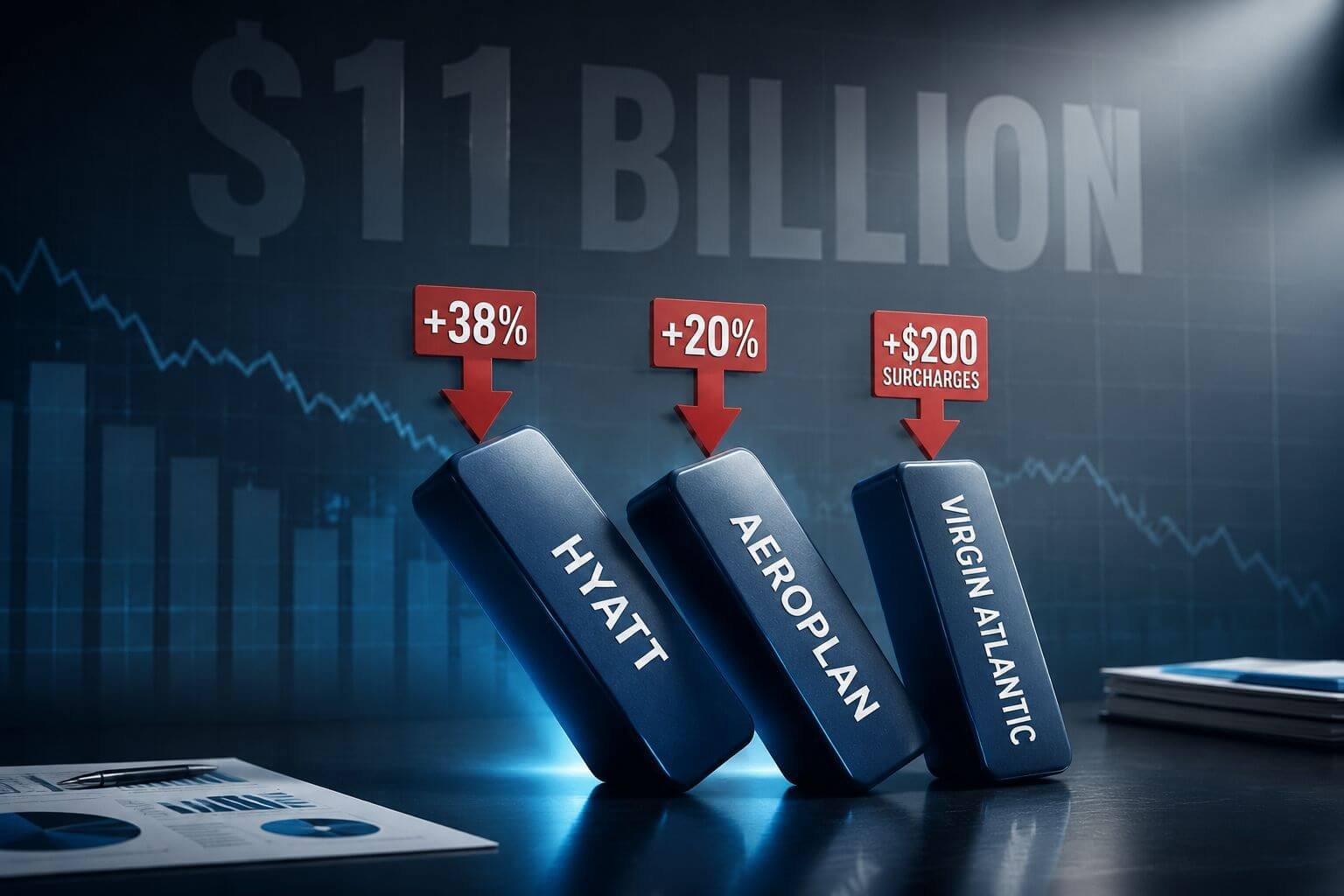
Hotel chains and airlines are sitting on more than $11 billion in outstanding points liability — and they have every incentive to shrink that number by making your points buy less. That is the blunt reason 2026 is shaping up to be one of the worst years for loyalty devaluations in a decade. Hyatt has already moved. Aeroplan moved June 1. Virgin Atlantic, Avianca, and Hilton are quietly raising the cost of redemptions without press releases.
This guide is the practical answer to how to protect points from devaluation 2026: a 5-step defense plan you can run in an afternoon. We will cover what to audit, which currencies to hold, when to transfer speculatively, when to redeem now, and how to rebuild your earning mix so the next round of cuts hurts less.
Key Takeaways
Treat hotel and airline points as depreciating assets. Every quarter you hold them, they typically lose real value against the cash rate they were earned to match.
Transferable currencies (Amex, Chase, Capital One, Citi, Bilt) are your hedge. Keep balances at the bank level until you have a confirmed booking in mind.
Speculative transfers only make sense for short, well-telegraphed devaluation windows — and only into programs with reasonable redemption options across multiple partners.
Hyatt (May 2026), Aeroplan (June 2026), and Virgin Atlantic surcharges are the three biggest 2026 hits to plan around.
Set use-by triggers: if a balance has not been redeemed within 12 months and is in a high-risk program, redeem it or stop earning into it.
Why 2026 Is a Heavy Devaluation Year (Programs to Watch)
The math behind 2026’s devaluations is not mysterious. Hotel chains alone disclose roughly $11 billion in outstanding points liability — Marriott near $4 billion, Hilton near $2.9 billion, Wyndham at $1.5 billion, with IHG, Hyatt, Choice, and Accor adding billions more. Airlines do not always publish the figure, but the dynamic is the same: programs printed too many points during pandemic-era promos, and now they need to dilute them.
You may be interested



Three forces are driving the 2026 wave:
Direct award chart resets (Hyatt’s five-tier chart, Aeroplan’s June 1 chart bump).
Stealth dynamic pricing that quietly pushes per-night and per-seat costs up without a formal announcement (Hilton is the clearest example).
Surcharge inflation on partner award tickets — Virgin Atlantic, Lufthansa, and several others have raised carrier-imposed fees on transatlantic redemptions twice in under a year.
If you want a fuller picture of how this is reshaping booking strategy, the 8 award travel trends shaping 2026 breakdown is a useful companion read.
The mental model: points are inventory, not savings
The single biggest mindset shift: stop treating your Hyatt, Marriott, or Aeroplan balance like a savings account. It is inventory in a warehouse the program controls — and management can mark down your inventory at any time. Your job is to turn that inventory into confirmed bookings before the markdown hits.
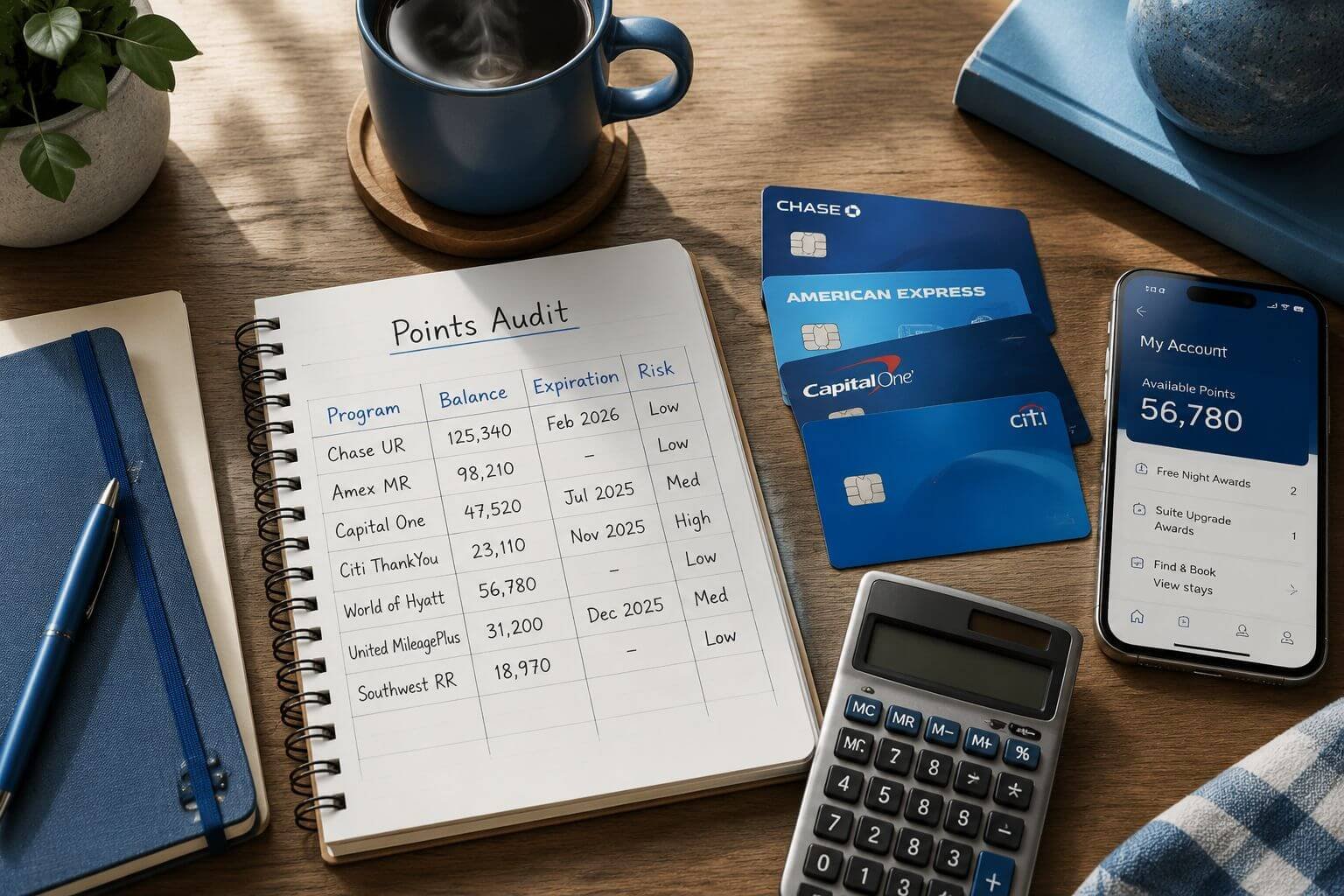
Step 1: Audit Where Your Balances Currently Sit
Before you can defend points, you need to know exactly where they live and how exposed each balance is. This takes about 30 minutes.
What to flag
Any balance over 60,000 points in a program with an announced devaluation date.
Any balance in a program where you no longer earn actively — it will only lose value from here.
Any program with an expiration clock that you have not touched in 12+ months. The hotel points expiration guide lays out the specific reset rules by chain.
If you are not sure how to value each balance, run a quick check using the cents per point math walkthrough. A balance worth 1.2 CPP today may be worth 0.9 CPP after a chart change — that is the dollar figure you are actually defending.
Step 2: Lean on Transferable Currencies, Not Program Points
The single best structural defense against devaluation is to hold points at the bank level, not at the airline or hotel level, until you are ready to book.
Transferable points from Chase Ultimate Rewards, Amex Membership Rewards, Capital One Miles, Citi ThankYou, and Bilt Rewards give you optionality. If Aeroplan devalues, you transfer to Air Canada’s competitors instead. If Hyatt raises a category, you pivot to a different chain or redeem through a partner.
Why bank-level points win in 2026
They cannot be devalued unilaterally — a transfer ratio cut is possible but rare, and usually telegraphed.
They access multiple partners, so a single program devaluation does not strand you.
They benefit from transfer bonuses, which effectively reverse devaluation cycles. The stacking transfer bonuses guide shows how 25–30% bonuses can recover most of a recent chart hike.
Quick comparison
If you are still deciding which ecosystem to anchor on, the best transferable points programs guide and the Chase vs Amex vs Citi vs Capital One comparison are the cleanest place to start.
Rule of thumb: Do not transfer points to a loyalty program until you have an award seat or room on hold, or a clear booking plan within 7 days.
One important caveat
Cash back is not a bad answer in 2026. For non-bonused everyday spend, a 2% cash-back card on $50,000 of spend returns $1,000 — often more than the redemption value of 1x hotel points in a dynamic-pricing program. The math has shifted. Reserve points-earning cards for bonused categories and travel spend, and let cash back handle the rest.
Step 3: Speculative Transfers vs Booking First — When Each Wins
A speculative transfer means moving points from a bank program into an airline or hotel program before you have a confirmed booking, betting that the current rate is about to get worse.
This is the most misunderstood defense in the 2026 toolkit. Done right, it locks in pre-devaluation pricing. Done wrong, it strands points in a program you cannot easily use.
When speculative transfers make sense
A specific devaluation date is announced and is within 30 days.
The destination program has broad partner utility (e.g., Avios, Aeroplan, Flying Blue) so unused miles still have a path.
You have a concrete trip window in mind, even if the exact dates are not booked.
The program does not have aggressive expiration rules that punish a long hold.
When to book first instead
The program uses dynamic pricing with no published chart. Speculative transfers into Hilton, Marriott, or United have no guaranteed upside because there is no fixed rate to lock in.
You do not have flexible travel dates to absorb low award availability.
You are transferring to a program with a single useful partner (e.g., Capital One to Emirates is much riskier post-devaluation).
Reverse transfers: the safety net most people misremember
None of the major U.S. transferable programs offer true reverse transfers back to the bank for free. Plan as if every transfer is one-way. That is why we anchor the rule to “have a plan within 7 days.”
Speculative transfer decision framework
<code>Is the devaluation date confirmed within 30 days?
├── No → Do not transfer. Hold at bank level.
└── Yes → Does the receiving program have ≥3 useful partners?
    ├── No → Book the award first, then transfer.
    └── Yes → Do you have a trip window within 12 months?
        ├── No → Hold at bank level.
        └── Yes → Speculative transfer is reasonable.
</code>
Step 4: Set Use-By Triggers for High-Risk Balances
Most points get devalued because they sit. A use-by trigger forces a decision before that happens.

Recommended triggers
6 months: Any balance in a program that has announced a devaluation. Redeem or transfer plan must exist.
12 months: Any orphan balance in a program you no longer earn into. Burn it on the best available redemption, even if not “optimal.”
18 months: Any balance approaching an expiration window. Trigger a qualifying activity (small redemption, dining transfer, shopping portal) or redeem outright.
24 months: Hard stop. If you have not used it, the points are functionally lost — assume zero value and plan accordingly.
The “good enough” redemption
Award travelers waste enormous value chasing peak redemptions that never materialize. If you have 60,000 Aeroplan miles and no realistic shot at the business-class sweet spot before June 1, a 35,000-mile economy flight at solid value is better than watching the chart change next week.
Use the redeeming points for flights guide for solid-but-not-perfect redemptions, and the hotel loyalty strategy after devaluation playbook for hotel balances.
Worked example: 80,000 stranded Hyatt points
You earned them on credit card spend, you do not stay at Hyatts often, and the May 2026 chart raised Cat 7 by 17% and Cat 8 by up to 38%.
Option A: Book a Cat 4 ($15K points, 2 nights) at a property near a planned trip → ~$280 value, points gone in a useful way.
Option B: Hold and hope for a future trip → likely lose 15–30% real value over 12 months.
Option C: Transfer to Hyatt only if you have a confirmed Cat 1–4 booking in mind.
Option A wins for most readers. The Hyatt Award Chart 2026 Survival Guide has the full pre/post-May pricing breakdown.
Step 5: Build a Devaluation-Resistant Earning Mix Going Forward
Defense is necessary, but the real long-term answer is to stop overearning into vulnerable programs.
Cut the cards you no longer need
If you are sitting on a co-branded card whose program just devalued, run the downgrade or cancel decision guide before renewal. Many premium hotel and airline cards are no longer worth their annual fees in 2026 — and downgrading lets you keep the balance while you redeem it.
Rebuild around 2–3 anchor currencies
Pick two or three transferable programs and concentrate earning there. Spreading thin across five bank programs leaves you with balances too small to redeem efficiently. The classic anchor pairs are Chase + Amex, Capital One + Citi, or Chase + Bilt for renters.
Three Devaluations to Plan Around in the Next 12 Months
Here are the three biggest known 2026 hits and the specific defensive move for each:
1. Hyatt’s five-tier award chart (effective May 7–20, 2026)
What changed: Three-tier (Off-Peak/Standard/Peak) → five-tier (Lowest/Low/Moderate/Upper/Top). Peak Cat 8 jumps from 45,000 to up to 75,000 points (+67%). 136 hotels changed categories on May 20, with 82% moving up.
Defense: Book any locked-in Hyatt stay through 2027 now if possible. Lean on Cat 1–4 properties where the new chart still offers strong value. See the Hyatt all-inclusive sweet spots for the best post-change values.
2. Aeroplan award chart adjustments (effective June 1, 2026)
What changed: Most awards up 10–20%, some routes up to 33%. First class North America ↔ Atlantic zones (4,001–6,000 miles) moved from 100,000 to 120,000 points (+20%).
Defense: Aeroplan is still one of the best Star Alliance booking engines. Top up via Rove Miles’ 25% Aeroplan transfer bonus if available, and focus on short-haul partner redemptions where increases were smaller. Full breakdown in the Aeroplan 2026 changes guide.
3. Virgin Atlantic surcharge inflation
What changed: Upper Class transatlantic awards now carry roughly $700 one-way in carrier surcharges to the UK — over $200 higher than a year ago. Avianca Lifemiles also raised U.S.–Europe business class from 80,000 to 92,400 miles one-way.
Defense: Pivot to lower-surcharge partners. Air France/KLM via Flying Blue (with the post-devaluation strategy) and Aer Lingus via Avios remain better surcharge profiles for Europe. For Asia, see best points for Japan business class.
Conclusion: Your Defense Plan This Week
The unsexy truth about how to protect points from devaluation 2026 is that it is mostly bookkeeping, not strategy. Programs will keep cutting. Your job is to keep your balances small, your currencies flexible, and your bookings ahead of the next announcement.
Run this checklist in the next 7 days:
✅ Audit every points balance and flag high-risk programs.
✅ Move new earning away from programs that devalued in 2026.
✅ Set use-by triggers on every legacy program balance.
✅ Identify one Hyatt, one Aeroplan, and one airline-surcharge-exposed redemption to lock in.
✅ Rebalance toward 2–3 transferable currencies as your earning anchors.
The points you redeem at fair value this year will outperform the points you “save” for 2027. Treat your balances accordingly.


Content on Award Travel Hub is independently created by Award Travel Hub Editorial Desk and, where noted, reviewed by Award Travel Hub Review Desk. Some pages may contain affiliate links, but compensation does not determine our coverage, opinions, or methodology.