

Last updated: November 25, 2026
Quick answer: A credit card travel bonus usually requires a set amount of spending within about three months of approval. Holiday shopping can cover that spend if the card is approved before major purchases and the deadline is tracked from the account-opening date. Only apply if the required spend fits purchases you already plan to make.
Key Takeaways
- The spending clock generally starts at approval or account opening, not when the card arrives.
- Many mainstream offers allow three months, but some premium offers allow six. The application page controls.
- Deloitte estimates average household holiday spending at $1,654 in 2026, which covers lower thresholds but not every offer.
- Cash advances, balance transfers, and some gift card purchases often do not count.
- Returns reduce qualifying spend, so January refunds can pull an account back under the threshold.
- Never raise spending beyond budget just to chase points.
How Welcome Bonus Minimum Spend Works
A minimum spend requirement is the amount of eligible purchases an issuer requires, within a fixed window, before it awards the welcome bonus. The window is typically three months, and the clock generally starts on approval, not on delivery of the physical card.
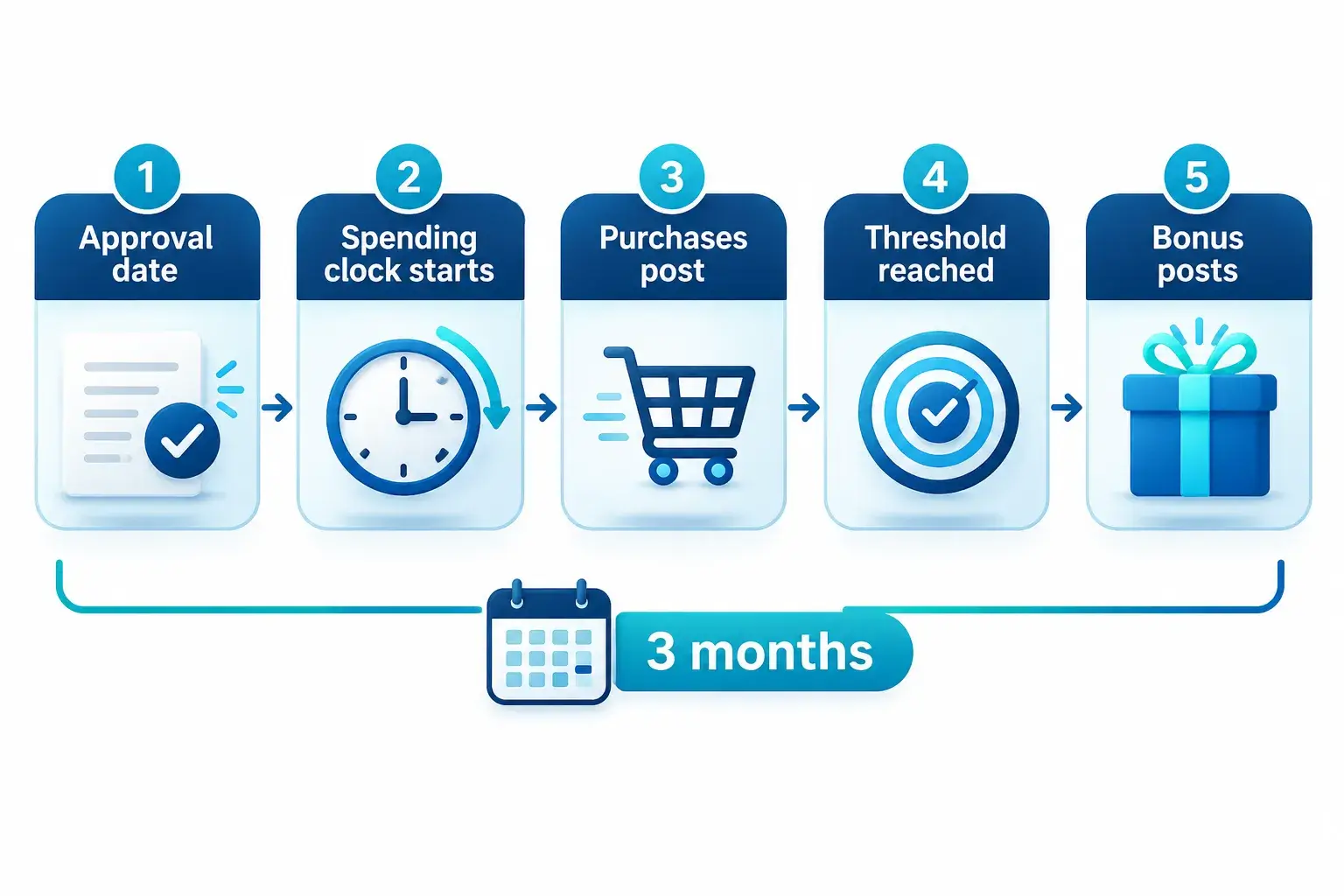
Current examples show the range. Verify each on the issuer’s page before applying, because offers change and some are targeted:
Decision rule: Compare the spend requirement with your realistic purchases in the window, not with the headline bonus. A 75,000-point offer is worthless if reaching $5,000 means buying things you would not otherwise buy.
For the value side, see this guide to how to maximize credit card sign-up bonus rewards. A rough estimate: at 1.5 to 2 cents per point, 75,000 points is worth about $1,125 to $1,500, though results depend on award availability and your redemption.
How much spend is reasonable
Deloitte’s 2026 survey puts average household holiday spending at $1,654, with about $988 on retail goods. That alone covers a $1,000 to $2,000 threshold only with some help from regular bills and groceries. A $4,000 to $5,000 requirement generally needs holiday spend plus normal monthly expenses.
Why the Holidays Are the Best Time to Apply
Holiday timing works because spending is concentrated and predictable. Adobe forecasts $275.1 billion in U.S. online sales from November 1 through December 31, with November alone at $145.1 billion, and Cyber Monday falling on November 30, 2026.
You may be interested



For a cardholder with an active spending window, that is the point of highest natural spend. Adobe projects $47.5 billion in Cyber Week online spending, including roughly $12.9 billion on Black Friday and $15.1 billion on Cyber Monday.
Best for: Applicants who already budget for gifts, travel, and seasonal bills and want the bonus without extra spending.
Not for: Anyone who would need to carry a balance, or who has a credit application pending elsewhere that could be affected by a new inquiry.
The timing rule
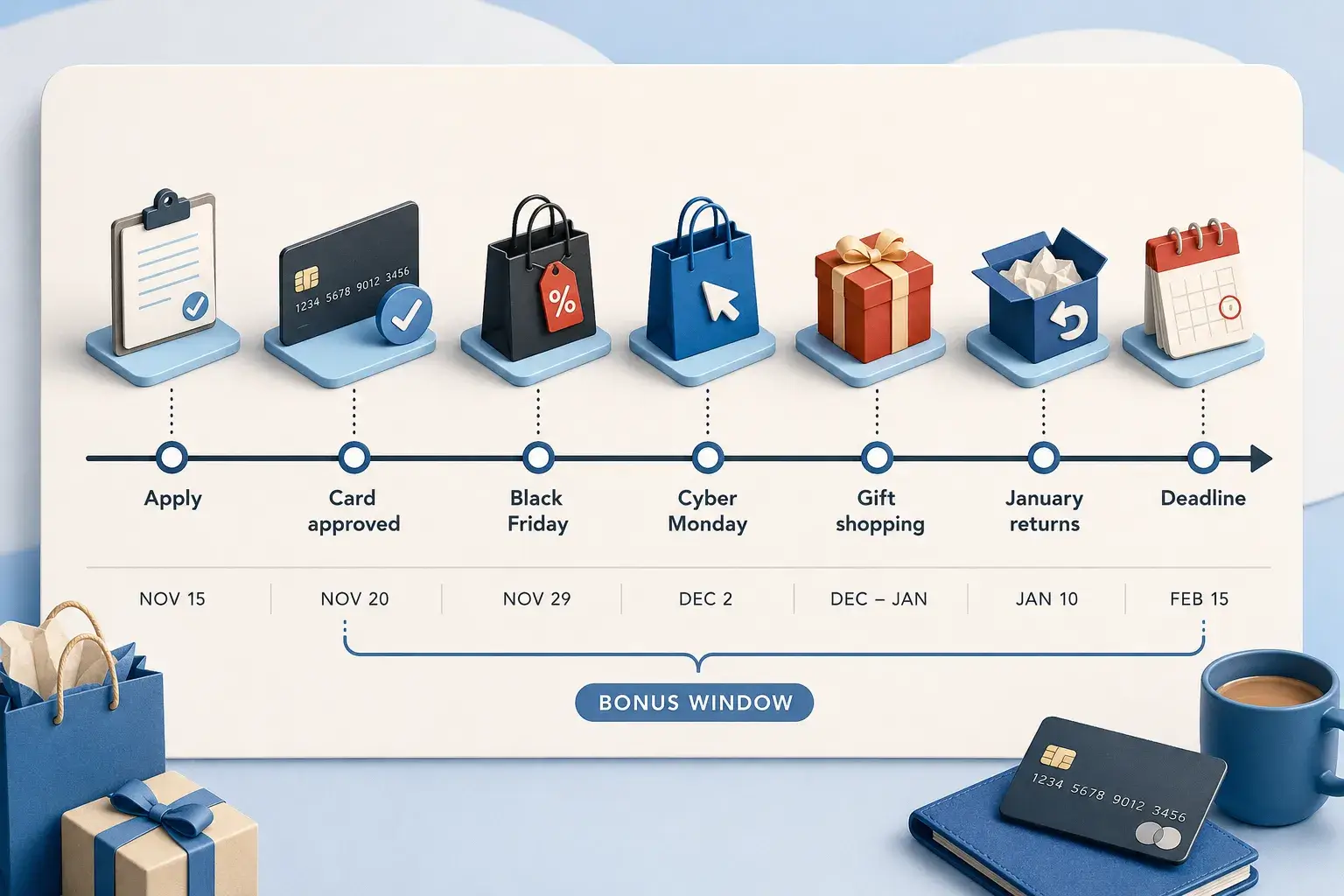
Apply early enough that the card is approved and usable before Black Friday, but not so early that the window closes before major planned purchases. A three-month offer opened on November 16 would typically end around mid-February 2027, subject to issuer terms.
That timing has a useful side effect: it captures holiday gifts, December travel bookings, and January bills in one window. Applying in late December, by contrast, misses most holiday spend.
Related guidance on card choice is in Best Travel Credit Card 2026: $0, $95, and Premium Picks. Lower spend thresholds are often available on no-annual-fee options, covered in Best Travel Credit Cards No Annual 2026.
Holiday Purchases That Count Toward Your Bonus
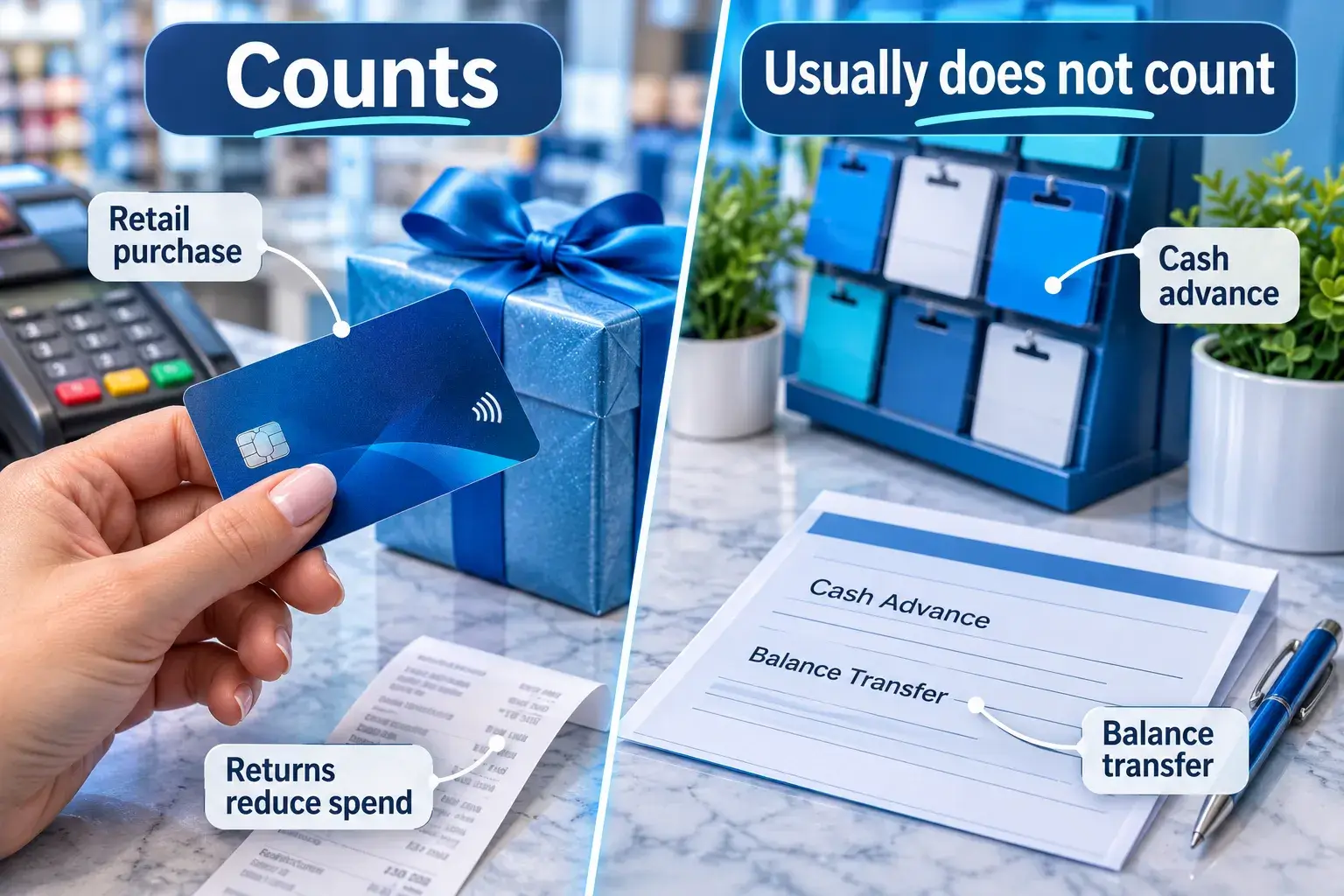
Ordinary retail purchases made with the new card generally count. That includes gifts, electronics, apparel, groceries, flights, hotels, and most online orders, as long as the transaction posts as a purchase.
Common qualifying spending:
- Gifts and décor from retailers, online or in store
- Holiday flights, hotels, and rental cars
- Groceries and holiday meals
- Utilities, phone, and insurance bills paid by card where accepted
- Annual subscriptions and memberships you already planned to renew
Bills: Paying recurring bills works if the biller accepts cards without a fee. A processing fee of 2% to 3% can wipe out the bonus value on smaller offers, so check first.
Quick example: A household plans $1,200 in gifts, $900 in December travel, and $600 per month in groceries and bills. Over three months that is about $3,900. A $4,000 offer is reachable with minor shifting of normal spend. A $5,000 offer would require roughly $1,100 more, which is a signal to consider a lower threshold card.
Pending and posted: Purchases must post to the account. Orders placed just before the deadline may not post in time, so leave a buffer of several days.
Purchases That Usually Do Not Count
Cash advances and balance transfers typically do not count toward minimum spend, and neither do fees, interest, or most convenience checks. Gift cards and some money-like purchases are treated inconsistently, so verify before relying on them.
Manufactured spending, meaning buying cash-like products to hit the threshold, carries real risk. Issuers can exclude those transactions, deny the bonus, or close accounts. For most first-time applicants, the downside outweighs the benefit. Related reading: welcome bonus clawbacks and how to avoid them is covered within the sign-up bonus guide above, and the Credit Card Travel Bonus Guide explains the basics.
Edge case: Buying gift cards that are really holiday gifts you would give anyway is lower risk than buying them in bulk. If the issuer’s terms are unclear, ask before the purchase, not after.
How to Track Your Progress and Deadline
Record the approval date and the exact deadline the day you are approved. Experian recommends confirming the date with the issuer if the terms are unclear.
A simple tracking routine:
- Save the approval date, the spend target, and the deadline in a calendar with reminders at 30, 14, and 7 days out.
- Check the issuer’s bonus tracker in the app or account page, if one exists.
- Keep a running total in a spreadsheet, subtracting expected returns.
- Review the statement after each billing cycle to confirm purchases posted.
- Pad your total target by 10% to cover returns and posting delays.
Pending versus counted: An issuer tracker may lag by a few days. Do not assume a purchase counts until it appears as posted.
Decision rule: If you are less than 60% of the way to the target with 30 days left, identify planned purchases you can move to the card, such as insurance premiums, tuition where fees are not charged, or annual bills. If none exist, stop rather than spend to chase.
What happens if the deadline is missed? Generally the bonus is not awarded, and issuers rarely extend. Some will review a request, but there is no guarantee.
Mistakes That Can Cost You the Bonus
The most common failures are overbuying, ignoring returns, and misreading the deadline. Each can be avoided with a few checks before applying.
- Spending to chase points. Interest on a carried balance can exceed the bonus value. Pay the statement in full.
- Forgetting returns. Apparel, electronics, and duplicate gifts are often returned in January. The Points Guy notes that returned purchases reduce qualifying spend. Keep a cushion above the threshold.
- Counting from card arrival. The window typically starts at approval.
- Trusting third-party offers. Public and targeted offers differ, as with the Southwest and Marriott Bevy examples. The terms on your application page control.
- Applying for several cards at once. Multiple cards means multiple thresholds in one window. Unless total planned spend covers all of them, stagger applications. Also note issuer rules such as Chase’s 5/24 pattern can limit approvals.
- Poor fit. If you rarely travel, a flexible-points card may still work, but a cash back option may be better. See Credit Card Points Vs Cash Back 2026.
If the threshold is too high, consider a lower-spend card, such as the Southwest offers requiring $1,000 to $3,000 (verify the displayed terms), or earn through everyday spend instead. For comparisons, see Best Credit Card Welcome Bonuses October 2026: Ranked.
FAQ
Can holiday shopping meet a minimum spend requirement?
Yes, if the requirement is near your planned spend. Average household holiday spending of about $1,654 covers low thresholds, while $4,000 or more usually needs regular bills as well.
How long do I have to meet minimum spend?
Often three months from approval, though some offers allow six. Confirm on the application page.
Do balance transfers or cash advances count?
Generally no. They are not treated as purchases and may add fees.
What happens if I miss the deadline?
The bonus is usually forfeited. Contact the issuer, but extensions are not guaranteed.
Is a travel card worth it if I rarely travel?
Sometimes. Points can be worth 1.5 to 2 cents each, but a no-annual-fee card with a lower threshold may be better for infrequent travelers.
Do returns reduce progress?
Yes. Refunds are typically subtracted from qualifying spend.
Conclusion
A credit card travel bonus pairs well with holiday shopping when the threshold fits spending already planned. Start with the approval date, add a buffer for returns, and keep purchases to eligible categories.
Next steps:
- Confirm the live offer, spend, and window on the issuer’s page.
- Add up planned holiday gifts, travel, and bills through mid-February.
- Apply only if the total clears the threshold by about 10%.
- Set calendar reminders and track posted spend.
- Read the Best Travel Credit Card 2026 by Spending Style guide before choosing.


Content on Award Travel Hub is independently created by Award Travel Hub Editorial Desk and, where noted, reviewed by Award Travel Hub Review Desk. Some pages may contain affiliate links, but compensation does not determine our coverage, opinions, or methodology.