

Last updated: July 6, 2026
Quick Answer: Frontier Miles is Frontier Airlines’ loyalty program where members earn Travel Miles on flights and eligible purchases, then redeem them for award flights starting at 5,000 miles one-way within the U.S. Miles do not expire as long as there is qualifying account activity at least once every 12 months. Given Frontier’s typically low cash fares, the math on redeeming miles versus paying cash is closer than most loyalty programs, and sometimes paying cash wins.
Key Takeaways
Frontier Miles are earned at 10 miles per $1 spent as a base member, with higher rates at elite tiers (up to 20 miles per $1 at the top level).
The program separates Travel Miles (redeemable for flights) from Elite Status Points (used only for status tracking), both can be earned from the same purchases.
Award flights start at 5,000 miles one-way for domestic U.S. and Puerto Rico routes at the Value level.
Frontier Miles are worth approximately 1.0 to 1.3 cents per mile (CPP) at best, which is below the average for major U.S. airline programs.
Miles do not expire with at least one qualifying activity per 12-month period.
Frontier has no airline transfer partners and is not part of a major alliance, so miles cannot be moved to other programs.
The biggest risk with Frontier Miles is redeeming them on routes where the cash fare is already $29,$49, the opportunity cost is real.
Last Seat awards (available to elite members only) offer the most flexibility, but require reaching higher status tiers.
How Frontier Miles Work in 2026
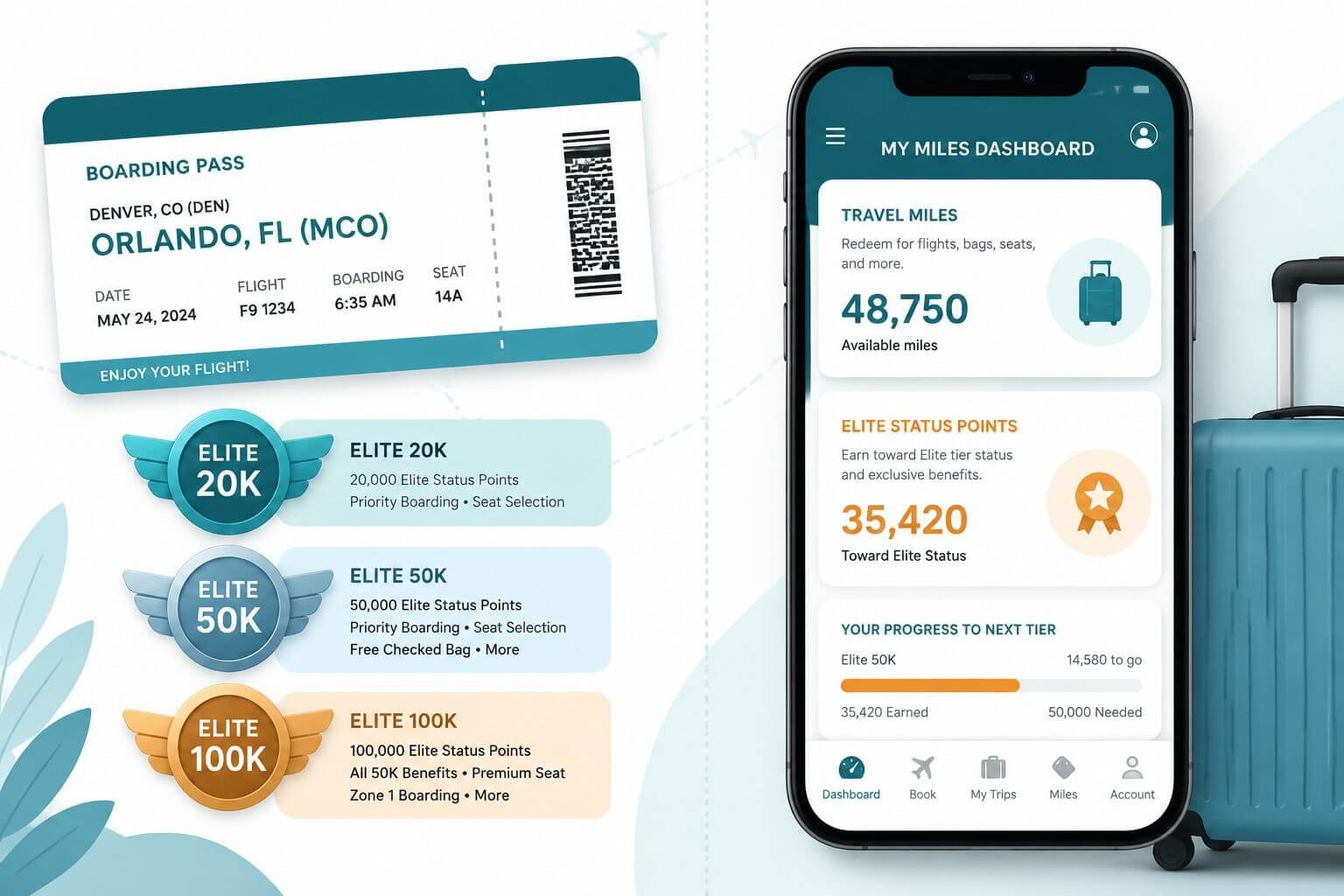
Frontier Miles is a straightforward revenue-based loyalty program. Members earn Travel Miles based on dollars spent, not miles flown, and redeem those miles for award flights or bundle add-ons. The program also tracks a separate currency called Elite Status Points, which determines a member’s tier but cannot be redeemed for anything directly.
This two-currency structure is worth understanding before assuming all earned “miles” are spendable. When Frontier says a member earns 10 miles per $1, that applies to both Travel Miles and Elite Status Points simultaneously. Only Travel Miles show up in the redeemable balance.
The key distinction:
Travel Miles, Redeemable for award flights and bundles
Elite Status Points, Track status progress only; not transferable or redeemable
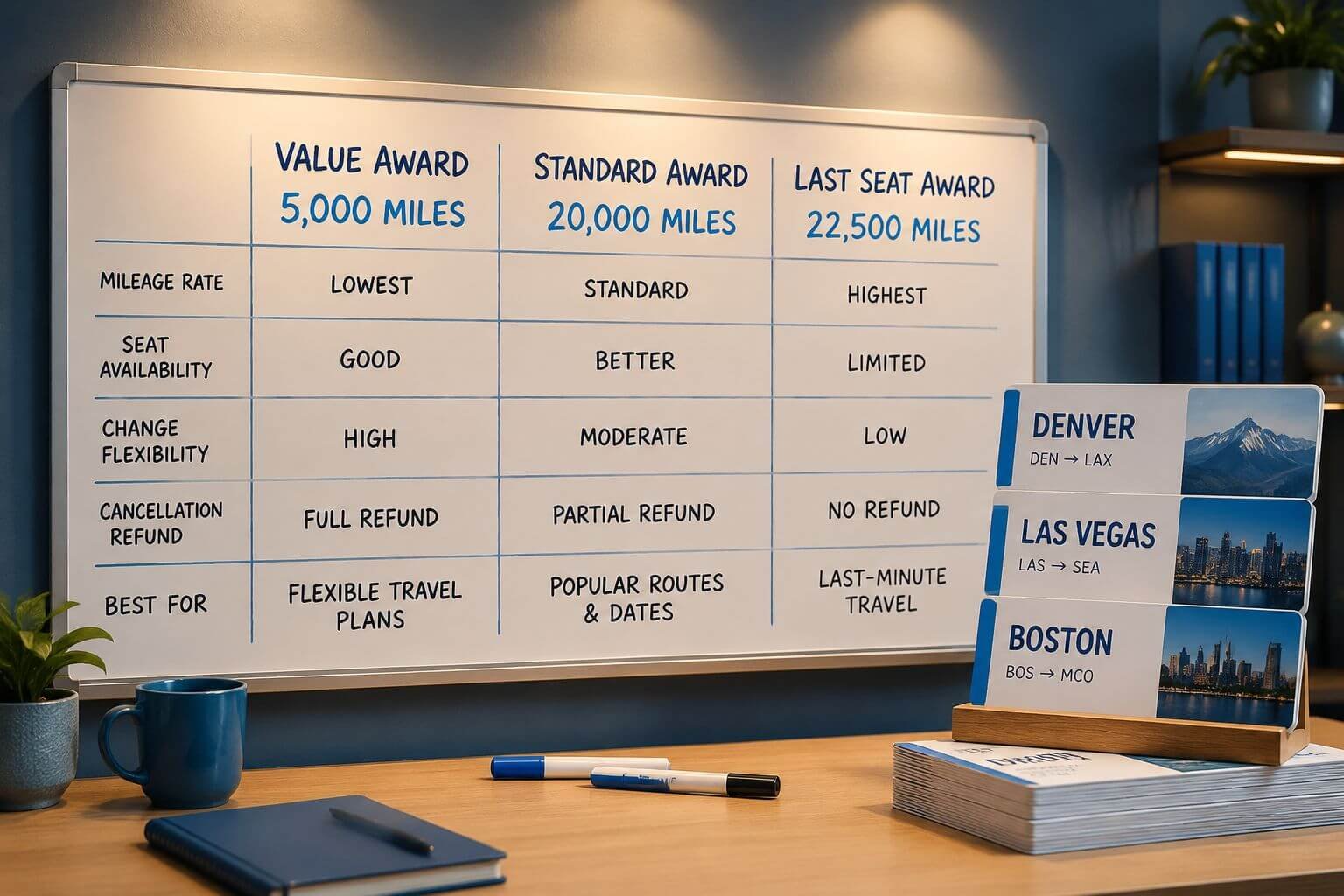
Frontier’s award inventory is divided into Value, Standard, and Last Seat tiers. Value awards require the fewest miles but have limited availability. Last Seat awards, available only to elite members, allow booking any seat on any flight that has availability, the tradeoff is a higher miles price.
There are no blackout dates in the traditional sense. Instead, availability is controlled by award tier pricing. If a Value seat is not available, the next tier costs more miles. This is functionally similar to dynamic pricing, though Frontier still publishes a fixed award chart rather than fully variable pricing.
For a broader look at how airline loyalty programs structure earning and redemption, see our guide to how airline miles work.
Earning Frontier Miles: Flights, Cards, and Partners
Base members earn 10 Travel Miles per $1 spent on eligible Frontier purchases at FlyFrontier.com. Eligible purchases include flights, baggage fees, seat selection, Discount Den membership, GoWild! Pass purchases, Flight Flexibility add-ons, and Priority Boarding. This is a meaningful shift from older models that only credited miles for the base fare.
Earning rates by source:
Flights and eligible add-ons at FlyFrontier.com: 10 miles per $1 (base)
Frontier Airlines World Mastercard: varies by spend category; cardholders earn bonus miles on Frontier purchases and a base rate on all other spending
Partner purchases: Frontier has a limited partner network compared to major carriers; options include select hotel and car rental partners bookable through the Frontier portal
What does not earn miles:
Award ticket taxes and fees
Third-party bookings (flights booked through OTAs like Expedia do not earn miles)
Certain promotional fares may have reduced or zero earn rates, always confirm at booking
The Frontier Airlines World Mastercard is the primary non-flying earn channel. It is worth evaluating against general-purpose travel cards, particularly if Frontier is not a frequent travel choice. A card that earns transferable points from programs like Chase, Capital One, or Amex will typically offer more redemption flexibility. See our comparison of the best credit cards for points and miles in 2026 for context on where a co-branded airline card fits.
Frontier Elite Status and the Earning Tiers
Frontier has four status tiers, each with a higher earning multiplier on Travel Miles. Status is earned by accumulating Elite Status Points within a calendar year.
Status Tier Travel Miles Earned per $1 Notable Benefit Base Member 10 miles per $1 Standard award access Elite 20K 12 miles per $1 Priority boarding, fee waivers Elite 50K 15 miles per $1 Seat selection discounts Elite 100K 20 miles per $1 Last Seat award access, highest earn rate
The jump from base to Elite 100K doubles the earn rate. For a frequent Frontier flyer spending $3,000 per year on flights and add-ons, that difference is 30,000 extra Travel Miles annually, enough for several domestic award flights.
Last Seat awards are the most operationally useful elite benefit. They allow booking any available seat on any Frontier flight, which removes the scarcity constraint of Value and Standard award inventory. The tradeoff is that Last Seat awards cost more miles (22,500 miles one-way domestically versus 5,000 for a Value award).
Elite status at Frontier does not include lounge access, upgrades to a premium cabin, or reciprocal benefits with partner airlines, Frontier does not operate a premium cabin and has no alliance partners. For travelers who want status perks like lounge access or upgrades, a different program will serve better. Our guide to choosing an airline loyalty program in 2026 covers how to match a program to your actual travel patterns.
Redeeming Frontier Miles: What to Expect
Award flights start at 5,000 miles one-way for domestic U.S. and Puerto Rico routes at the Value level. Redemptions must be made at the time of booking, miles cannot be applied after purchase.
Domestic award levels (one-way, U.S. and Puerto Rico):
Value: 5,000 miles
Standard: 20,000 miles
Last Seat: 22,500 miles (elite members only)
International award levels (one-way, select destinations):
Value: 15,000 miles to Mexico, Dominican Republic, Jamaica, El Salvador, Bahamas, Costa Rica, Guatemala, and Antigua
Standard and Last Seat tiers apply at higher mile costs
Bundle redemptions start at 2,000 miles and can include seat selection, baggage, and no-change-fee protection. These are applied during booking and can be a practical use of smaller mile balances that would not cover a full flight award.
Taxes and fees apply to award bookings and vary by destination. Domestic awards typically carry modest fees. International routes may carry higher government taxes depending on destination.
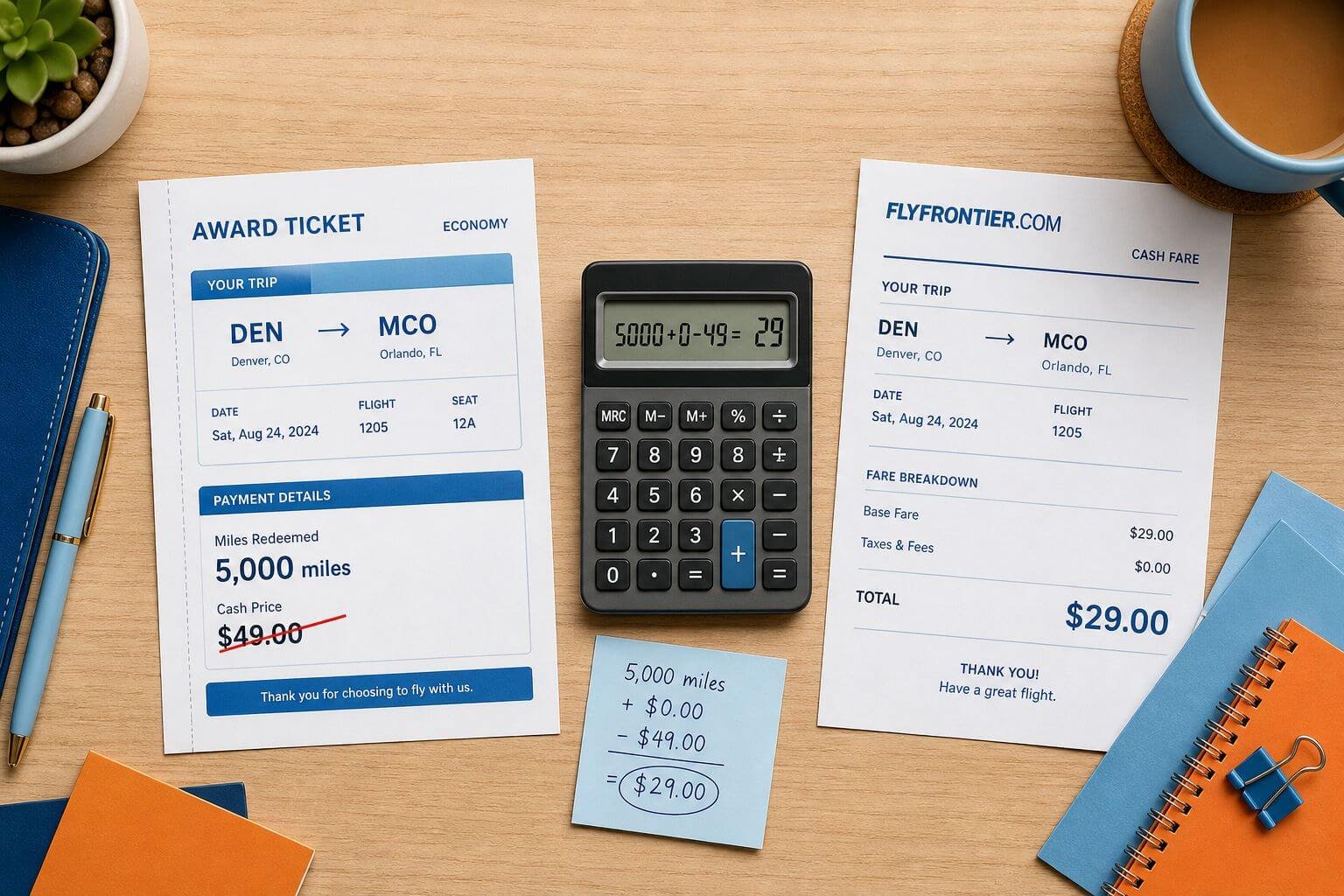
Common mistake: Redeeming miles at the Standard or Last Seat level without checking the cash price first. A Standard award at 20,000 miles on a route where the cash fare is $49 represents very poor value. Always compare before confirming a redemption.
How Much Are Frontier Miles Actually Worth?
At the Value award level, Frontier Miles are worth approximately 1.0 to 1.3 cents per mile (CPP) when redeemed for domestic flights. This estimate assumes a cash fare of $50,$65 for a route that costs 5,000 miles.
Example:
Route: Denver to Las Vegas, one-way
Cash fare: $59
Award cost: 5,000 miles (Value level)
CPP: $59 / 5,000 = 1.18 cents per mile
At the Standard level, the math deteriorates quickly. A 20,000-mile Standard award on the same route where cash is $59 yields only 0.30 CPP, a poor use of miles by any measure.
Frontier Miles CPP by redemption type:
Redemption TypeMiles RequiredExample Cash ValueCPP EstimateDomestic Value5,000$50,$651.0-1.3Domestic Standard20,000$50,$650.25-0.33International Value15,000$120,$1800.80-1.20Bundle (seat + bag)2,000+$30,$501.50-2.50
Bundle redemptions can actually deliver above-average value because Frontier’s a la carte fees for bags and seats are high relative to the miles cost. If a member has a small balance that cannot cover a full flight, using miles for a bundle is often the better move.
For context on how to evaluate cents per point across programs, see our overview of points and miles valuation.
Frontier Miles vs. Just Paying the Low Fare
This is the central question for any Frontier flyer. Frontier’s business model is built on low base fares, sometimes as low as $19,$49, which compresses the value of redeeming miles.
When paying cash beats redeeming miles:
The cash fare is under $40 and the award costs 5,000 miles (CPP drops below 0.80)
The only available award is at the Standard or Last Seat level
The route has a promotional fare running (Frontier regularly runs $49 sales)
The miles balance is small and better preserved for a higher-value redemption
When redeeming miles makes sense:
A Value award is available and the cash fare is $60 or higher
Redeeming a bundle for bags and a seat on a $150+ route where a la carte fees are steep
The miles would otherwise expire due to inactivity (though earning any eligible purchase resets the clock)
Frontier ran a buy-miles promotion through July 10, 2026 offering up to a 100% bonus, bringing the effective cost to approximately 1.61 cents per mile for larger purchases. Buying miles at that rate to redeem at 1.0-1.3 CPP is a losing trade. Do not buy Frontier Miles speculatively.
The core tradeoff: Frontier Miles work best as a way to offset the cost of a flight you were already going to pay for, not as a vehicle for aspirational travel or premium cabin redemptions. Frontier does not fly premium cabins, and miles cannot transfer to programs that do.
For a direct comparison of how airline loyalty programs stack up, see our analysis of the best airline rewards programs in 2026.
Can You Transfer Frontier Miles to Other Airlines?
No. Frontier Miles cannot be transferred to any other airline loyalty program. Frontier is not a member of a major airline alliance (Star Alliance, oneworld, or SkyTeam), and the program has no airline transfer partners.
This is a significant limitation for points and miles users who prioritize flexibility. Programs like Chase Ultimate Rewards, Amex Membership Rewards, Capital One Miles, and Citi ThankYou Points all offer transfers to multiple airline partners, which creates far more redemption options, including international business class and first class awards.
Frontier Miles are a closed system. Miles earned stay in the Frontier program and can only be used for Frontier flights and bundles. If flexibility and premium cabin access matter, earning transferable points from a major bank program will deliver more value than concentrating on Frontier Miles.
How Long Do Frontier Miles Expire?
Frontier Miles do not expire as long as there is at least one qualifying activity on the account within a rolling 12-month period. Qualifying activity includes earning miles from a flight, eligible purchase, or partner transaction.
This is a relatively forgiving policy. Members who fly Frontier even once a year, or make a single eligible purchase, will keep their balance active. However, members who stop flying Frontier entirely and have no partner earning activity will lose their miles after 12 months of inactivity.
How to keep miles from expiring without flying:
Make a purchase through the Frontier shopping portal
Use the Frontier Airlines World Mastercard for any purchase
Book a hotel or car through an eligible Frontier partner
For a full comparison of expiration policies across major airline programs, see our guide to airline miles expiration rules in 2026.
Tips to Avoid Wasting Frontier Miles
Most Frontier Miles are wasted at the Standard award level or on routes where the cash fare is already low. A few clear rules help avoid that.
Decision framework for Frontier Miles redemptions:
Check the cash fare first. If it is under $40, pay cash and save the miles.
Confirm award availability at the Value level before assuming a redemption is available.
Use miles for bundles when the balance is small, bundle CPP often exceeds flight CPP.
Do not redeem at Standard or Last Seat levels unless the cash fare is well above $100.
For international routes, compare the 15,000-mile Value award against the actual cash fare. Routes to Mexico or the Caribbean may have promotional fares that undercut the award value.
Keep the account active with at least one eligible activity per year to prevent expiration.
Common pitfalls:
Assuming more miles always means more value, the tier structure makes Standard awards a poor deal on low-fare routes
Buying miles to redeem for flights (the math rarely works in the member’s favor)
Ignoring bundle redemptions, which can offer the best CPP for smaller balances
Expecting partner airline awards or premium cabin options that do not exist in this program
For infrequent flyers deciding whether Frontier Miles is worth tracking at all, see our guide to the best airline loyalty program for infrequent flyers in 2026.
FAQ
How do I check my Frontier Miles balance?
Log in to your account at FlyFrontier.com. The dashboard displays both your Travel Miles balance (redeemable) and your Elite Status Points total (status tracking only). The Frontier mobile app shows the same information.
Do Frontier Miles have blackout dates?
No traditional blackout dates exist. Instead, award availability is controlled by tier pricing. If a Value award (5,000 miles) is not available on a given date, the next tier (Standard at 20,000 miles) may be. This functions like restricted availability rather than a hard blackout.
Can Frontier Miles be used for cabin upgrades?
No. Frontier Airlines does not operate a premium cabin (business class or first class), so there are no upgrade awards available. Miles can only be used for standard seat awards and bundle add-ons.
What can Frontier Miles be used for besides flights?
Miles can be redeemed for bundle packages that include seat selection, checked baggage, and no-change-fee protection. These bundle redemptions start at 2,000 miles and can offer good value when a la carte fees would otherwise be high.
Are Frontier Miles worth earning if I only fly once or twice a year?
Possibly, but with caveats. If those one or two flights are on Frontier and the cash fares are above $60, redeeming a Value award at 5,000 miles makes sense. However, if Frontier’s fares are consistently low on the routes flown, paying cash and skipping the miles accumulation is often simpler and equally cost-effective.
What happened to Frontier’s expansion in 2026?
In July 2026, Frontier announced eight new routes in markets previously served by Spirit Airlines, including Boston, Detroit, Dallas, and Las Vegas. This expansion increases the number of routes where Frontier Miles can be earned and redeemed, which modestly improves the program’s utility for travelers in those markets.
Can I combine Frontier Miles with a companion’s account?
Frontier does not offer household account pooling. Each member’s miles are held in their individual account and cannot be combined with another member’s balance for a single redemption.
Conclusion
Frontier Miles is a straightforward program with a narrow but real use case: offsetting the cost of Frontier flights when Value award space is available and the cash fare is high enough to make the math work. The program earns well on eligible purchases, does not expire with basic account activity, and the bundle redemption option adds flexibility for smaller balances.
The limitations are equally clear. Miles cannot transfer to other airlines, there are no premium cabin options, and the value at Standard or Last Seat award levels is poor on most routes. For travelers who primarily use Frontier for low-fare domestic flying, the program is worth enrolling in and maintaining, but it should not be the centerpiece of a broader points strategy.
Practical next steps:
Enroll in Frontier Miles if flying Frontier and not already a member, there is no cost and Value awards can offset real dollars
Check the cash fare before every redemption; if it is under $40, pay cash
Consider bundle redemptions for bags and seat selection when the miles balance is small
If flexibility and partner airline access matter, focus earning efforts on transferable points programs and treat Frontier Miles as a secondary benefit
Related Reading:


Content on Award Travel Hub is independently created by Award Travel Hub Editorial Desk and, where noted, reviewed by Award Travel Hub Review Desk. Some pages may contain affiliate links, but compensation does not determine our coverage, opinions, or methodology.