
Last updated: June 30, 2026
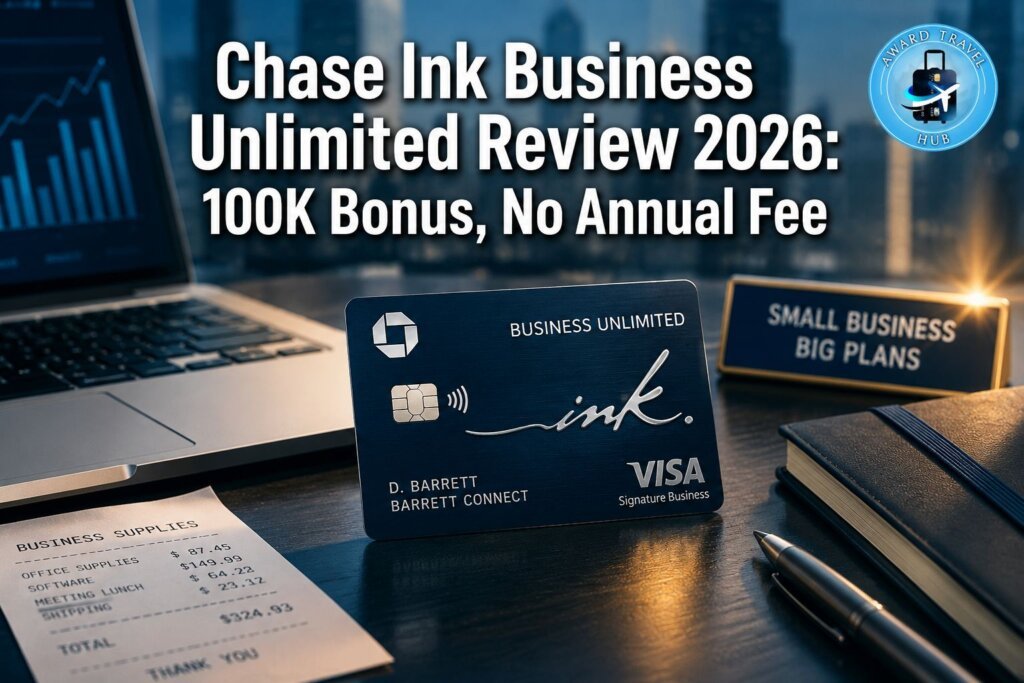
Quick Answer: The Chase Ink Business Unlimited is a no-annual-fee business credit card that earns a flat 1.5% back (1.5x Ultimate Rewards points) on every purchase. As of mid-2026, it carries a 100,000-point welcome bonus after spending $6,000 in the first three months — the highest bonus this card has ever offered. On its own, those points are worth $1,000 in cash back. Paired with a Chase Sapphire Preferred, Sapphire Reserve, or Ink Business Preferred, they become fully transferable Ultimate Rewards points worth significantly more.
Key Takeaways
- The 100K welcome bonus is the best this card has ever offered, up from the previous $750 (75,000-point) offer.
- No annual fee means there’s no break-even math to do — the card costs nothing to hold long-term.
- The flat 1.5x earning rate applies to all purchases with no category caps or rotating categories.
- Points earned on this card are locked as cash-back until you also hold a Chase Sapphire Preferred, Sapphire Reserve, or Ink Business Preferred — at which point they become transferable.
- The card is subject to Chase’s 5/24 rule and requires a legitimate business or side income to apply.
- Sole proprietors, freelancers, and gig workers qualify — you do not need an LLC or formal business entity.
- The Ink Business Unlimited works best as part of a broader Chase card strategy, not as a standalone travel card.

What Is the Chase Ink Business Unlimited Card?
The Chase Ink Business Unlimited is a no-annual-fee Visa business credit card that earns Chase Ultimate Rewards points at a flat 1.5x rate on all purchases. It sits in Chase’s small-business card lineup alongside the Ink Business Cash and the Ink Business Preferred.
Unlike the other two Ink cards, the Unlimited has no bonus categories and no spending caps. Every dollar spent earns the same rate. That simplicity makes it a reliable catch-all card for business expenses that don’t fall into higher-earning categories on other cards.
The card also includes a 0% intro APR on purchases for 12 months (then a variable APR applies), which can be useful for businesses managing cash flow on larger purchases.
How Much Is the 100K Bonus Worth?
The 100,000-point welcome bonus launched in mid-June 2026 and represents the highest offer this card has ever carried. At a baseline, those points are worth $1,000 in cash back when redeemed through Chase’s statement credit option.
The value increases substantially if you hold a premium Chase card alongside the Ink Unlimited:
| Redemption Method | Value of 100K Points |
|---|---|
| Cash back / statement credit | $1,000 |
| Chase Travel portal (with Sapphire Reserve) | $1,500 |
| Transfer to airline or hotel partners | $1,500–$2,500+ (estimate, varies by redemption) |
The transfer partner route carries the highest ceiling but also the most variability. Transferring to Hyatt for a luxury property, or to United MileagePlus for a business class award, can push the value well above 2 cents per point (CPP) — but award availability, dynamic pricing, and fuel surcharges all affect the final outcome.
You may be interested



For a practical look at how Chase transfer partners compare across programs, see the Chase Transfer Partners Guide 2026.
What are the spending requirements for the 100K bonus?
Cardholders must spend $6,000 on purchases within the first three months of account opening. That works out to $2,000 per month — a reasonable threshold for most small businesses. The spend requirement covers all purchases; there are no restricted categories.
Is There an Annual Fee on Chase Ink Business Unlimited?
There is no annual fee on the Chase Ink Business Unlimited — not in year one, and not in subsequent years. This is a permanent feature of the card, not a waived-first-year promotion.
That matters for long-term strategy. Holding the card indefinitely costs nothing, which means it can serve as a permanent base for flat-rate earning and as a points-pooling vehicle within a broader Chase setup. There’s no annual decision about whether the card “pays for itself.”
For comparison, the Ink Business Preferred carries a $95 annual fee but earns 3x on travel and select business categories. If the Preferred’s bonus categories don’t align with your spending, the Unlimited’s flat 1.5x with no fee can produce more points per dollar overall.
What Are the Earning Rates on Chase Ink Business Unlimited?
The Ink Business Unlimited earns a flat 1.5x Ultimate Rewards points on every purchase, with no category caps and no rotating categories.
There are no exceptions to the flat rate — office supplies, advertising, travel, shipping, and miscellaneous business expenses all earn the same 1.5x. This is the card’s defining feature and its primary limitation: it never earns more than 1.5x, even in categories where other cards earn 3x, 5x, or more.
One notable perk: the card earns 5x on Lyft rides through a partnership that runs through late 2027. This applies when paying with the Ink Unlimited directly.
Where the flat rate makes sense:
- Expenses that don’t fit any bonus category on other cards
- Large, irregular purchases (equipment, contractor payments, software)
- Businesses with highly varied spending that don’t cluster in specific categories
- Pairing with the Ink Business Cash, which earns 5x on office supplies and internet/phone/cable services (up to $25,000/year), to cover what the Unlimited misses
How Do Points Become Transferable with a Sapphire Card?
This is the most important strategic point about the Chase Ink Business Unlimited. On its own, the card’s points can only be redeemed for cash back, gift cards, or travel booked through Chase’s portal. They cannot be transferred to airline or hotel partners.
To unlock full transferability, you need to also hold one of these Chase cards:
- Chase Sapphire Preferred
- Chase Sapphire Reserve
- Ink Business Preferred
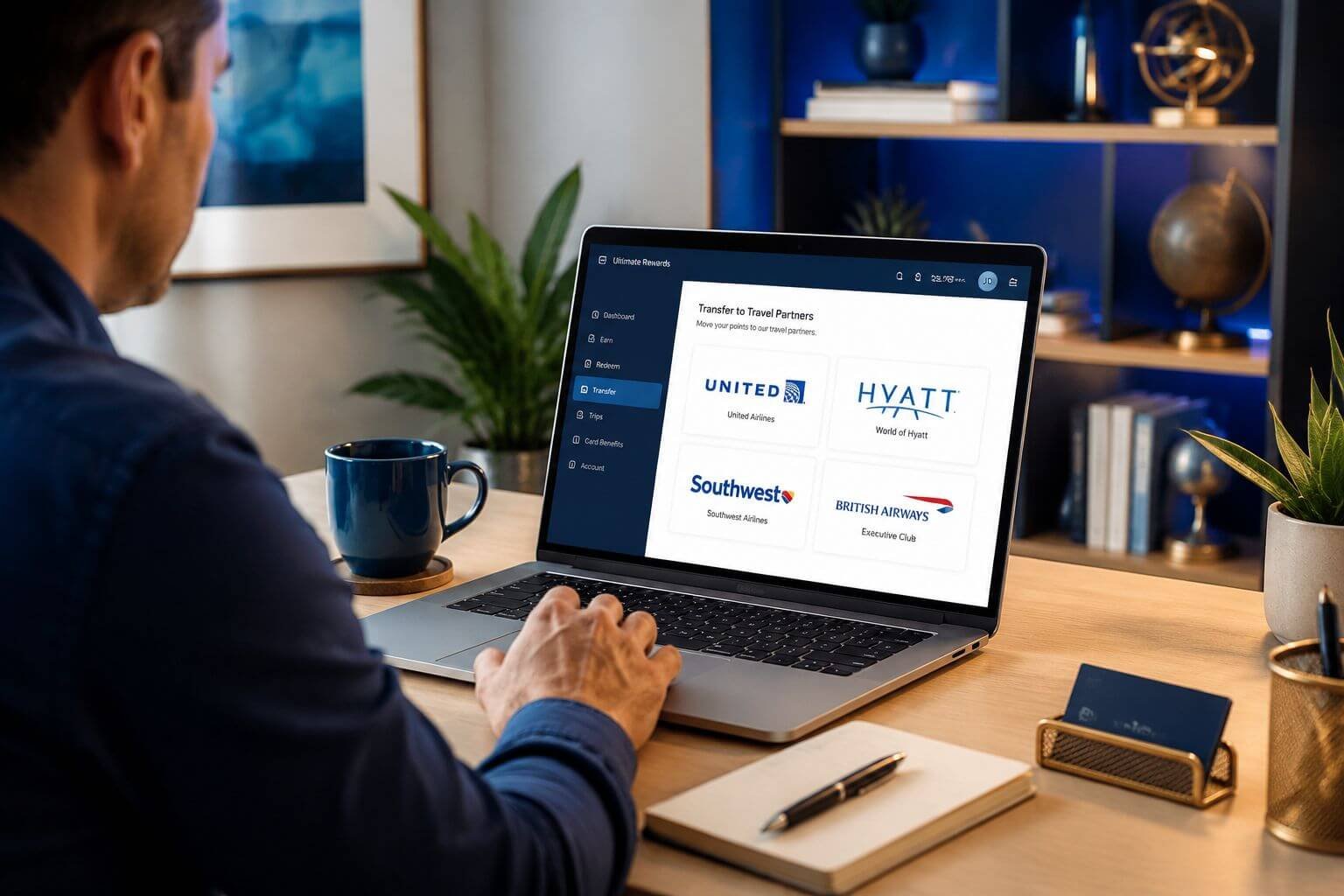
Once you hold one of those cards, you can combine (pool) all your Ultimate Rewards points into a single account and transfer them to Chase’s airline and hotel partners at a 1:1 ratio. Partners include United MileagePlus, Hyatt, British Airways Avios, Air France/KLM Flying Blue, Singapore Airlines KrisFlyer, and others.
This pairing strategy — often called the Chase Ink trifecta or Chase trifecta — is the core reason the Ink Unlimited is valuable for award travel. Without a premium Chase card, the Unlimited is a solid cash-back card. With one, it becomes a transferable points engine.
For a detailed breakdown of the Sapphire lineup, see Chase Sapphire Preferred vs Reserve 2026.
If you’re actively watching for transfer bonus opportunities that can increase the value of those pooled points, the Credit Card Transfer Bonuses tracker is worth bookmarking.
Ink Unlimited vs Ink Cash vs Ink Preferred
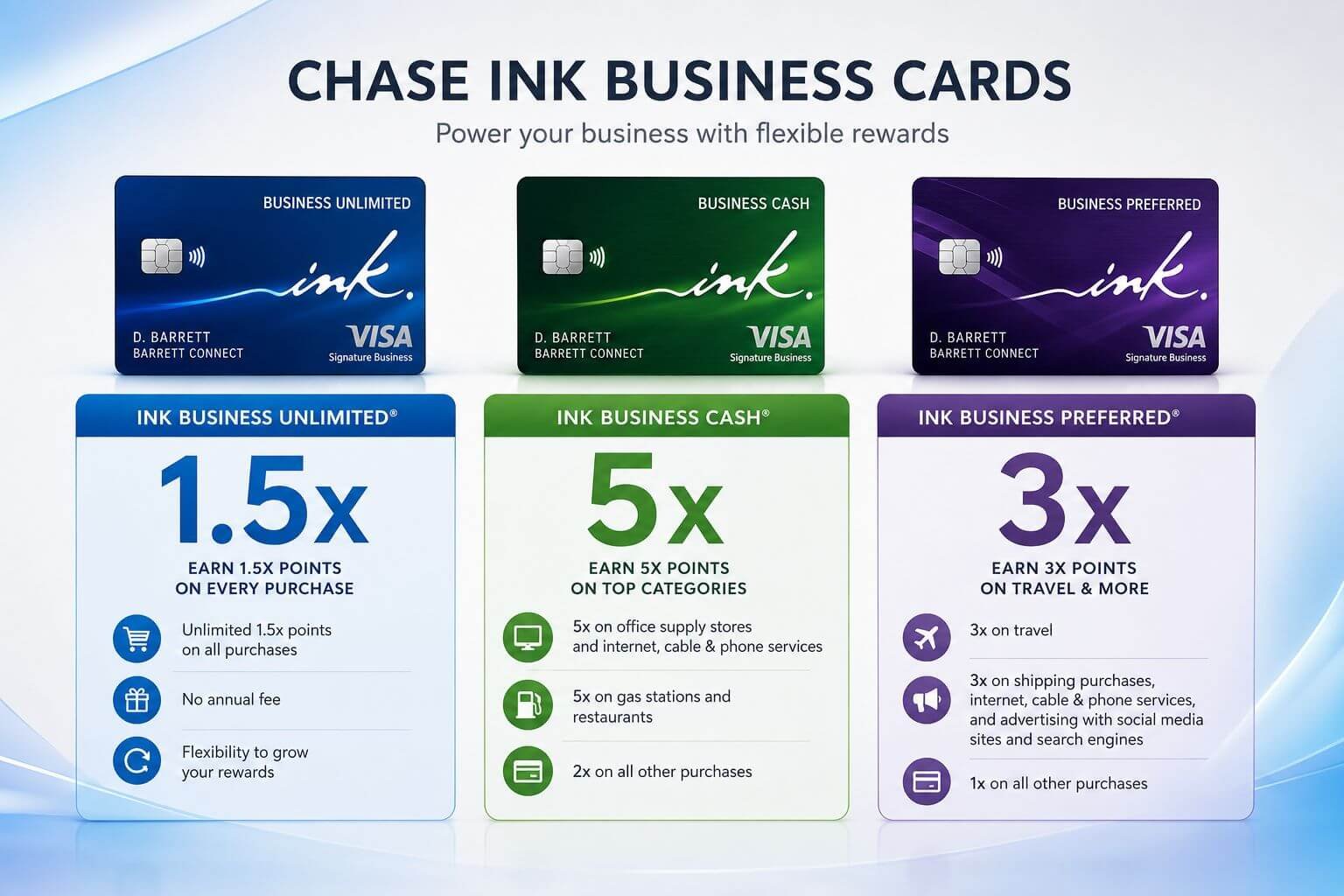
The three Chase Ink business cards have distinct earning structures. Choosing the right combination depends on where your business spending concentrates.
| Card | Annual Fee | Best Earning | Flat Rate |
|---|---|---|---|
| Ink Business Unlimited | $0 | N/A (flat rate only) | 1.5x on everything |
| Ink Business Cash | $0 | 5x on office supplies, internet, phone, cable (up to $25K/year); 2x on gas and dining | 1x on everything else |
| Ink Business Preferred | $95 | 3x on travel, shipping, advertising, internet/phone/cable (up to $150K/year) | 1x on everything else |
The practical read:
- If your business spends heavily on office supplies, telecom, or internet services, the Ink Cash covers those categories at 5x.
- If you spend significantly on travel or digital advertising, the Ink Preferred’s 3x rate and higher cap justify the $95 fee.
- The Ink Unlimited fills the gap — it catches everything that doesn’t earn a bonus elsewhere and does so at 1.5x rather than the 1x fallback on the other two cards.
Running all three cards together (the trifecta) is a common strategy for maximizing points across all business spending categories. The Preferred anchors the setup by enabling point transfers; the Cash and Unlimited handle the rest.
Who Qualifies for Chase Ink Business Unlimited?
Applicants need a legitimate business or source of self-employment income. Chase does not require a formal business entity. Sole proprietors, freelancers, consultants, gig workers (rideshare, delivery, tutoring), and anyone with 1099 income can apply using their Social Security Number as the tax ID.
Key eligibility factors:
- Chase 5/24 rule: Chase will typically decline applicants who have opened five or more new credit card accounts (from any issuer) in the past 24 months. Business cards from most issuers do not count toward 5/24, but the Ink cards themselves do count when approved. If you’re at or near 5/24, prioritize Chase cards before applying elsewhere.
- Credit score: Most approvals require good to excellent credit — generally 700 or above, though Chase evaluates the full application, not just the score.
- Existing Chase relationship: Having an existing Chase business or personal account can support approval, but it’s not required.
- Bonus eligibility: The 100K bonus is not available to applicants who currently hold the Ink Business Unlimited or who received a new cardmember bonus on this card in the past 24 months. Holding other Chase Ink cards does not disqualify you.
Can you get the 100K bonus if you already have a Chase business card?
Yes, in most cases. Holding the Ink Business Cash or Ink Business Preferred does not prevent you from earning the Ink Business Unlimited bonus, provided you haven’t held the Unlimited itself or received its bonus within the past 24 months. Chase evaluates each card’s bonus eligibility separately.
Does Chase Ink Business Unlimited Have Travel Insurance?
The Ink Business Unlimited includes a modest set of travel and purchase protections, though it’s not a premium travel card in this regard.
Included protections:
- Trip cancellation/interruption insurance: Up to $1,500 per person and $6,000 per trip for prepaid, non-refundable travel expenses if a trip is canceled or cut short due to covered reasons.
- Auto rental collision damage waiver: Primary coverage for business rentals when the card is used to pay and the rental company’s coverage is declined.
- Purchase protection: Covers new purchases against damage or theft for 120 days, up to $10,000 per claim.
- Extended warranty: Extends the manufacturer’s warranty by one additional year on eligible purchases.
What it does not include: lounge access, travel credits, Global Entry/TSA PreCheck fee reimbursement, or the more comprehensive travel protections found on the Sapphire Reserve. For a card with no annual fee, the protections are reasonable — but travelers who want robust coverage should look at pairing this card with a premium option.
Is Chase Ink Business Unlimited Worth It With No Annual Fee?
For most small-business owners who already hold or plan to hold a Chase Sapphire or Ink Preferred card, the answer is yes. The combination of a 100K welcome bonus, no annual fee, and flat 1.5x earning on all purchases makes this one of the more straightforward value propositions in the no-fee business card space.
The card is worth it if:
- You want to earn transferable Chase Ultimate Rewards points without paying an annual fee
- Your business has varied spending that doesn’t cluster in specific bonus categories
- You already hold a Sapphire Preferred, Sapphire Reserve, or Ink Preferred (or plan to)
- You want a permanent, low-maintenance card to hold alongside higher-earning cards
The card is not the right fit if:
- You want a standalone travel card with lounge access, travel credits, or premium protections
- Your spending is heavily concentrated in categories where other cards earn 3x–5x
- You’re at 5/24 and have higher-priority Chase cards to apply for first
- You have no other premium Chase card and no plans to get one — in that case, the points are limited to cash back and portal redemptions
For context on how the Ink Unlimited fits into the broader no-annual-fee card landscape, see the Best No-Annual-Fee Travel Cards 2026 guide.
If you’re evaluating whether to pair this with a Sapphire card, the Chase Sapphire Preferred vs Reserve 2026 breakdown covers the math on which card makes more sense as your premium anchor.
Conclusion
The Chase Ink Business Unlimited earns its place in a well-built Chase card setup. The 100K welcome bonus is the highest this card has ever offered, the flat 1.5x earning rate is genuinely useful for catch-all spending, and the no-annual-fee structure removes any pressure to justify the card year after year.
The critical nuance: this card’s points are only as valuable as the rest of your Chase setup. Without a Sapphire Preferred, Sapphire Reserve, or Ink Preferred to unlock transfers, the Unlimited is a good cash-back card — but not a transferable points card. That distinction matters if your goal is premium cabin redemptions or high-value hotel awards.
Practical next steps:
- Check your 5/24 status before applying. If you’re at 4/24, consider whether the Ink Unlimited or another Chase card is the better use of your next slot.
- If you don’t already hold a premium Chase card, decide whether to apply for the Ink Unlimited and a Sapphire card in the same period — or sequence them.
- Once approved and the bonus posts, evaluate your transfer options. Hyatt and United tend to offer the strongest value among Chase’s partners for most U.S.-based travelers.
- Use the Ink Unlimited for all non-bonus spending going forward, and pair it with the Ink Cash for 5x categories.
For a broader view of how Chase points compare to Amex, Capital One, and Citi in terms of transfer partners and redemption flexibility, see the Comparing Transfer Partners 2026 guide.
Frequently Asked Questions
What is the current welcome bonus on the Chase Ink Business Unlimited? As of mid-2026, the welcome bonus is 100,000 Ultimate Rewards points after spending $6,000 on purchases within the first three months of account opening. This is the highest bonus the card has ever offered and is worth $1,000 in cash back at minimum.
Does the Chase Ink Business Unlimited have an annual fee? No. There is no annual fee on this card — not in year one and not in any subsequent year. It is a permanently free card to hold.
Can I transfer points earned on the Ink Business Unlimited to airlines and hotels? Not directly. Points earned on the Ink Unlimited can only be transferred to airline and hotel partners if you also hold a Chase Sapphire Preferred, Sapphire Reserve, or Ink Business Preferred. You pool the points into that card’s account to access transfers.
Does applying for the Chase Ink Business Unlimited count against my 5/24? Yes. Chase business cards, including all Ink cards, count toward your 5/24 total when approved. However, most other issuers’ business cards do not appear on your personal credit report and do not count toward Chase’s 5/24 limit.
Can a freelancer or sole proprietor apply for the Chase Ink Business Unlimited? Yes. Chase does not require a formal business entity. Freelancers, consultants, gig workers, and anyone with self-employment income can apply using their Social Security Number. List your business type as “sole proprietor” and use your actual income from self-employment.
How long does it take to get approved for the Chase Ink Business Unlimited? Many applicants receive an instant decision online. If the application goes to review, Chase typically issues a decision within 7–10 business days. You can call the reconsideration line to discuss a pending application. Once approved, the physical card arrives within 7–10 business days, and the welcome bonus posts after the statement closes in which you meet the spend requirement.
Is the Chase Ink Business Unlimited the same as the Ink Business Cash? No. Both cards have no annual fee, but they have different earning structures. The Ink Unlimited earns a flat 1.5x on all purchases. The Ink Cash earns 5x on office supplies and telecom services (up to $25,000/year) and 2x on gas and dining, with 1x on everything else. They complement each other well when held together.
What credit score is needed for the Chase Ink Business Unlimited? Chase does not publish a minimum score, but most approvals are associated with good to excellent credit — generally 700 or higher on a FICO scale. Chase also considers factors like income, existing debt, and your history with Chase accounts.


Content on Award Travel Hub is independently created by Award Travel Hub Editorial Desk and, where noted, reviewed by Award Travel Hub Review Desk. Some pages may contain affiliate links, but compensation does not determine our coverage, opinions, or methodology.