
Last updated: October 18, 2026
Quick Answer: A guaranteed statement credit can beat an airline transfer, even when the transfer looks more impressive. Chase Pay Yourself Back is worth considering when your card offers an enhanced rate on an eligible purchase and no realistic travel redemption delivers better net value. In Q4 2026, Sapphire Reserve offers range from 1.15 to 1.50 cents per point depending on category; check your account before redeeming because categories, rates, and deadlines can change.
Key Takeaways
- Pay Yourself Back exchanges points for statement credits against eligible posted purchases.
- Sapphire Reserve and J.P. Morgan Reserve have different redemption rates for charities, annual fees, department stores, groceries, and wholesale clubs.
- Most listed Q4 offers run through December 31, 2026, subject to change.
- Eligible purchases generally must have posted within the previous 90 days.
- Points Boost applies to selected Chase Travel bookings, not purchase reimbursements.
- Legacy travel-portal benefits do not automatically determine Pay Yourself Back rates.
- Compare transfers after subtracting taxes, surcharges, and extra travel costs.
How Chase Pay Yourself Back Works in 2026
Chase Pay Yourself Back lets cardholders redeem rewards for statement credits against eligible transactions. The redemption rate depends on the card and purchase category, rather than the card’s earning rate.
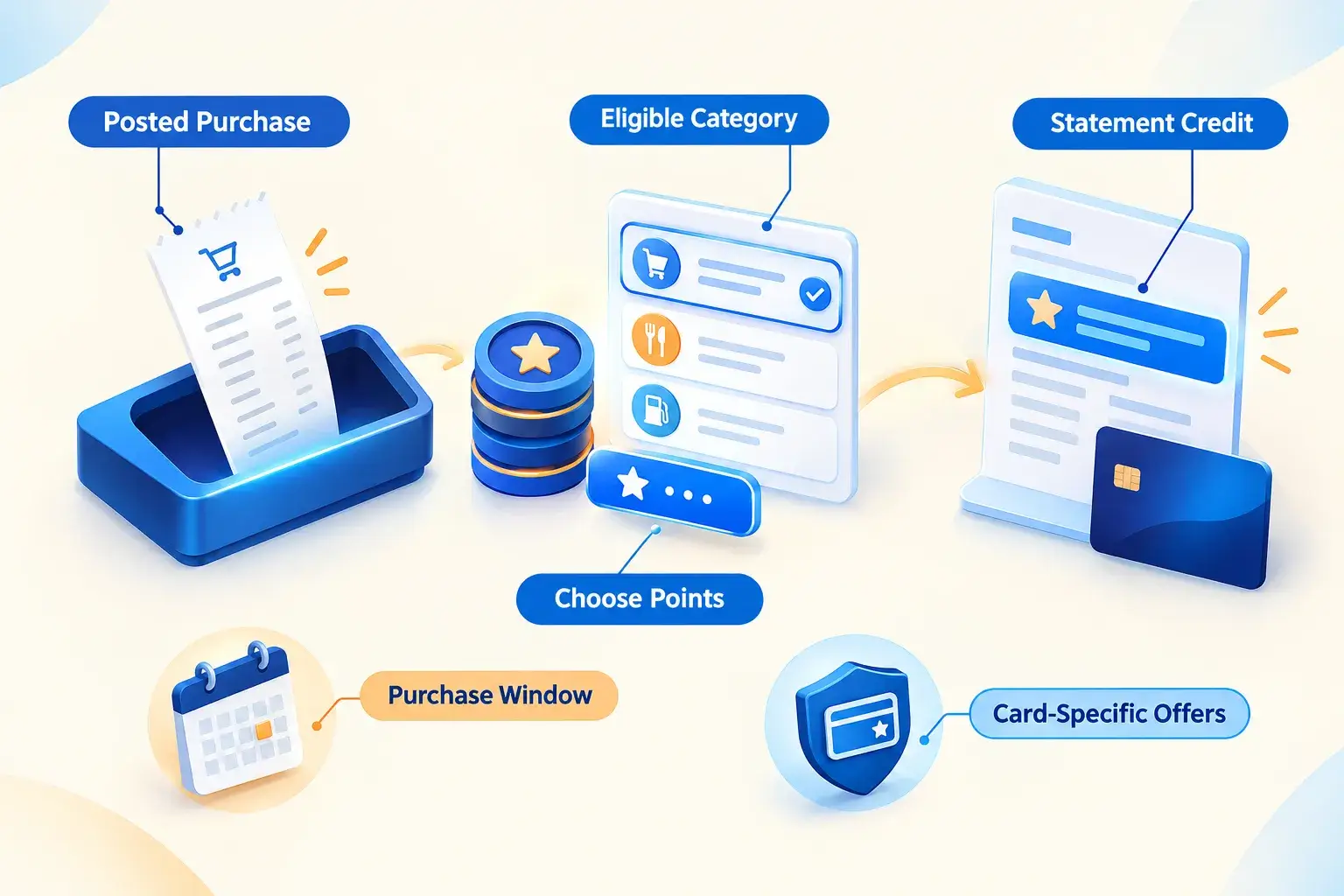
Select a qualifying posted purchase in Ultimate Rewards, choose how much to reimburse, and review the points required. A partial reimbursement may be available; there is no need to erase the entire purchase if the interface allows a smaller credit.
Pay Yourself Back is not a transfer to airline miles or hotel points. Once redeemed, those points are no longer available for travel.
Can you use Pay Yourself Back on all purchases?
No. Only transactions Chase identifies as eligible qualify. A purchase can earn bonus points without qualifying for Pay Yourself Back, because earning categories and redemption categories are separate.
Merchant coding also matters. Buying groceries at a merchant classified differently may not create an eligible grocery transaction.
You may be interested



Decision rule: Use the actual points-and-credit quote in your account, not the store’s description of what it sells.
For earning, pooling, and transfer options, see the Chase Ultimate Rewards guide.
Current Eligible Categories and Redemption Rates by Card
The Q4 2026 schedule gives Sapphire Reserve and J.P. Morgan Reserve the broadest enhanced-value options listed here. Other Ultimate Rewards cards have narrower offers, with qualifying charities remaining a principal enhanced redemption category.
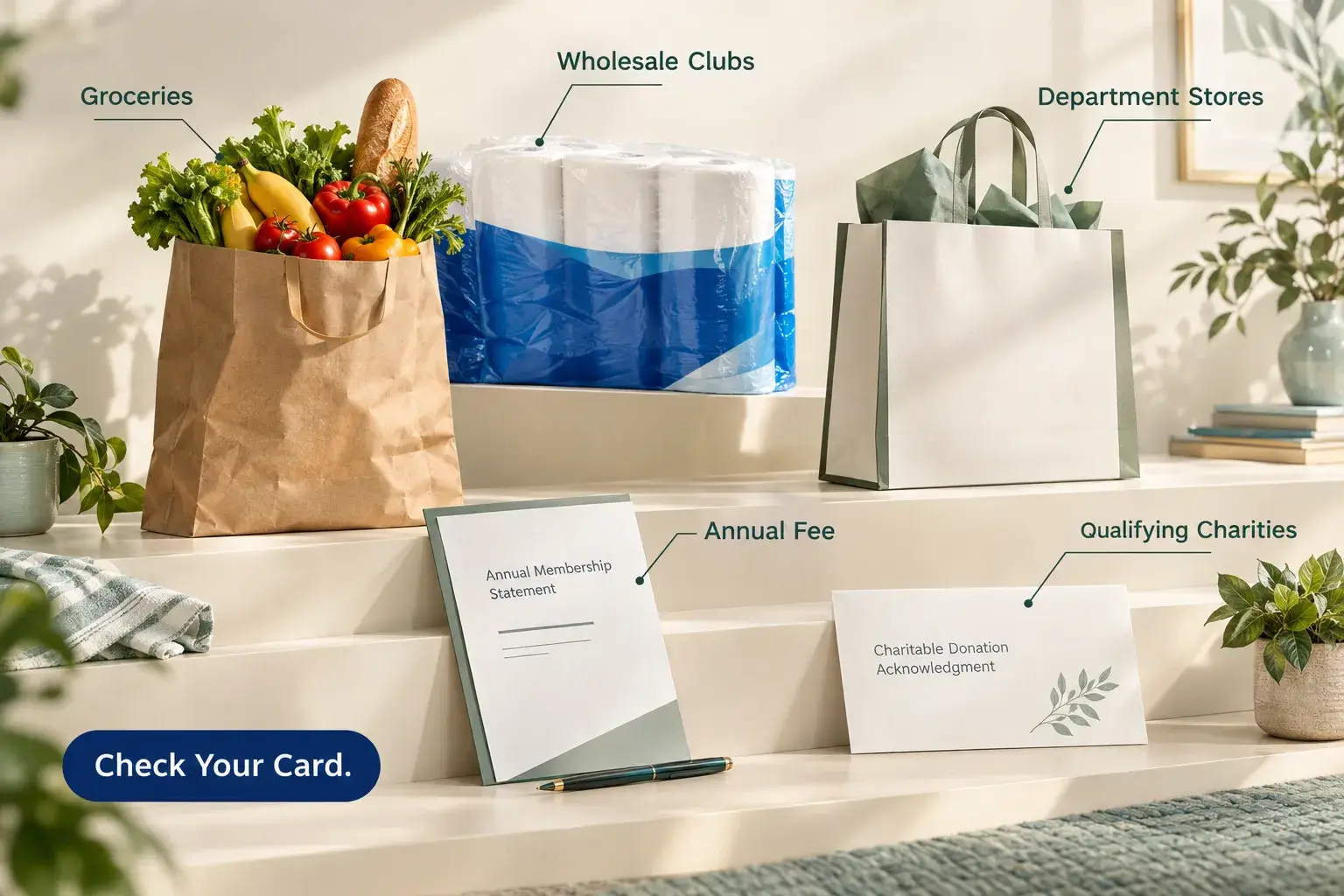
What are the current Chase Pay Yourself Back categories and rates?
| Card | Eligible category | Redemption value |
|---|---|---|
| Sapphire Reserve / J.P. Morgan Reserve | Qualifying charities | 1.50 CPP |
| Sapphire Reserve / J.P. Morgan Reserve | Annual membership fee | 1.25 CPP |
| Sapphire Reserve / J.P. Morgan Reserve | Department stores | 1.20 CPP |
| Sapphire Reserve / J.P. Morgan Reserve | Grocery stores, excluding Target and Walmart | 1.15 CPP |
| Sapphire Reserve / J.P. Morgan Reserve | Wholesale clubs | 1.15 CPP |
| Sapphire Preferred | Qualifying charities, when offered | 1.25 CPP |
| Participating Freedom cards | Qualifying charities, when offered | 1.25 CPP |
| Participating Ink cards | Qualifying charities, when offered | 1.25 CPP |
CPP means cents per point. Most listed Q4 offers run through December 31, 2026, but your account’s offer terms control. Do not assume every donation qualifies: Chase specifies eligible charitable organizations.
Reserve gas-station and public-transit offers expired September 30, 2026. Earlier grocery and pet-related offers also ended; groceries returned in Q4 at 1.15 CPP.
Former Ink offers for cable, internet, phone services, and shipping at 1.10 CPP were removed from the current quarter’s listed schedule. Do not plan a business-purchase reimbursement using those older terms.
Which Chase cards have Pay Yourself Back?
Participating Sapphire, Freedom, and Ink cards can offer Ultimate Rewards Pay Yourself Back options. Selected co-branded Chase cards also use the feature’s name, but their currency and redemption rules differ.
Holding a Sapphire Preferred does not unlock Reserve’s category schedule. For broader card benefits, consult the Sapphire Preferred benefits audit.
Are Chase Pay Yourself Back categories from 2024 still valid?
No. A 2024 category list is historical guidance, not evidence of eligibility in 2026. Chase changes categories and rates over time, so an older article or screenshot should not drive a current redemption.
Common mistake: Treating a familiar category as permanent after its quarterly offer expires.
Pay Yourself Back vs Points Boost vs Transfers
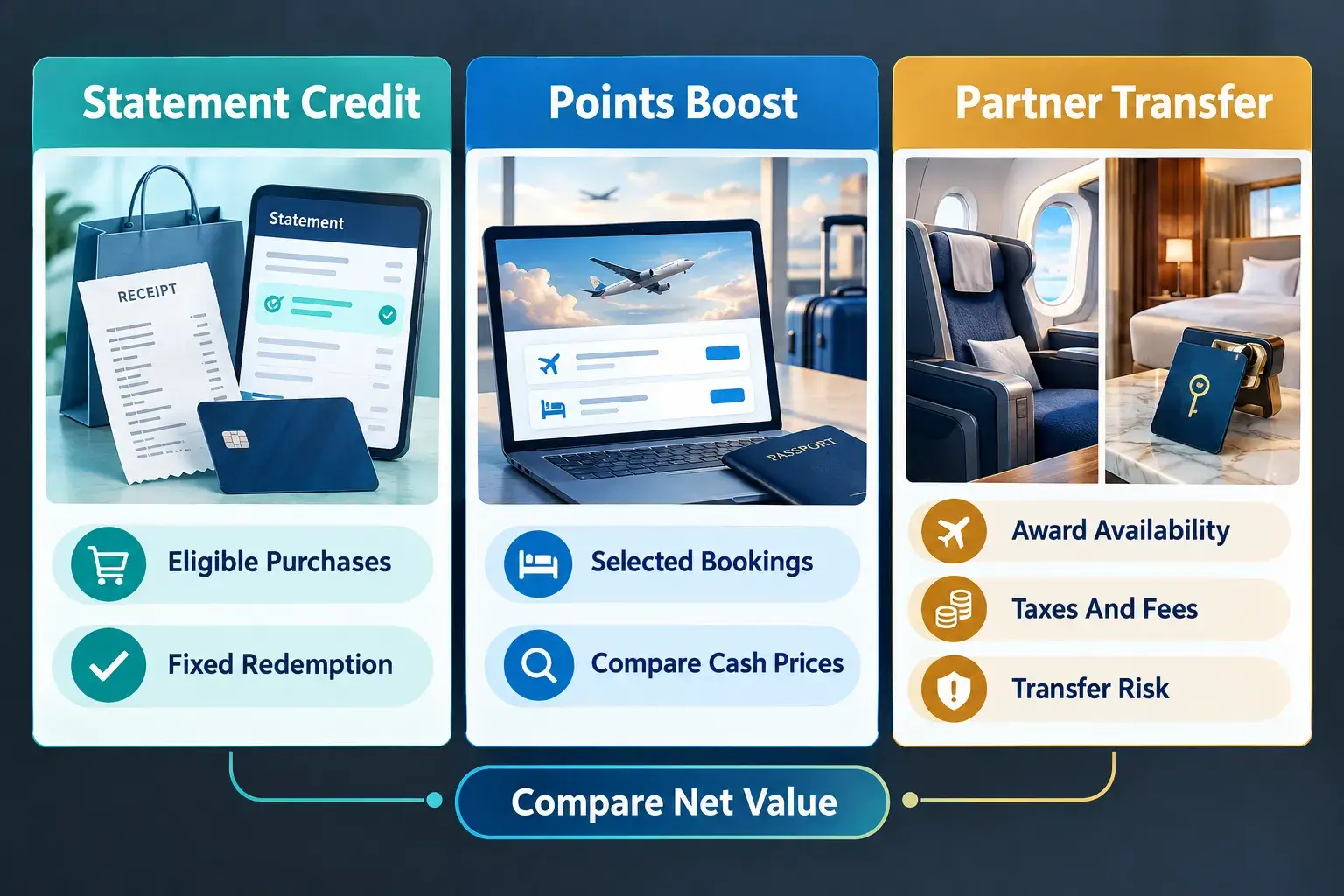
Pay Yourself Back provides a known statement-credit value, Points Boost offers enhanced value on selected Chase Travel bookings, and transfers depend on the award actually available. Compare all three using the same trip, cash alternative, and point balance.
| Option | How value works | Main limitation |
|---|---|---|
| Pay Yourself Back | Category-specific statement credit | Eligible purchases and deadlines |
| Regular cash redemption | Generally 1 CPP for Ultimate Rewards | No enhanced category value |
| Points Boost | Enhanced rate on selected Chase Travel bookings | Not every flight or hotel qualifies |
| Partner transfer | Value determined by the booked award | Award space, fees, and irreversible transfers |
Pay Yourself Back vs regular cash back: which pays more?
An enhanced Pay Yourself Back rate beats a standard 1-CPP cash redemption mathematically.
For example, 50,000 points at 1.25 CPP provide $625, compared with $500 at 1 CPP. At 1.15 CPP, the same balance provides $575.
These are illustrative calculations, not universal offers. If Pay Yourself Back quotes only 1 CPP, there is no rate advantage over ordinary cash redemption; compare convenience and available redemption methods.
Do legacy and new Sapphire cardholders receive the same rates?
Do not use legacy travel-portal rates to infer Pay Yourself Back value. The Pay Yourself Back quote follows the current offer for the selected card and transaction.
Points Boost and grandfathered portal benefits are separate. Eligible legacy Sapphire balances may retain former portal values, generally 1.25 CPP for Preferred or 1.50 CPP for Reserve, through October 26, 2027 under transition terms. Eligibility depends on card-opening and point-earning dates.
Selected Points Boost bookings can offer up to 1.50 CPP with Preferred and up to 2 CPP with Reserve. Those are ceilings, not rates available on every itinerary.
Compare the portal fare with the airline’s direct price before treating a higher advertised rate as better value. The Chase Travel portal versus transfer partners guide explains the booking tradeoffs.
When does transferring Chase points beat Pay Yourself Back?
Transfers win when a bookable award delivers higher net value per Chase point:
CPP = (comparable cash price − award taxes and fees) ÷ Chase points used × 100
Illustrative hotel example:
- Comparable cash stay: $300, including taxes.
- Award stay: 15,000 points, with no additional mandatory fees.
- Assumed transfer ratio: 1:1.
- Redemption value: 2 CPP.
- Using those 15,000 points at 1.25 CPP instead: $187.50.
The award saves more, assuming the room is available and cancellation terms are comparable.
Transfer bonuses can improve the calculation, but only when they reduce the Chase points needed for a useful award. See transfer bonus math before moving points.
When Pay Yourself Back Is the Best Use of Points
Pay Yourself Back is a strong choice when the guaranteed credit exceeds the value of a realistic travel alternative. It also fits cardholders who need cash-flow relief or lack usable award availability.
Compare a statement credit with a trip you would actually book, not a premium-cabin cash fare you would never pay.
Is Chase Pay Yourself Back worth it?
Best for: Cardholders with eligible expenses, no near-term high-value award, and a useful enhanced redemption rate.
Not for: Cardholders who have found available hotel sweet spots or premium cabin awards that deliver clearly better net value.
Consider an illustrative flight:
- Cash ticket: $500.
- Award: 35,000 miles plus $80.
- Assumed transfer ratio: 1:1.
- Net award value: 1.20 CPP.
An eligible 1.25-CPP Pay Yourself Back redemption beats that transfer on simple value. A 1.15-CPP grocery redemption does not, although the small difference may not justify restrictive award terms.
What is the best Pay Yourself Back strategy?
Use this decision framework:
- Confirm the live offer. Record the eligible expense, rate, and deadline.
- Check a realistic trip. Search award availability before assigning transfer value.
- Compare net costs. Include fuel surcharges, positioning flights, and required extra nights.
- Keep a useful reserve. Avoid exhausting transferable points if a specific booking is approaching.
- Redeem only what makes sense. Consider a partial credit where available.
Dynamic pricing and devaluation risk make speculative transfers unattractive. Transfer delays can also cause award space to disappear before miles arrive. Review when to transfer points and when to wait.
Points are not always the best tool for every expense. The credit card points versus cash back comparison helps assess that broader tradeoff.
How to Redeem Step by Step
Redeem through the Ultimate Rewards account attached to the card with the eligible purchase. Review the final credit and points total before confirming.
- Sign in to Chase and select the relevant card.
- Open Ultimate Rewards and find Pay Yourself Back.
- Review the eligible posted transactions.
- Select the purchase and reimbursement amount.
- Check the displayed rate and remaining eligibility period.
- Submit the redemption and retain the confirmation.
- Verify that the statement credit posts.
Quick check: Divide the credit amount by the points required, then multiply by 100. A $125 credit costing 10,000 points equals 1.25 CPP.
Combining Chase points may help fund a redemption where permitted, but moving points does not move the underlying purchase between cards. A Freedom purchase does not become a Reserve transaction.
Continue making required payments. Do not assume a rewards statement credit satisfies your minimum payment.
Common Mistakes and Timing Windows
Two timing rules matter: the purchase must remain within its eligibility window, and the category offer must still permit redemption. Eligible purchases generally must have posted within the previous 90 days; that does not guarantee 90 days beyond an offer’s expiration.
Does Chase Pay Yourself Back expire?
Category offers have deadlines, and individual transactions age out. Most listed Q4 2026 offers run through December 31, 2026, subject to change.
A late-quarter purchase should not be assumed redeemable after that date. Follow the deadline shown for the transaction and offer. Ultimate Rewards points generally do not expire while the account remains open and in good standing, but account closure and program rules can affect them.
Why is Pay Yourself Back not working?
Common causes include:
- The purchase is pending rather than posted.
- The transaction is older than the eligible window.
- The merchant category does not qualify.
- The offer expired or belongs to another card.
- The purchase was refunded or already reimbursed.
If a transaction appears eligible but is missing, check its posting date and merchant details, then contact Chase.
Which common mistakes should you avoid?
Avoid relying on old category lists, confusing earning bonuses with redemption eligibility, or transferring points before checking award space. Also avoid making an unnecessary purchase or donation solely to receive a higher CPP.
Practical rule: A higher redemption rate cannot recover the cost of spending you did not need.
FAQ
Is Pay Yourself Back a statement credit or cash deposit?
Pay Yourself Back provides a statement credit against an eligible purchase, not a bank-account deposit.
Can Pay Yourself Back reimburse only part of a purchase?
Yes, where the redemption interface permits it. Review the minimum and maximum amounts displayed.
Does Sapphire Preferred get Reserve’s grocery rate?
No. Sapphire Preferred eligibility follows its own offers, not Sapphire Reserve’s schedule.
Is Points Boost available for every Chase Travel booking?
No. Points Boost applies to selected eligible bookings; check the rate for the exact itinerary.
Can redeemed points later be transferred?
No. Points spent on Pay Yourself Back are no longer available for partner transfers.
Should points be transferred because a bonus is ending?
Only if a useful award is available and the net value beats your alternatives. A deadline alone does not justify a transfer.
Conclusion
Chase Pay Yourself Back remains useful in 2026, but narrower categories make account-level checks essential. Start with the posted purchase and live redemption quote, then compare regular cash redemption, Points Boost, and an available partner award.
Use the statement credit when its guaranteed value wins. Keep points transferable when a specific, bookable award offers more after fees and extra costs. Redeem before the applicable deadline, and do not carry an old quarterly offer into a new one.





Content on Award Travel Hub is independently created by Award Travel Hub Editorial Desk and, where noted, reviewed by Award Travel Hub Review Desk. Some pages may contain affiliate links, but compensation does not determine our coverage, opinions, or methodology.