

Last updated: October 25, 2026
Quick Answer
A credit card travel bonus is a one-time block of points or miles awarded after a new cardholder meets a minimum spend within a set window. In October 2026, common thresholds run from $4,000 to $5,000 in three months for 75,000-point offers. The bonus is worth earning only if the spend fits normal budgets, the issuer’s eligibility rules allow approval, and the points have a planned redemption.
Key Takeaways
- A welcome offer pays out only after eligible purchases reach the stated threshold before the deadline.
- The clock usually starts at approval or account opening, not when the physical card arrives.
- Returns, fees, cash advances, balance transfers, and gift-card purchases can reduce or block qualifying spend.
- Chase 5/24, Amex lifetime language, and Capital One and Citi lookback rules decide eligibility before spend matters.
- A 60,000 to 80,000 point bonus is worth roughly $600 to $1,600, depending on redemption (about 1 to 2 cents per point).
- Never spend money that would not be spent anyway, and never carry a balance to chase a bonus.
- Compare the bonus against the first-year annual fee and the likelihood the points will be used.
What Is a Credit Card Travel Bonus and How Does It Work?
A credit card travel bonus, also called a welcome offer or sign-up bonus, is a one-time reward for opening a card and meeting a spending target. The reward is paid in transferable points, airline miles, or hotel points, which can later be used for flights and stays.
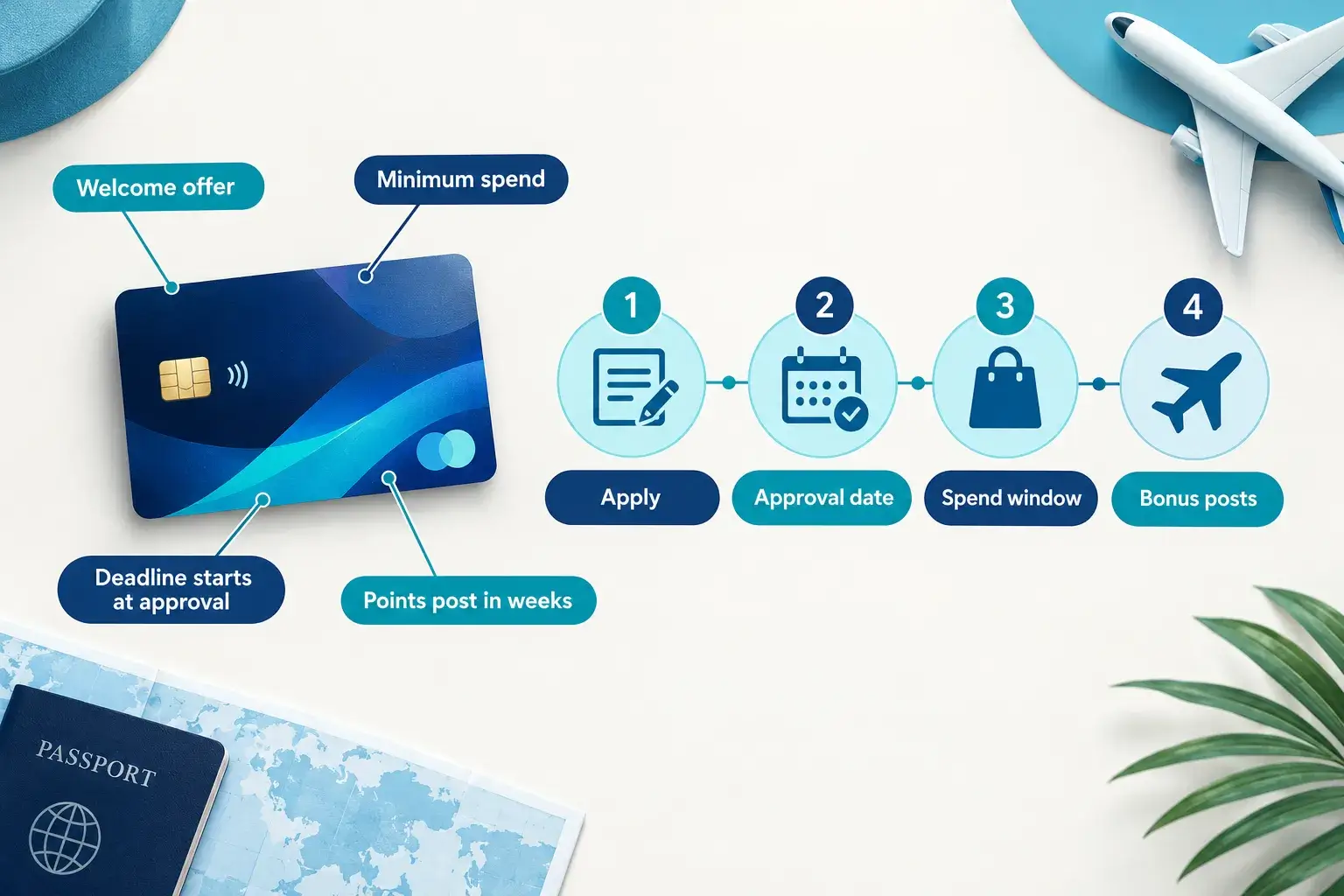
The sequence is straightforward:
- Apply and receive approval.
- Spend the required amount on eligible purchases within the window.
- Wait for the bonus to post, often within several weeks of the statement closing.
Offers vary by issuer and often change. Chase, Amex, Capital One, Citi, and Bilt programs are the main sources of transferable points. For a current snapshot of what is worth applying for, see Best Travel Credit Cards 2026.
What is the difference between travel points and cash back?
Cash back pays a fixed value, usually 1 to 2 cents per dollar spent. Travel points have variable value: roughly 1 cent each as a statement credit or fixed-value redemption, and often more when transferred to airline or hotel partners. Choose cash back if redemptions need to be simple. Choose travel points if premium cabin awards or partner transfers are a goal.
Which cards carry the best travel bonuses in 2026?
Rankings change monthly, and older “best of 2024” lists are out of date. Current public examples include the Capital One Venture and Chase Sapphire Preferred at 75,000 points each, plus targeted Amex Platinum offers that can reach 175,000 points. For beginners, best no annual fee travel credit cards offer a lower-risk starting point.
How Do Minimum Spend Requirements Work?
A minimum spend requirement is the amount of eligible purchases needed within a fixed window to trigger the bonus. A “$5,000 in three months” offer requires $5,000 in qualifying purchases, not $5,000 in payments made.
| Example offer (mid-October 2026) | Bonus | Minimum spend | Window | Monthly pace |
|---|---|---|---|---|
| Capital One Venture | 75,000 miles | $4,000 | 3 months | about $1,333 |
| Chase Sapphire Preferred | 75,000 points | $5,000 | 3 months | about $1,667 |
| IHG Premier (Chase) | 180,000 points | $3,000 | 3 months | $1,000 |
| Amex Platinum (targeted) | up to 175,000 points | $12,000 | 6 months | $2,000 |
You may be interested



Offers change and some are personalized, so the terms shown at application control. Save a screenshot of them.
How long does it take to earn a travel bonus?
Reaching the threshold takes the full window for most households, then a few weeks for posting. Divide the minimum spend by the number of months. If that pace exceeds normal monthly spending, the offer is a poor fit.
What counts as eligible spending?
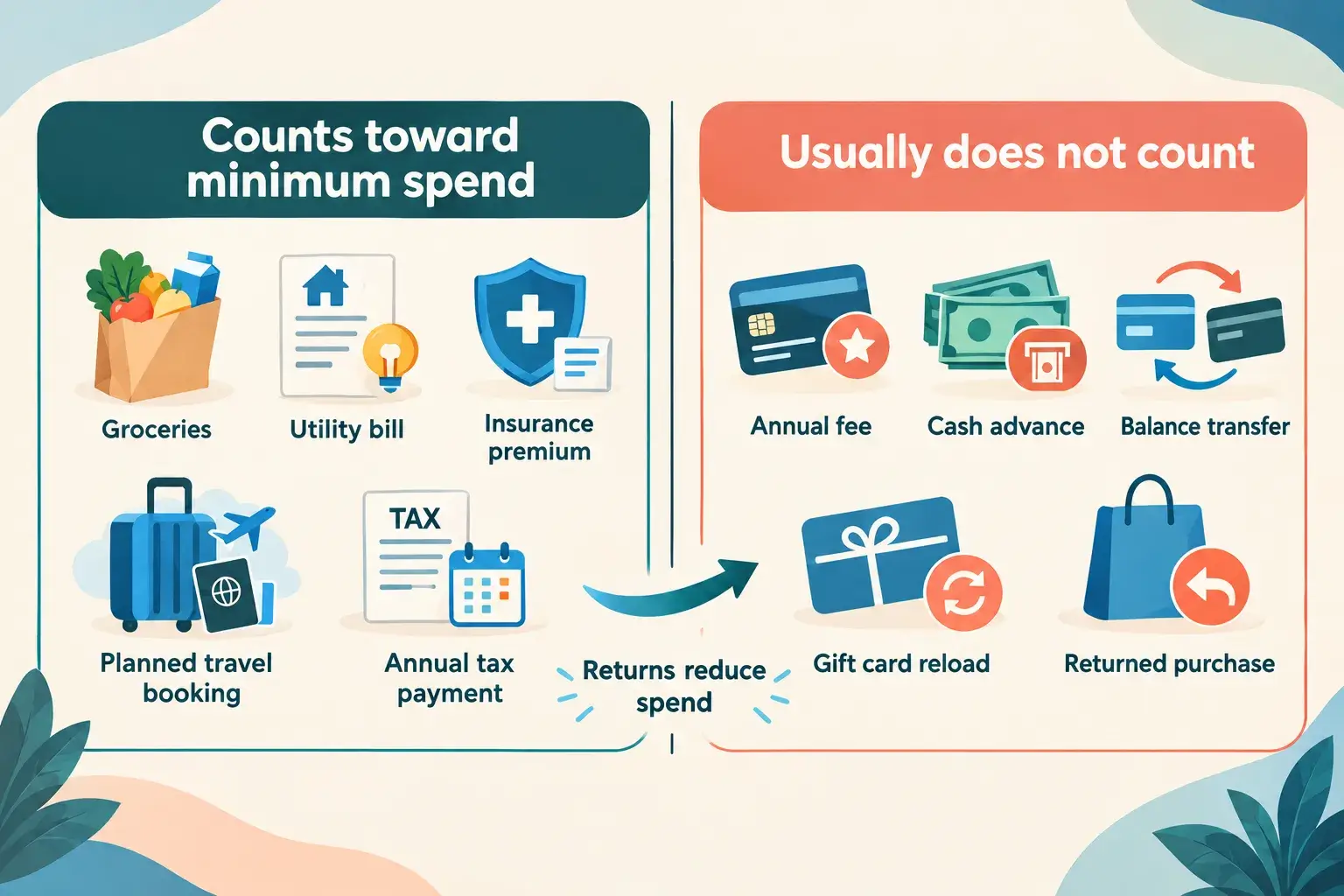
Eligible purchases are goods and services bought with the card, minus returns and credits. Typical exclusions:
- Annual fees and interest
- Balance transfers and cash advances
- Gift cards, prepaid reloads, and money orders on many offers
- Certain person-to-person payments
Deadlines may be three months, 90 days, six months, or 12 months on some business cards. The clock normally begins at approval, so a delayed card delivery shortens the usable time.
What Disqualifies You From a Credit Card Welcome Bonus?
Most disqualifications come from issuer rules, not credit scores alone. Check these before applying, because a denied application or a skipped bonus wastes both an inquiry and an opportunity.
- Chase 5/24: Chase generally declines applicants who opened five or more personal credit cards, across all issuers, in the past 24 months. Chase Sapphire bonuses also have a 48-month restriction tied to holding or recently receiving a Sapphire bonus.
- Amex lifetime language: Many Amex offers state the bonus is unavailable if the card has been held before or a bonus was earned previously. Terms are shown during application.
- Capital One: The current Venture offer excludes applicants who received a new Venture or Venture X bonus in the previous 48 months.
- Citi: A specialist report on October 15 said Citi rewrote Strata card language on September 20, moving from a 48-month restriction to wording that may make the bonus effectively once per lifetime. That is not an issuer announcement, so confirm the offer terms on the application page.
Other triggers include too many recent inquiries, high existing balances, or unclear income details. Business cards and personal cards follow different counting rules.
Are there cards for fair credit?
Yes, but the bonuses are typically smaller and approval is not guaranteed. Fair-credit applicants usually have better results with no annual fee cards, or after improving utilization and payment history. Premium travel cards generally target good to excellent credit.
How Can You Hit Minimum Spend Without Overspending?
The safest method is to move existing bills and planned purchases onto the new card, then pay the balance in full each month. Overspending can erase the bonus value through interest or unneeded purchases.
Practical sources of existing spend:
- Rent or utilities where card payment does not carry a fee larger than the rewards earned
- Insurance premiums and phone plans
- Planned travel, such as flights or hotel stays already booked
- Large predictable costs like annual dues, tuition (if fee-free), or tax payments (check the processor fee first)
Timing matters. Apply before a known large expense, not after. A decision rule: if the processing fee on a payment exceeds roughly 1 percent of the amount, the cost usually outweighs the benefit unless the bonus is at risk. See how to maximize credit card sign up bonus rewards for more spending sources.
Can you combine travel bonuses from multiple credit cards?
Yes, and points from cards in one issuer’s ecosystem usually pool. For example, Chase points from different Chase cards can be combined in one account, and Amex points can be consolidated under one membership rewards account. Do not open several cards at once unless each minimum spend can be met on its own schedule. Stagger applications, which also eases pressure under Chase 5/24.
How Much Is a Credit Card Travel Bonus Worth in Flights and Hotels?
A 60,000 to 80,000 point bonus is typically worth about $600 to $1,600. The range depends on cents per point (CPP): the cash price of the trip, minus taxes and fees, divided by the points used.

Illustrative math for a 75,000-point bonus (estimates, not guaranteed prices):
| Redemption | Assumed CPP | Approximate value |
|---|---|---|
| Statement credit or fixed-value travel portal | 1.0 | $750 |
| Economy or domestic flight via partner transfer | 1.3 to 1.5 | $975 to $1,125 |
| International business class via transfer partner | 2.0 or more | $1,500 or more |
Award availability, dynamic pricing, fuel surcharges, and devaluations can all lower these figures. A premium cabin seat is not always bookable when needed. Check award space before transferring, since transfers are generally irreversible. For transfer options, see top transfer partners.
Is a travel credit card bonus worth the annual fee?
Compare the realistic value of the bonus, minus the first-year fee, plus any credits actually used. If the net is positive and the card is useful in year two, the bonus is worth it. If not, consider a no-fee card. Retention offers may reduce later costs; see annual fee waivers and retention offers.
Do travel rewards expire?
It depends on the program. Many bank points stay active while the account is open and in good standing, but closing the card can forfeit them unless they are moved or the card is downgraded. Airline and hotel programs often have inactivity rules, so read the specific policy.
Can you transfer travel points between airlines and hotels?
Bank points transfer to airline and hotel partners, usually at 1:1, though ratios vary. Airline miles do not move to hotel programs in most cases, and the few conversions that exist are often poor value. Decide on the destination program before transferring.
What Common Mistakes Cost You the Travel Bonus?
Most lost bonuses come from missed terms, not from the card itself. These are the usual causes:
- Missing the deadline because the clock started at approval, not delivery.
- Returning purchases after hitting the threshold, which can pull spend below the minimum.
- Closing the account early before the bonus posts or inside the issuer’s holding period, which can trigger a clawback.
- Counting ineligible spend, such as fees, gift cards, or cash advances.
- Carrying a balance, where interest outweighs the bonus value.
- Applying while ineligible under 5/24, once-per-lifetime, or 48-month rules.
- Ignoring the redemption plan, then letting points sit while valuations change.
Read credit card welcome bonus clawbacks you must avoid and common mistakes using travel credit cards before applying.
Federal scrutiny has focused on transparency. The CFPB has flagged denied bonuses, hidden conditions, and unclear spending rules, but no federal rule removes minimum spend requirements. The offer terms remain the controlling document.
FAQ
Does the bonus count if spending is split across several purchases?
Yes. Multiple eligible purchases add up toward the minimum, as long as they post before the deadline.
When is the bonus usually credited?
Most issuers post it after the statement closes in which the minimum was met, often within a few weeks. Check the terms for the exact timing.
Is the Chase 5/24 rule a hard limit?
It is an informal but consistently applied policy. Chase generally declines applicants with five or more personal cards opened in the past 24 months, so check the count first.
Does a travel card bonus affect credit scores?
A new application causes a hard inquiry and lowers average account age. Impact is usually modest if payments are on time and balances are low.
Can a bonus be earned again on the same card?
It depends on the issuer. Capital One and Chase use 48-month rules on some cards, Amex often uses lifetime language, and Citi’s wording may be changing. Verify the terms before applying.
Is a bigger bonus always better?
No. A 200,000-point offer requiring $10,000 to $20,000 in spend may be harder to meet and less valuable than a smaller offer that fits normal spending.
Conclusion
A credit card travel bonus is worth pursuing when the minimum spend matches normal budgets, the card passes the issuer’s eligibility rules, and the points have a defined use. The best offer is the one that can be earned safely, not the largest on a list.
Next steps:
- Count recent personal card openings and check each issuer’s lookback rules.
- Divide the minimum spend by the months available and compare with usual spending.
- Save the offer terms and note the approval date as the start of the clock.
- Pick a redemption target, then check award space before transferring.
- Review current transfer bonuses to see whether a transfer can stretch the bonus further.




Content on Award Travel Hub is independently created by Award Travel Hub Editorial Desk and, where noted, reviewed by Award Travel Hub Review Desk. Some pages may contain affiliate links, but compensation does not determine our coverage, opinions, or methodology.