
Last updated: November 15, 2026
A Platinum welcome offer worth as much as 175,000 Membership Rewards points is only worth something if Amex lets you earn it. For anyone planning several American Express credit card applications in 2026, the rules that decide eligibility matter more than the size of the offer. Those rules include once-per-lifetime terms, family restrictions, the eligibility pop-up, and soft card limits. Amex doesn’t publish all of them. The patterns below come from Amex’s own terms plus years of reported applicant data points.
How Amex Welcome Offer Eligibility Works in 2026
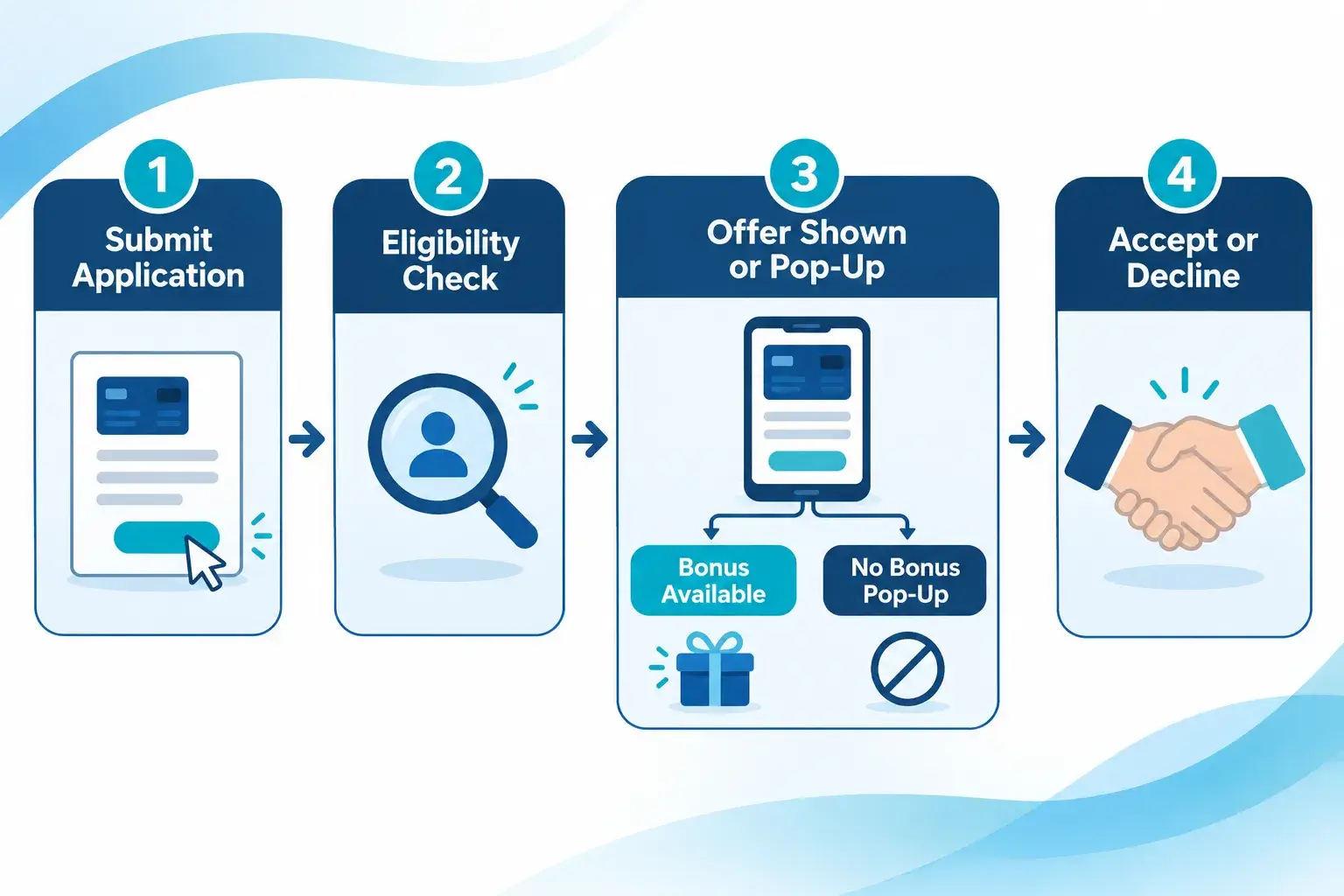
Amex decides bonus eligibility before you accept the card, and its terms say applicants “may not be eligible” based on prior card history and other internal factors. In practice, you’ll find out whether a welcome offer is available during the application, usually before any hard credit pull. That gives you a chance to walk away.
The current public terms are deliberately qualified. Amex says eligibility can depend on:
- Whether you currently hold, or have previously held, the same card
- Whether you hold or held another card in the same product family
- The number of cards you’ve opened and closed
- Your history with welcome offers, upgrades, and balance transfers
- Other internal factors Amex does not disclose
That last line is where most of the uncertainty sits. Amex has never published a complete rulebook, so treat any “rule” you read about, including the ones in this guide, as a consistent pattern rather than a guarantee.
Apply with Confidence: approval and bonus are separate decisions
Amex’s Apply with Confidence feature splits two outcomes:
- Approval: whether Amex will issue the card.
- Offer eligibility: whether the welcome bonus applies to you.
You can be approved and still be told the bonus isn’t available. If that happens, you can decline the card. Amex generally does not do a hard inquiry until you accept, though this applies mainly to applicants Amex can pre-evaluate. A new applicant with a thin credit file or a frozen bureau report may see different behavior.
Common mistake: Clicking through an application quickly and accepting a card without reading the offer screen. If no bonus is shown, assume none will post.
You may be interested



Decision rule: Apply only when Amex displays the offer you expect. If the screen says you aren’t eligible, decline and wait, unless the card’s ongoing value justifies holding it without a bonus. For a quick check on whether one popular card holds up on its own merits, see our Amex Gold Card worth it analysis for 2026.
Why does this matter for a points strategy? A 175,000-point Platinum offer, valued conservatively at 1.5 cents per point (CPP) through points transfer partners, is roughly $2,600 in travel value. Missing it because of a sequencing error is a real cost, not a technicality.
Once-Per-Lifetime Language and Family-of-Cards Rules
Amex generally allows one welcome bonus per specific card product per lifetime, and family rules can also block a bonus on a card you’ve never held. These are two separate restrictions. You need to check both before every application.
What “once per lifetime” means
Since around 2014, Amex terms have limited cardmembers to one welcome bonus per card product, no matter how long ago you held it. Key points:
- It applies across consumer, business, airline, hotel, cash-back, and Membership Rewards cards, including co-branded Delta, Hilton, and Marriott products.
- Each product counts separately. A Business Gold bonus doesn’t block a personal Gold bonus.
- Closing a card does not reset the clock. The question is whether you’ve ever held the product or earned its bonus, not whether the account is open today.
- “Lifetime” in practice means a very long lookback. Some applicants report becoming eligible again after many years, but there is no published reset window.
Because Amex uses “may not be eligible” rather than an absolute ban, there is some room for targeted offers that lack lifetime language and for occasional database gaps. Don’t plan around exceptions. Treat a prior bonus as permanently used unless Amex shows you an eligible offer.
How family-of-cards rules work
Family language can disqualify you from a lower-tier card’s bonus if you’ve held a more premium card in the same family. Reported restrictions and patterns look like this:
| Card family | Order that protects bonuses | What blocks a lower-tier bonus |
|---|---|---|
| Membership Rewards consumer | Green, then Gold, then Platinum | Holding or having held Platinum can block Gold and Green; Gold can block Green |
| Delta SkyMiles consumer | Blue, then Gold, then Platinum, then Reserve | Holding a higher-tier Delta card can block lower-tier bonuses |
| Hilton Honors consumer | Hilton Honors, then Surpass, then Aspire | Family language has appeared on Hilton offers; check current terms |
| Marriott Bonvoy (Amex side) | Check terms per card | Cross-issuer Chase and Amex Marriott rules also apply |
Edge case: Moving upward generally works. Holding Gold does not usually prevent a later Platinum bonus. Moving downward is where people lose offers.
Quick example: An applicant holds the Platinum Card and wants the Gold Card’s bonus for dining and grocery earning. The family language means Amex may show no offer. If that same person had opened Gold first, both bonuses would likely have been available.
Before applying, read the full offer terms on the application page. Business cards often have their own families, and the wording changes between offers.
What Pop-Up Jail Is and Why It Happens
“Pop-up jail” is the informal name for repeatedly seeing Amex’s eligibility pop-up, which says you aren’t eligible for a welcome offer even on cards you’ve never held. It isn’t a permanent ban. It’s a temporary flag based on how Amex judges your account behavior.
The pop-up usually reads along the lines of “Based on your history with American Express welcome offers or the number of cards you have opened and closed, you are not eligible.” You’re often still approved, just without the bonus.

Common triggers reported by applicants
Amex doesn’t publish triggers. Reported data points point to these patterns:
- Frequent openings and closings: Opening cards, earning bonuses, then closing near the first anniversary.
- Low organic spend: Using cards only for the minimum spend and then letting them sit idle.
- Manufactured spending signals: Heavy gift card, money order, or payment-app activity.
- Bonus-only behavior: A pattern of cards that are used briefly and then downgraded or canceled.
- Returns after meeting spend: Buying items to hit the threshold and returning them.
- Thin relationship: Few years with Amex or little regular spend across your cards.
Pop-up jail also appears with no obvious cause, including for people with modest application histories. That’s frustrating, but it’s part of the system.
How long it lasts and how to get out
There’s no published timeline. Reports range from a few weeks to many months. Strategies that applicants report working:
- Use your existing Amex cards for normal spending (groceries, dining, travel) for two to three months.
- Pause new Amex applications rather than testing the pop-up every few days.
- Keep cards open past their first year instead of closing right after a bonus.
- Check periodically using Apply with Confidence, which typically won’t pull your credit until you accept.
To check whether you’re in pop-up jail, start an application for a card you haven’t held. If the pop-up appears on several products, you’re likely flagged.
Pop-up jail vs. a permanent ban: Pop-up jail is reversible. A financial review, shutdown, or clawback for abuse (such as returned purchases after earning a bonus) is far more serious and can end your Amex relationship. Avoid behavior that looks like gaming the bonus terms.
If you’re blocked, other issuers are fine short-term options. Chase points, Capital One miles, and Citi points cover many of the same transfer partners. Our guide to Capital One Venture Rewards is a sensible starting point.
Amex Credit Card and Charge Card Limits
Amex generally limits applicants to about five credit cards at once, while charge-style cards like Platinum and Gold have historically not counted toward that cap. These limits aren’t published by Amex, so they come from repeated applicant reports.
Here’s how the reported limits break down:
| Card type | Reported limit | Examples |
|---|---|---|
| Credit cards (revolving) | About 5 open at once | Blue Cash Preferred, Delta Gold, Hilton Surpass, Blue Business Plus |
| Charge-style / Pay Over Time cards | Higher, often cited around 10 | Platinum, Gold, Green, Business Platinum, Business Gold |
| Business vs. personal | Generally counted together for the credit card cap | Personal and business credit cards share the limit |
What counts and what doesn’t
- Authorized user cards don’t count toward your own limit.
- Closed cards don’t count against the open-card cap, but they still count for once-per-lifetime history.
- Charge cards have pay-over-time features now, but applicants still report them sitting outside the five-credit-card cap.
Common mistake: Holding five Amex credit cards, including several no-fee products you rarely use, then being denied for a high-value co-branded card. If you’re near the cap, close or product change a low-value card first, ideally one that’s past its first year.
Decision rule: If you’re at four or five Amex credit cards, decide which slot is worth the most. A no-fee card earning little may be blocking a Delta or Hilton bonus worth far more. For a structured way to decide, use our annual fee review: keep, downgrade, or cancel.
Product changes deserve a warning. Upgrading Gold to Platinum may come with an upgrade offer, but it can also count as having “held” Platinum for lifetime and family purposes. If you want the full Platinum welcome offer, apply for it as a new card instead of upgrading.
How Often You Can Apply for Amex Cards
Amex reportedly approves no more than one credit card every five days and no more than two credit cards in a rolling 90-day window. Charge cards have historically not been subject to these velocity limits in the same way.
The commonly cited guidelines:
- One credit card per five days: A second credit card application within five days is often denied.
- Two credit cards per 90 days: A third credit card within 90 days is often denied.
- Charge cards: Applicants report more flexibility, though fast applications can still raise pop-up risk.
These are reported patterns, not published terms. Amex can deny for other reasons, including credit profile, income, or internal risk scores.
How Amex compares with other issuers
Amex is one of the more flexible issuers on new accounts, but its bonus rules are stricter than many competitors. If you’re planning across several banks, the order matters:
- Chase 5/24: Chase generally denies most of its cards if you’ve opened five or more personal cards from any issuer in 24 months. Many Amex business cards don’t appear on personal credit reports, so they usually don’t add to 5/24. Personal Amex cards do.
- Citi and Capital One: Each has its own velocity and bonus limits.
For the full multi-issuer picture, read our guide to navigating credit card application rules.
Can you reapply after a denial? Yes. If you were denied for velocity, wait until you’re outside the five-day or 90-day window. If you were denied for credit or income reasons, call reconsideration or wait until your profile improves. Repeated applications in a short period can add to pop-up risk.
Quick example: You open the Delta Gold card on March 1. A Hilton Surpass application on March 4 is likely too soon. On March 7, Surpass may be approved, but a third credit card before late May risks denial. A Platinum Card application in April is less likely to run into velocity limits.
An Application Order That Protects Your Bonuses
The safest order is lowest tier to highest within each family, Chase-sensitive personal cards before Amex personal cards, and patient spacing between Amex applications. That order keeps family rules, 5/24, and velocity limits from cutting into bonuses.

A practical sequence
- Plan Chase applications first if you’re under 5/24. Personal Amex cards add to your count, so open Chase products like the Chase Sapphire Preferred while you still can.
- Go up each Amex family, not down. Green, then Gold, then Platinum. Delta Blue, Gold, Platinum, then Reserve. Hilton base, Surpass, then Aspire.
- Use Amex business cards to fill gaps. They generally don’t add to Chase 5/24 and have separate lifetime histories.
- Space credit card applications at least five days apart, with no more than two in 90 days.
- Spend organically. Use cards beyond the minimum spend so your account looks like a real customer relationship.
- Keep cards at least 12 months before closing or downgrading.
- Read the offer screen every time. Decline if no bonus appears.
Best for / Not for
Best for: Readers who already hold several Amex cards and want to add Platinum, Delta, or Hilton bonuses over the next 12 to 24 months.
Not for: Anyone already in pop-up jail who keeps reapplying, or anyone counting on bonuses from cards they’ve previously held.
When Amex isn’t the best next move
Amex points are valuable, but they’re not the only option. If you’re locked out, an issuer with fresher bonuses often makes more sense than waiting. Compare offers before deciding, and see our ranking of the best Amex travel credit cards for 2026 for which Amex products are worth a slot when you’re eligible.
Is Amex churning still possible in 2026? In a narrow sense, yes. You can still earn many bonuses across products and families. Recycling the same card’s bonus isn’t realistic, and aggressive open-close cycles are the main reason people end up in pop-up jail.
Frequently Asked Questions
Does closing an Amex card reset the once-per-lifetime rule? No. Amex looks at whether you have ever held the card product, not whether it’s open now. Closing a card doesn’t restore bonus eligibility.
Does once-per-lifetime apply to every Amex card? It generally applies to all consumer and business Amex products, including co-branded airline and hotel cards. Each product is tracked separately.
How long does Amex pop-up jail last? There’s no published timeline. Reports range from a few weeks to several months, and regular organic spending on existing cards is the most commonly reported fix.
Can you get around the pop-up? Not reliably. Pausing applications, using current cards normally, and keeping cards open longer are the reported ways to clear it. Targeted offers sometimes lack lifetime language, but they’re not guaranteed.
How many Amex cards can you hold? Reports suggest about five Amex credit cards at once, with a separate and higher limit for charge-style cards. Amex doesn’t publish an official cap.
Does Apply with Confidence cause a hard pull? Generally no, not until you accept the card. Amex shows whether you’re approved and whether the bonus is available first.
Conclusion
Amex rules reward planning. Once-per-lifetime terms mean every bonus is a one-time decision, family rules punish going downward, and pop-up jail mostly hits people who open and close cards fast. Practical next steps:
- List every Amex card you’ve ever held, including closed ones.
- Map each family and apply from the lowest tier upward.
- Check Chase 5/24 before opening personal Amex cards.
- Space credit cards five days apart, two per 90 days.
- Read the Apply with Confidence offer screen and decline if no bonus appears.
After a bonus posts, review current credit card transfer bonuses before moving Amex points to partner airlines, so the points go further when you book.




Content on Award Travel Hub is independently created by Award Travel Hub Editorial Desk and, where noted, reviewed by Award Travel Hub Review Desk. Some pages may contain affiliate links, but compensation does not determine our coverage, opinions, or methodology.