

Last updated: May 18, 2026
Quick Answer: In 2026, United MileagePlus dynamically prices awards on its own flights, so costs swing wildly with demand. Star Alliance partner programs like Aeroplan, ANA Mileage Club, Turkish Miles&Smiles, and LifeMiles still use fixed or semi-fixed award charts for many of the same seats, often at significantly lower rates. The exception: United cardholders now get 10–15% off United-metal awards, and all Premier elites can apply complimentary upgrades and PlusPoints to award tickets starting February 2026. The right move depends on the route, cabin, your elite status, and whether you hold a co-branded United card.
Key Takeaways
- United dynamically prices its own flights, so award costs on popular routes can spike 50–100% above what partners charge for the same seat.
- Partner programs reduced rates in late 2025: MileagePlus cut partner award prices roughly 9%, dropping Europe business class to 80,000 miles and Asia-Pacific business to 100,000 miles one-way.
- Aeroplan, Turkish, and ANA still beat MileagePlus on most long-haul routes when saver award space is available, sometimes by 20,000–40,000 miles per ticket.
- United cardholder discounts (10–15% off) apply only to United metal awards, not partner bookings, narrowing the gap on select routes.
- Upgrade eligibility changed in February 2026: Premier members can now use complimentary upgrades and PlusPoints on MileagePlus award tickets, a major shift that favors booking on United metal if you have elite status.
- Transferable points (Chase, Amex, Capital One, Citi, Bilt) give you access to multiple Star Alliance programs, so you can compare pricing before committing.
- For domestic and short-haul flights, Turkish Miles&Smiles at 10,000 miles in economy often undercuts United’s dynamic pricing.
- Devaluation risk is real on both sides: United adjusts dynamically in real time, while partner programs can change charts with limited notice.
How United and Key Star Alliance Partners Price Awards in 2026
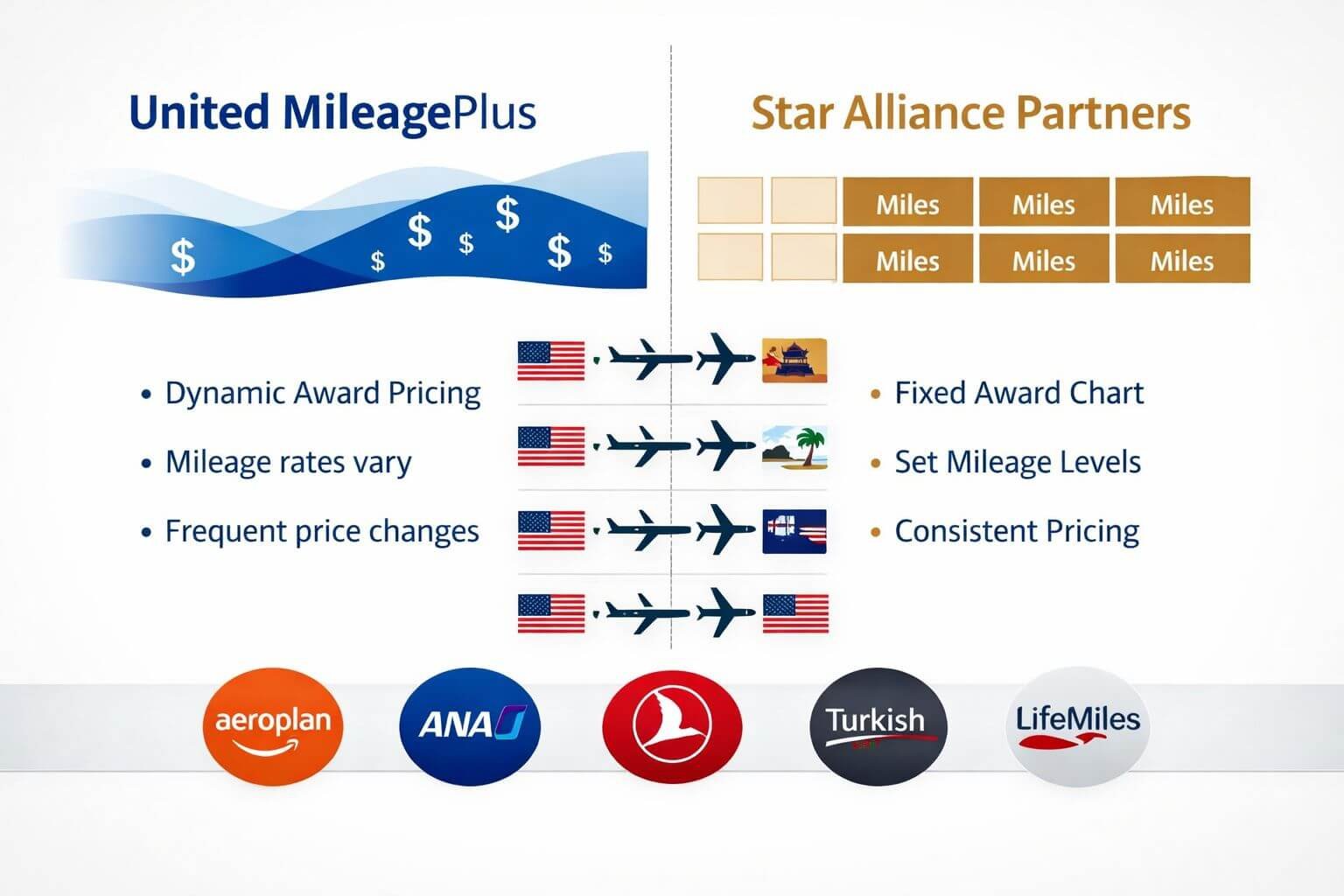
United MileagePlus uses fully dynamic pricing on its own flights, meaning there’s no published award chart for United metal redemptions. Prices fluctuate based on demand, route, date, and cabin, much like revenue fares. Partner programs, by contrast, largely retain structured pricing.
Here’s how the major programs compare:
| Program | Pricing Model | Access to United Flights | Key Advantage |
|---|---|---|---|
| United MileagePlus | Dynamic (own metal); reduced fixed chart (partners) | Direct | Cardholder discounts, upgrade eligibility, seat selection |
| Aeroplan | Dynamic on United/AC; fixed chart on most Star partners | Via Star Alliance | Lower rates on Lufthansa, Swiss, EVA; stopover rules |
| ANA Mileage Club | Fixed round-trip chart | Via Star Alliance | Extremely low round-trip rates; strict booking rules |
| Turkish Miles&Smiles | Fixed chart | Via Star Alliance | Low domestic/short-haul; no fuel surcharges on most partners |
| LifeMiles | Fixed chart | Via Star Alliance | Purchasable miles; no surcharges; good for one-ways |
Key context: United’s late-2025 partner rate reduction brought Europe business class down from 88,000 to 80,000 miles and Asia-Pacific business from 110,000 to 100,000 miles when booking partner airlines through MileagePlus. That’s a welcome improvement, but it still doesn’t match what Aeroplan or ANA charge for the same seats. For a deeper look at how MileagePlus pricing has evolved, see our United MileagePlus 2026 changes breakdown.
Case Study Routes Where United Wins (Especially for Cardholders)
Direct answer: United-metal bookings through MileagePlus make the most sense on routes where dynamic pricing stays reasonable, cardholder discounts apply, and upgrade eligibility tips the value calculation.
Route 1: Newark (EWR) to London Heathrow (LHR) — Polaris Business Class
- United MileagePlus (cardholder): ~70,000–85,000 miles + $5.60 taxes (with 10–15% discount applied)
- Aeroplan on United metal: ~70,000 miles + $5.60 (dynamic pricing on United flights via Aeroplan)
- Cash fare benchmark: ~$4,500 one-way
- CPP with United (cardholder): 5.3–6.4 cents per point
With the cardholder discount, United’s own pricing on this high-demand transatlantic route can match or beat Aeroplan, especially when United releases saver-adjacent inventory. Add in the ability to use PlusPoints for a Polaris-to-first upgrade on select aircraft, and the math favors MileagePlus for Premier 1K and Platinum members.
Route 2: San Francisco (SFO) to Honolulu (HNL) — Economy
- United MileagePlus (cardholder): ~18,000–22,000 miles + $5.60
- Turkish Miles&Smiles: Not bookable (Turkish doesn’t price Hawaii routes competitively)
- Cash fare benchmark: ~$350–$500 round trip
- CPP with United: 1.6–2.8 cents per point
Hawaii is United’s stronghold. Dynamic pricing stays moderate outside peak holiday windows, and cardholder discounts bring costs below what most partner programs can offer. The February 2026 upgrade eligibility change also means a Premier Gold or above member flying on an award ticket can clear a complimentary upgrade to Economy Plus or even first on a domestic-configured 737.
Route 3: Chicago (ORD) to Los Angeles (LAX) — Domestic First (Transcon)
- United MileagePlus (cardholder): ~20,000–30,000 miles + $5.60
- Turkish Miles&Smiles: 12,500 miles + ~$5.60 (if saver space available)
- Cash fare: ~$600–$900 one-way
You may be interested



Decision rule: If you’re a Premier Platinum or 1K member, book with MileagePlus at the cardholder rate and use PlusPoints to upgrade. If you have no status and hold transferable points, Turkish at 12,500 miles is the clear winner when saver space opens up.
Common mistake: Assuming United dynamic pricing is always inflated. On hub routes with heavy competition (ORD–LAX, EWR–SFO), United frequently releases reasonable award pricing, especially 2–3 weeks out. Check before defaulting to a partner.
Case Study Routes Where Aeroplan, ANA, or Turkish Beat MileagePlus
Direct answer: For most long-haul premium cabin awards, especially to Europe and Asia, partner programs consistently offer better rates than MileagePlus. The savings can reach 20,000–50,000 miles per ticket.
Route 4: US to Europe — Lufthansa First Class (JFK–FRA)
- United MileagePlus: 121,000 miles + $5.60 (partner rate)
- Aeroplan: 90,000–100,000 miles + ~$50 surcharges
- LifeMiles: 87,000 miles + ~$30
- Cash fare benchmark: ~$8,000–$12,000 one-way
This is one of the clearest cases in the United vs. Star Alliance partner awards debate. LifeMiles saves over 30,000 miles compared to MileagePlus for the same Lufthansa First Class seat. During Amex transfer bonus promotions to LifeMiles, the effective cost drops further.
Route 5: US to Japan — ANA Business Class (LAX–NRT)
- United MileagePlus: 100,000 miles + $5.60 (partner rate, post-reduction)
- ANA Mileage Club: 85,000–88,000 miles round trip (low/regular season)
- Aeroplan: 75,000 miles one-way on ANA metal
- Cash fare benchmark: ~$5,000–$7,000 one-way
ANA’s own program requires round-trip bookings but charges roughly 88,000 miles round-trip in business class during the regular season, making it one of the best sweet spots in all of award travel. The catch: ANA only releases partner award space to its own members closer to departure, and you need to transfer points from Amex or Rove Miles. For route-specific tactics, see our Star Alliance business class booking guide.
Route 6: US to Istanbul — Turkish Business Class (IAD–IST)
- United MileagePlus: 80,000 miles + $5.60
- Turkish Miles&Smiles: 45,000 miles + ~$100 surcharges
- Cash fare benchmark: ~$4,000 one-way
Turkish’s own program charges nearly half what MileagePlus does. Even with modest fuel surcharges, the savings are substantial. Turkish Miles&Smiles transfers from Citi points and Capital One miles at 1:1, making this an excellent use of transferable points. Our Turkish Airlines Miles&Smiles guide includes the full list of transfer partners.
Upgrade Eligibility on United Award Tickets vs Partner-Booked Tickets
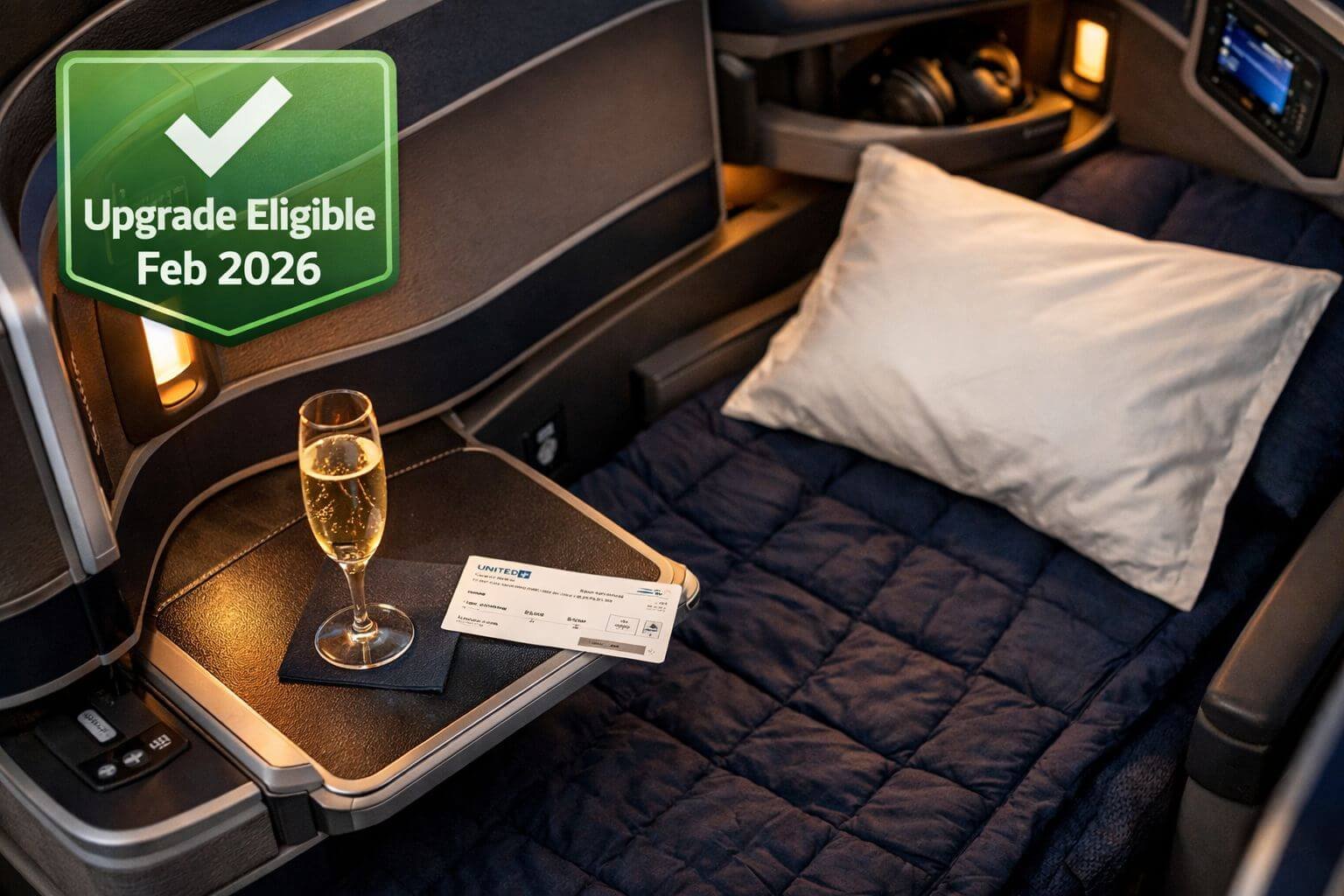
Direct answer: Beginning February 1, 2026, United Premier members can use complimentary Premier upgrades and PlusPoints on MileagePlus award tickets. This is a significant change that previously relegated award tickets to second-class status for upgrades. Partner-booked award tickets (booked through Aeroplan, Turkish, etc.) remain ineligible for these upgrades.
What this means in practice:
- Premier Gold and above can now list for complimentary domestic upgrades on award tickets, just like paid fares.
- Premier Platinum and 1K can apply PlusPoints to confirm upgrades on award tickets, including on international Polaris routes.
- Partner-booked tickets (any Star Alliance program other than MileagePlus) cannot access complimentary upgrades or PlusPoints, regardless of your United elite status.
Decision framework:
- Choose United MileagePlus if you’re Premier Platinum or 1K and the route has upgrade availability. The combination of a discounted award fare plus a confirmed PlusPoints upgrade to Polaris can deliver outstanding value.
- Choose a partner program if you don’t have United elite status or if the partner rate is so low that the savings exceed the upgrade’s value.
Edge case: If you’re Premier Gold, complimentary upgrades on award tickets only clear on a space-available basis at the gate. The value is real but unpredictable. For most Gold members, the lower partner rate is still the better bet on long-haul routes.
How to Choose Which Currency to Use for Your Next Star Alliance Trip
This decision framework applies to anyone holding transferable points from Chase, Amex, Capital One, Citi, or Bilt who can access multiple Star Alliance programs. For a full breakdown of which banks transfer where, see our comparing transfer partners guide.
Step 1: Determine the operating airline and cabin. Partner award pricing depends on who operates the flight, not who sells the ticket.
Step 2: Check United MileagePlus pricing first. Log into united.com and note the dynamic price. If you hold a United co-branded card, apply the 10–15% discount mentally.
Step 3: Compare against at least two partner programs. Use these rules of thumb:
| Scenario | Best Program | Why |
|---|---|---|
| US–Europe business on Lufthansa/Swiss/Austrian | Aeroplan or LifeMiles | 60,000–87,000 vs. 80,000–121,000 on United |
| US–Japan business on ANA | ANA Mileage Club (round trip) | ~88,000 RT vs. 100,000 one-way on United |
| US domestic economy | Turkish Miles&Smiles | 10,000 miles vs. 12,500+ dynamic on United |
| US–Hawaii (United metal) | MileagePlus with cardholder discount | Best availability, upgrade eligible |
| Any route where you’re Premier 1K | MileagePlus | PlusPoints upgrade potential |
Step 4: Factor in fees and surcharges. United charges minimal taxes on awards ($5.60 from the US). Some partner programs add fuel surcharges, particularly on Lufthansa and Swiss metal. LifeMiles and Turkish generally do not.
Step 5: Check for active transfer bonuses. A 15–30% transfer bonus can shift the math entirely. If Amex is running a 20% bonus to LifeMiles, an 87,000-mile Lufthansa first class award effectively costs ~73,000 Amex points.
Common pitfall: Transferring points before confirming award availability. Always search and hold (where possible) before initiating a transfer. Points transfers are irreversible.
Step-by-Step Booking Workflow and Tools to Compare Options
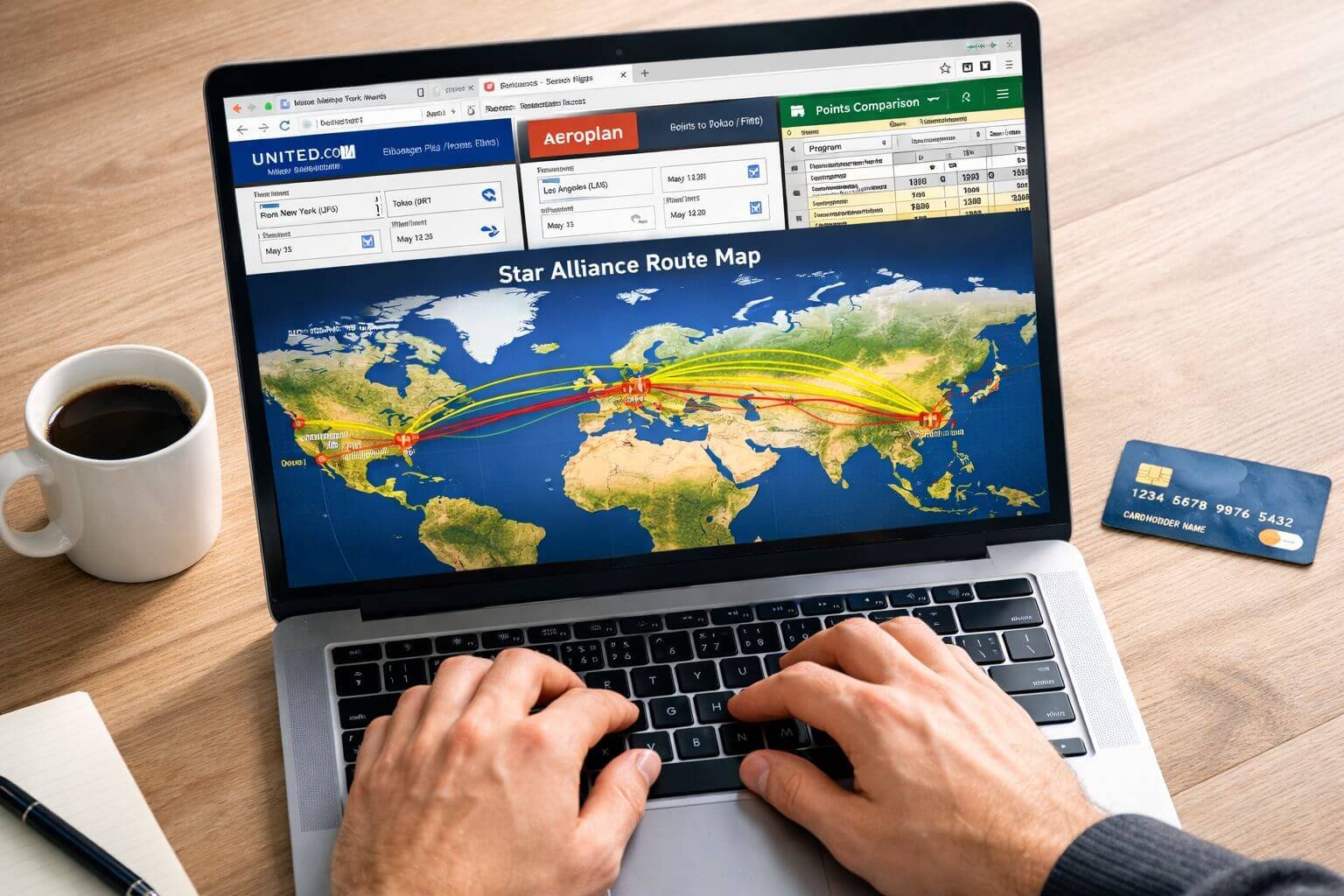
Direct answer: A systematic search across 2–3 programs before transferring any points takes 15–20 minutes and can save tens of thousands of miles. Here’s the workflow.
Search United.com for your route and dates. Note the MileagePlus price in your desired cabin. Filter by “MileagePlus partner airlines” to see partner-operated flights and their MileagePlus rates.
Search Aeroplan.com for the same route. Aeroplan shows Star Alliance availability broadly and displays its own pricing. Compare directly.
Search cowtool.com or point.me for cross-program comparisons. These award search tools pull availability across multiple programs simultaneously.
Check ANA’s site if booking round-trip to Asia. ANA’s tool is clunky but shows its own exclusive inventory.
Calculate total cost: Miles required + taxes/surcharges + any positioning flight costs. Divide the cash fare you’d otherwise pay by the total miles to get your CPP.
Confirm availability, then transfer. Only move transferable points after you’ve verified the seat exists. Most transfers from Chase, Amex, and Capital One complete within minutes to hours.
Book and screenshot your confirmation. Partner bookings occasionally have ticketing delays; follow up within 24 hours if no e-ticket number appears.
Pro tip: For timing your award booking, partner award space on Star Alliance carriers typically opens 330–355 days out, but the best Lufthansa first class and ANA business class space often appears inside 14 days as airlines release unsold inventory.
Checklist for Keeping Your United and Partner Strategies in Sync
☐ Maintain flexible currency. Keep the bulk of your points in transferable programs (Chase Ultimate Rewards, Amex Membership Rewards, Capital One, Citi ThankYou, Bilt) rather than speculatively transferring to MileagePlus. This preserves optionality across all Star Alliance partners.
☐ Earn MileagePlus miles through flying and the United card. Under the April 2026 revenue-based earning structure, cardholders earn 5x–17x miles per dollar spent on United flights. These miles are best used for United metal awards, where cardholder discounts and upgrade eligibility apply.
☐ Monitor partner award chart changes. Aeroplan, Turkish, and ANA can adjust charts with limited warning. Subscribe to Award Travel Hub and program newsletters for devaluation alerts.
☐ Watch for transfer bonuses quarterly. A 20–30% bonus to LifeMiles, Aeroplan, or Turkish can turn a good redemption into an exceptional one. See our transfer bonus strategy guide for current promotions.
☐ Reassess annually. United’s dynamic pricing algorithm changes frequently. What’s overpriced today may become competitive after a route adjustment or capacity increase.
☐ Don’t overlook ITA Airways. With ITA’s full Star Alliance membership in 2026, new routes to Italy are bookable through MileagePlus and partner programs, expanding options for European award travel.
☐ Factor in the JetBlue partnership. United’s Blue Sky tie-up with JetBlue adds domestic connectivity, particularly from East Coast focus cities. This doesn’t change the Star Alliance partner calculus but improves MileagePlus’s domestic coverage.
Conclusion
The United vs. Star Alliance partner awards question doesn’t have a single answer—it depends on the route, cabin, your elite status, and whether you hold a United co-branded card. In 2026, the clearest pattern is this: use MileagePlus miles for United-metal flights where cardholder discounts and upgrade eligibility create compounding value, and use partner programs (Aeroplan, ANA, Turkish, LifeMiles) for long-haul premium cabins where fixed charts price the same seats for significantly fewer miles.
The February 2026 upgrade eligibility change is a genuine inflection point for Premier elites. If you’re 1K or Platinum, booking Polaris awards through MileagePlus and applying PlusPoints can deliver first-class-equivalent value at business class rates. For everyone else, the math still overwhelmingly favors partner programs on international routes.
Next steps:
- Search your next trip on united.com and at least one partner program to see the spread firsthand.
- Review our Star Alliance award booking guide for program-specific tactics.
- Keep your transferable points flexible until you’ve confirmed availability and compared all options.
Frequently Asked Questions
Is it ever worth booking United flights through MileagePlus instead of a partner program?
Yes. When United offers cardholder discounts (10–15% off), when you have Premier status that enables PlusPoints upgrades, or when dynamic pricing dips below partner chart rates on hub routes, MileagePlus is the better choice.
Which Star Alliance partner program is best for booking United flights?
Aeroplan is the most versatile for United metal bookings, though it now uses dynamic pricing on United and Air Canada flights. Turkish Miles&Smiles offers the lowest domestic economy rates at 10,000 miles one-way.
Can I use PlusPoints on award tickets booked through Aeroplan or Turkish?
No. Complimentary Premier upgrades and PlusPoints only apply to award tickets booked directly through MileagePlus, not through any partner program.
Do partner-booked award tickets earn United elite-qualifying miles?
Award tickets, whether booked through MileagePlus or partners, do not earn elite-qualifying points (PQP) under United’s revenue-based earning model. Only paid fares earn PQP.
What’s the biggest risk of using partner programs instead of MileagePlus?
Award chart devaluations can happen with limited notice. Also, partner-booked tickets may have more restrictive change and cancellation policies, and you lose access to United’s upgrade tools.
Should I transfer points to MileagePlus speculatively?
Generally no. MileagePlus miles are less flexible than transferable points sitting in Chase, Amex, or other bank programs. Transfer only after confirming specific award availability.
How do fuel surcharges affect the partner vs. United comparison?
United charges minimal surcharges ($5.60 from the US). Some partners like Aeroplan pass through carrier-imposed surcharges on Lufthansa and Swiss flights ($50–$300+). LifeMiles and Turkish typically do not add surcharges, making them preferable for surcharge-heavy carriers.
Does the United-JetBlue partnership affect Star Alliance award bookings?
Not directly. The Blue Sky partnership expands MileagePlus domestic options but doesn’t change how Star Alliance partner programs price or access United flights.
What is the best use of 100,000 transferable points on Star Alliance?
Depending on the route, 100,000 points could cover a round-trip ANA business class ticket to Japan (via ANA Mileage Club), a one-way Lufthansa first class ticket to Europe (via LifeMiles with a transfer bonus), or two domestic round-trips (via Turkish). See our best use of 100,000 points guide for more scenarios.


Content on Award Travel Hub is independently created by Award Travel Hub Editorial Desk and, where noted, reviewed by Award Travel Hub Review Desk. Some pages may contain affiliate links, but compensation does not determine our coverage, opinions, or methodology.