

Last updated: July 15, 2026
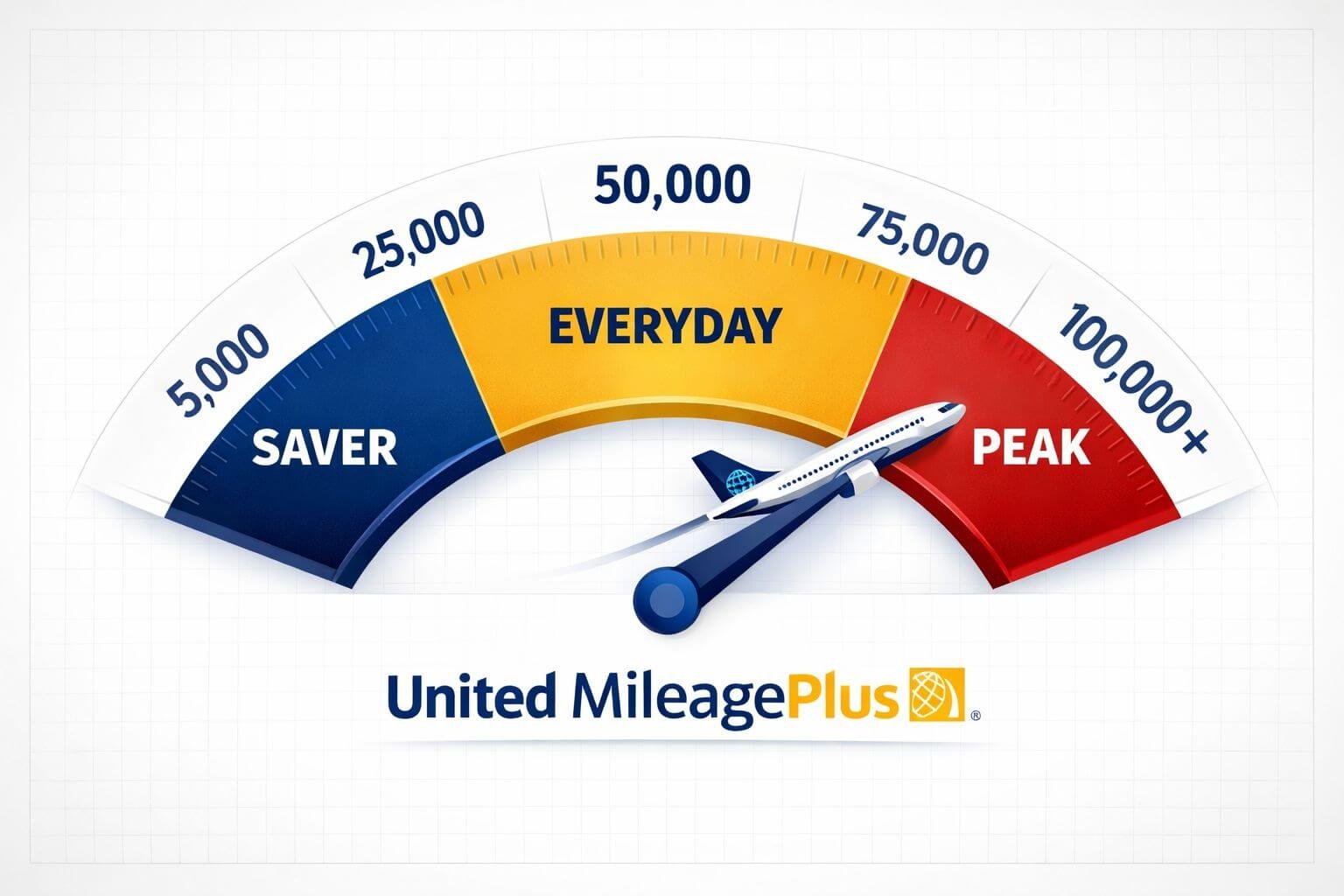
Quick Answer: There is no single fixed number. United MileagePlus uses fully dynamic pricing for United-operated flights, so the miles needed for a free flight range from roughly 5,000 miles for a short domestic hop to 100,000+ miles for peak international Business Class. The most realistic domestic economy award costs 8,000–20,000 miles one-way, while a transatlantic economy seat typically runs 25,000–45,000 miles. Knowing the “good,” “okay,” and “overpriced” ranges for your specific route is what separates a smart redemption from a wasted one.
Key Takeaways
- United MileagePlus has no published award chart for its own flights; pricing is dynamic and tied to cash fare demand.
- Domestic economy awards start as low as 5,000–7,500 miles one-way on off-peak routes and short segments.
- Transcon (coast-to-coast) economy typically runs 12,500–25,000 miles one-way; business class can reach 40,000–60,000 miles.
- Hawaii economy from the mainland averages 17,500–30,000 miles one-way; Europe economy runs 25,000–45,000 miles.
- United co-branded cardholders receive a 10% automatic discount on standard awards; Premier members get 15%+.
- Partner awards (booked through United on Star Alliance carriers) still loosely follow distance-based pricing bands.
- Aeroplan (Air Canada) often prices the same United flights 20–30% cheaper in miles — always compare before transferring.
- Chase Ultimate Rewards, Amex, Capital One, Citi, and Bilt all transfer to United MileagePlus at 1:1 — but transferring to Aeroplan instead may deliver better value on the same metal.
- A cents per point (CPP) value of 1.2–1.5 cents is average for United miles; business class redemptions can push 2–3+ CPP.
- Always search award availability before transferring any transferable points — United’s dynamic pricing means the same route can swing 30–50% between dates.
How United’s Dynamic Pricing Affects “Free Flight” Mile Requirements
United MileagePlus abandoned its fixed award chart for United-operated flights several years ago. In 2026, the miles needed for a free flight on United are calculated in real time based on the cash price of the ticket, demand, and your cardholder status — not a set zone or distance band.
What this means in practice:
- The same SFO–JFK route might cost 12,500 miles on a Tuesday in October and 35,000 miles over Thanksgiving weekend.
- There is no “standard” price you can memorize and plan around.
- United does publish Featured Awards — a rotating selection of discounted routes — but these change frequently and are not guaranteed.
Two pricing tiers still exist in practice:
| Tier | What It Is | Typical Cost vs. Cash |
|---|---|---|
| Saver-level | Lower-demand inventory, best CPP | 1.5–2.5+ CPP |
| Everyday/Standard | Higher-demand, priced closer to cash | 1.0–1.3 CPP |
United introduced automatic award discounts in 2026: 10% off standard awards for co-branded cardholders and 15%+ for Premier members. These discounts apply at checkout and meaningfully improve value on everyday-priced awards.
Common mistake: Many beginners assume United has a chart like the old one and search for a fixed number online. Any specific number you find on a third-party site may be outdated within weeks. Always search United’s own tool for current pricing.
For a broader look at how these changes affect earning and status, see the United MileagePlus 2026 changes breakdown on ATH.
How Many United Miles Do You Need for Domestic Flights?
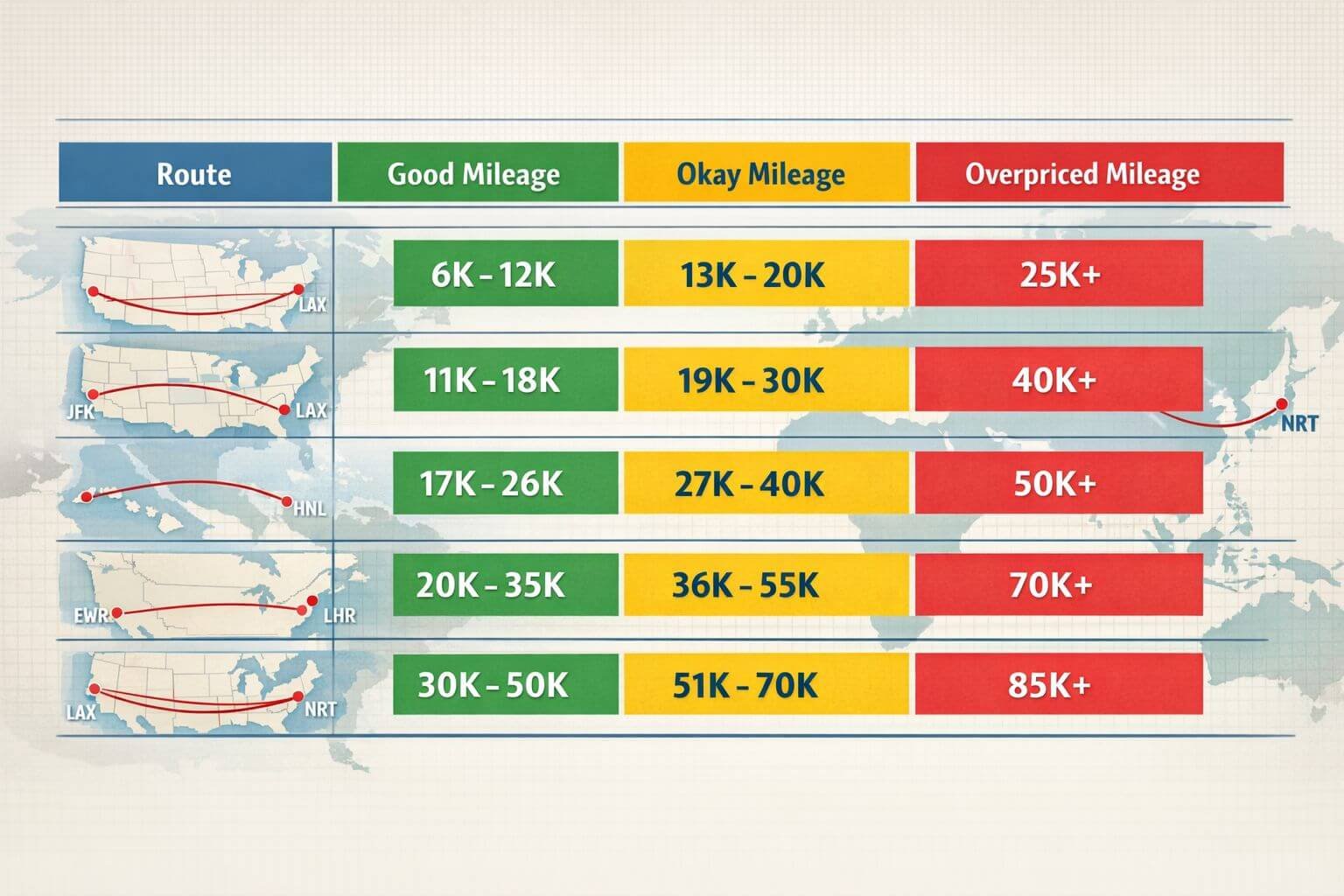
For most domestic routes, economy awards on United currently fall between 8,000 and 25,000 miles one-way, with the lowest prices appearing on short segments and off-peak travel dates.
You may be interested



Short-haul domestic (under 500 miles):
- Examples: SFO–LAX, ORD–STL, EWR–BOS
- Range: 5,000–10,000 miles one-way + ~$6 in fees
- Good price: under 7,500 miles
- Overpriced: above 12,000 miles for these distances
Mid-haul domestic (500–1,500 miles):
- Examples: EWR–MCO, ORD–DEN, LAX–SEA
- Range: 8,500–18,000 miles one-way
- Good price: 8,500–12,000 miles
- Overpriced: above 20,000 miles
Transcon (coast-to-coast):
- Examples: JFK–LAX, EWR–SFO, BOS–SEA
- Range: 12,500–30,000 miles one-way economy; 35,000–60,000 miles business
- Good price: under 15,000 miles economy
- Overpriced: above 25,000 miles economy
Featured Award examples (as of April 2026 searches):
- SFO–LAX: 5,600 miles + $6 one-way
- EWR–MCO: 8,500 miles + $6 one-way
These Featured Award prices represent the low end of what’s available. They appear on specific dates and disappear quickly — treat them as best-case benchmarks, not guaranteed prices.
Decision rule: For the domestic economy, if the award costs more than 1.5 cents per mile in equivalent cash value, the redemption is mediocre. Use the ATH United MileagePlus transfer partners guide to check if a partner program prices the same route lower.
How Many United Miles You Need for Hawaii, Europe, and Asia
These longer routes are where dynamic pricing creates the widest variation — and where knowing the “good” range matters most.
Hawaii (Mainland U.S. to Hawaii)
- Economy one-way: 17,500–35,000 miles
- Business one-way: 35,000–60,000 miles
- Good price: 17,500–22,000 miles economy
- Overpriced: above 30,000 miles economy for off-peak dates
Hawaii is a high-demand leisure route, so peak summer and holiday pricing can push economy awards well above 30,000 miles. Shoulder season (April–May, September–October) consistently produces the lowest prices.
Europe (U.S. to Western Europe)
- Economy one-way: 25,000–55,000 miles
- Business (Polaris) one-way: 55,000–100,000+ miles
- Good price: 25,000–35,000 miles economy; 55,000–70,000 miles business
- Overpriced: above 45,000 miles economy; above 90,000 miles business
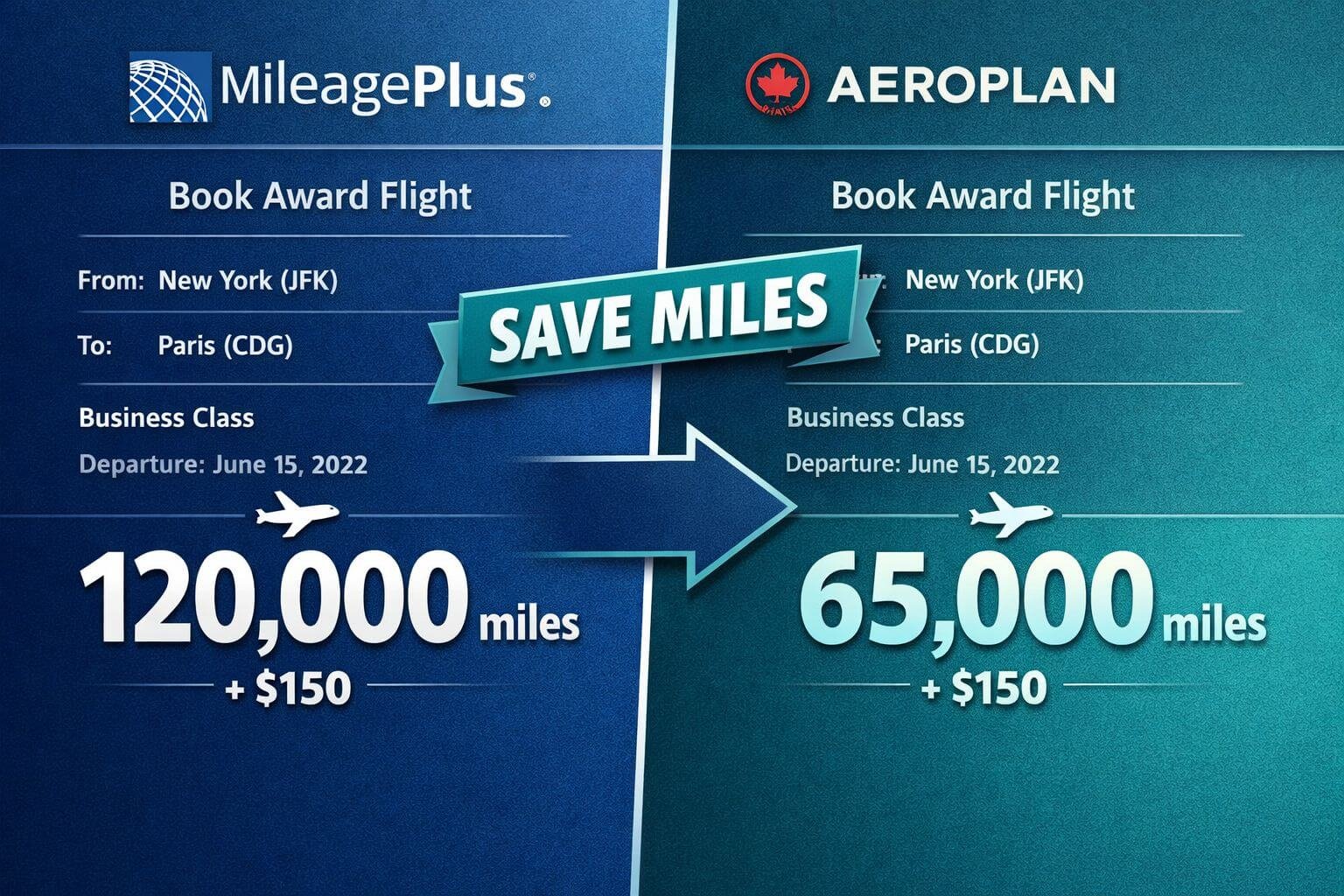
Partner alternative worth knowing: Aeroplan (Air Canada) frequently prices United-operated transatlantic flights at 60,000–70,000 miles round-trip in business class — often 20–30% fewer miles than booking directly through MileagePlus for the same seats. Chase Ultimate Rewards and other transferable points programs transfer to Aeroplan at 1:1, making this a strong alternative. See the Europe award flight booking guide for step-by-step instructions.
Asia (U.S. to East Asia/Southeast Asia)
- Economy one-way: 35,000–70,000 miles
- Business one-way: 70,000–130,000+ miles
- Good price: 35,000–45,000 miles economy; 70,000–85,000 miles business
- Overpriced: above 60,000 miles economy; above 110,000 miles business
Asia routes show the widest pricing swings of any region. Peak travel periods (Chinese New Year, Golden Week, summer) can push business class awards above 120,000 miles one-way on United’s own tool.
Route Range Summary Table
| Route | Economy (Good) | Economy (Okay) | Economy (Overpriced) | Business (Good) |
|---|---|---|---|---|
| Short domestic | 5,000–8,500 | 8,500–12,000 | 12,000+ | N/A |
| Mid domestic | 8,500–12,000 | 12,000–18,000 | 18,000+ | 25,000–35,000 |
| Transcon | 12,500–15,000 | 15,000–22,000 | 22,000+ | 35,000–50,000 |
| Hawaii | 17,500–22,000 | 22,000–30,000 | 30,000+ | 35,000–50,000 |
| Europe | 25,000–35,000 | 35,000–45,000 | 45,000+ | 55,000–75,000 |
| Asia | 35,000–45,000 | 45,000–60,000 | 60,000+ | 70,000–90,000 |
Ranges are estimates based on off-peak searches in April 2026. Peak dates and last-minute bookings will price higher.
When Partner Awards Beat United Flights on the Same Routes
United MileagePlus lets you book Star Alliance partner flights — and in many cases, those awards price more predictably than United’s own dynamic inventory.
Key partner programs to compare before booking:
- Aeroplan (Air Canada): Transfers from Chase, Amex, Capital One, and Bilt at 1:1. Frequently prices United-metal transatlantic business at 60,000–70,000 miles round-trip versus 80,000–100,000+ through MileagePlus directly.
- Turkish Airlines Miles&Smiles: Transfers from Citi and Capital One. Known for low pricing on short-haul Star Alliance routes. See the Turkish Airlines Miles&Smiles transfer partner guide for current sweet spots.
- ANA Mileage Club: Strong for transpacific premium cabin awards on United metal.
When to book through United MileagePlus directly:
- You have a United co-branded card and qualify for the 10–15% discount
- The Featured Award price is genuinely low (under the “good” threshold in the table above)
- You need flexibility — United awards on United flights can be changed or canceled more easily
When to book through a partner program instead:
- The United direct price is in the “okay” or “overpriced” range
- You hold Chase, Amex, Capital One, Citi, or Bilt points and can transfer to Aeroplan or another Star Alliance partner
- You’re booking business class to Europe or Asia
Important: Always search award availability on United’s tool first to confirm seats exist before transferring any points. Transferable points transfers are generally instant to United but irreversible. For timing strategy, the award flight booking timing guide covers when to search and when to pull the trigger.
For a full comparison of which transferable points programs offer the best value for United-metal flights, the Chase vs Amex vs Citi vs Capital One transfer partner comparison is a useful next read.
Simple Rules of Thumb to Decide If a United Award Is Worth Booking
United’s dynamic pricing makes it easy to overpay. These decision rules help you recognize a good redemption quickly.
Rule 1: The CPP floor Calculate cents per point (CPP) before redeeming. Divide the cash price of the ticket by the miles required, then multiply by 100.
- Formula: (Cash price ÷ Miles required) × 100 = CPP
- Example: $350 cash ticket / 25,000 miles × 100 = 1.4 CPP
- Minimum acceptable: 1.2 CPP for economy; 1.8+ CPP for business
If the CPP is below 1.2, paying cash or saving miles for a better redemption is usually smarter.
Rule 2: The 30% partner check Before booking any international award through United, spend 5 minutes checking Aeroplan for the same dates. If Aeroplan prices it 30% lower in miles, use Aeroplan instead (assuming you have transferable points available).
Rule 3: The peak/off-peak date shift If the award price is in the “overpriced” range, shift your search by 2–3 days in either direction. United’s dynamic pricing means a Friday departure might cost 40% more than the same flight on a Wednesday. This single step resolves the majority of “why is this so expensive?” questions.
Rule 4: Featured Awards first Always check United’s Featured Awards section before searching specific routes. These rotating discounts often surface the best CPP available and are worth bookmarking as a starting point.
Rule 5: Cardholder discount check If you hold a United co-branded card, the 10% automatic discount applies at checkout — factor this into your CPP calculation before deciding. A 20,000-mile award becomes 18,000 miles with the discount, which can push a borderline redemption into “worth it” territory.
Checklist before transferring points to United:
- Confirmed award seat availability on United’s tool
- Calculated CPP (above 1.2 for economy, 1.8+ for business)
- Checked Aeroplan and one other Star Alliance partner for the same route
- Tried ±3 days on dates to find the lowest price
- Verified no fuel surcharges or excessive carrier fees apply
- Confirmed miles won’t expire before travel (see the airline miles expiration rules guide for United’s policy)
For readers who want to go deeper on booking business class specifically, the how to book Business Class with points guide covers United Polaris alongside other premium cabin options.
FAQ: How Many United Miles for a Free Flight?
Q: What is the minimum number of United miles needed for any flight? A: The lowest prices found in 2026 are around 5,000–5,600 miles one-way for very short domestic routes like SFO–LAX on off-peak dates. Most domestic flights require at least 8,000–10,000 miles one-way.
Q: How many United miles do I need for a round-trip domestic flight? A: Budget 16,000–40,000 miles for a round-trip domestic economy award, depending on route and dates. Short-haul round trips can come in under 20,000 miles; transcon round trips typically cost 25,000–50,000 miles.
Q: Does United still have a Saver award level? A: United no longer uses the “Saver” label publicly, but lower-priced award inventory still exists. The pricing tiers are now just reflected in the mile cost shown — lower-demand dates show lower prices without a separate label.
Q: Are United miles worth it for short domestic flights? A: Generally, no — unless you find a Featured Award under 7,500 miles. Short domestic cash fares are often $50–$150, which means CPP is low. Miles are better saved for Hawaii, Europe, or Asia redemptions where the cash price is much higher.
Q: How many United miles do I need for a free flight to Europe in economy? A: Expect 25,000–45,000 miles one-way in economy. Off-peak dates in spring or fall can come in at the lower end. Summer and holiday dates regularly push above 40,000 miles.
Q: Can I use Chase points directly for United awards? A: Chase Ultimate Rewards transfer to United MileagePlus at 1:1. However, also consider transferring to Aeroplan (also a Chase partner at 1:1) for the same United-operated flights — Aeroplan often prices them lower.
Q: What’s the best way to find low United award prices? A: Use United’s own search tool with flexible date view enabled. Check Featured Awards weekly. Search ±3 days around your target date. The best award search tools for beginners guide covers additional tools that surface United availability.
Q: Do United miles expire if I’m not flying? A: United MileagePlus miles do not expire as long as your account has qualifying activity every 18 months. Credit card spending, partner purchases, and transfers all count as activity.
Q: How many miles for United Polaris business class to Europe? A: Expect 55,000–100,000+ miles one-way depending on dates and demand. Off-peak shoulder season dates can come in at 55,000–70,000 miles. Aeroplan frequently prices the same seats at 60,000–70,000 miles round-trip, making it a strong alternative.
Q: Is it worth buying United miles to cover a redemption? A: Rarely. United sells miles at roughly 3.5 cents each, which is well above the average redemption value of 1.2–1.5 CPP. The buying airline miles guide covers the rare cases where a purchase makes sense (usually a targeted bonus sale closing a small gap).
Q: What are “Everyday” awards vs. lower-priced awards on United? A: United’s pricing is fully dynamic, so there’s no formal “Everyday” label in 2026. The distinction is simply higher-priced inventory (priced closer to cash value) versus lower-priced inventory (better CPP). The lower-priced seats are limited and fill quickly on popular routes.
Q: How do I know if a United award price is good or overpriced? A: Use the route range table in this article as a benchmark. Calculate CPP (cash price ÷ miles × 100). If CPP is below 1.2, the price is poor. If it’s above 1.5 for economy or 2.0+ for business, it’s a solid redemption.
Conclusion
The honest answer to “how many United miles do you need for a free flight” in 2026 is: it depends on the route, the date, and whether you’re booking directly through MileagePlus or through a partner program.
For most readers, the practical framework is straightforward:
- Search first, transfer second. Confirm award availability before moving any points.
- Use the range table to quickly judge whether a price is good, okay, or overpriced for your route.
- Check Aeroplan before booking any international award through United directly — it frequently wins on price for the same seats.
- Hold a United co-branded card if you fly United regularly; the 10–15% automatic discount meaningfully improves redemption value.
- Target off-peak dates for Hawaii, Europe, and Asia — the difference between peak and shoulder season pricing can be 30–50% in miles.
United MileagePlus miles are most valuable in business class on long-haul routes and least valuable on short domestic hops where cash prices are low. Build your strategy around the high-value use cases, and treat short domestic awards as a convenience rather than a primary redemption goal.
Next steps:
- Review the United MileagePlus transfer partners guide to see all programs that can feed miles into MileagePlus or book United flights at lower rates.
- Read the best transferable points programs guide if you’re deciding which credit card ecosystem to build.
- Set up award alerts for your target routes using the tools covered in the best award travel tools guide.




Content on Award Travel Hub is independently created by Award Travel Hub Editorial Desk and, where noted, reviewed by Award Travel Hub Review Desk. Some pages may contain affiliate links, but compensation does not determine our coverage, opinions, or methodology.