

Last updated: May 15, 2026
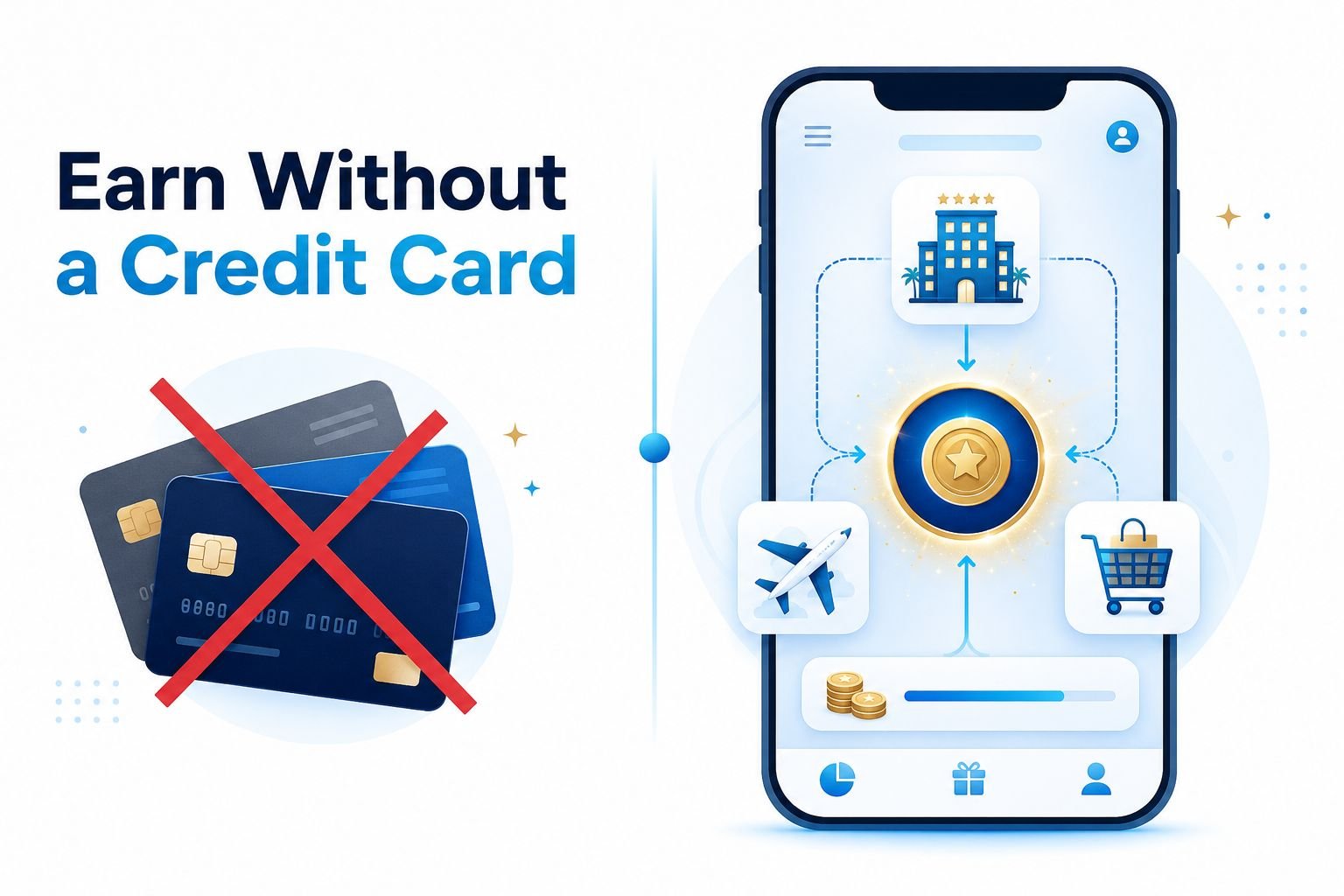
Quick Answer: Rove Miles is a transferable points currency launched in 2025 that lets you earn miles on hotels, flights, and online shopping — without applying for any credit card. You earn on top of whatever card you already carry, then redeem by booking travel directly through Rove’s portal or by transferring to 18 airline and hotel partners at rates that can reach 3–6+ cents per mile in premium cabins.
Key Takeaways
No credit card required. Rove Miles is earned through bookings and shopping, not card spend. Pay with any card you already have.
Stacking is the core value. You earn Rove Miles on top of your existing credit card rewards — not instead of them.
Earn rates: Up to 25x on hotels, 1–10x on 140+ airlines, and competitive rates at 13,000+ online stores through their portal or Chrome extension.
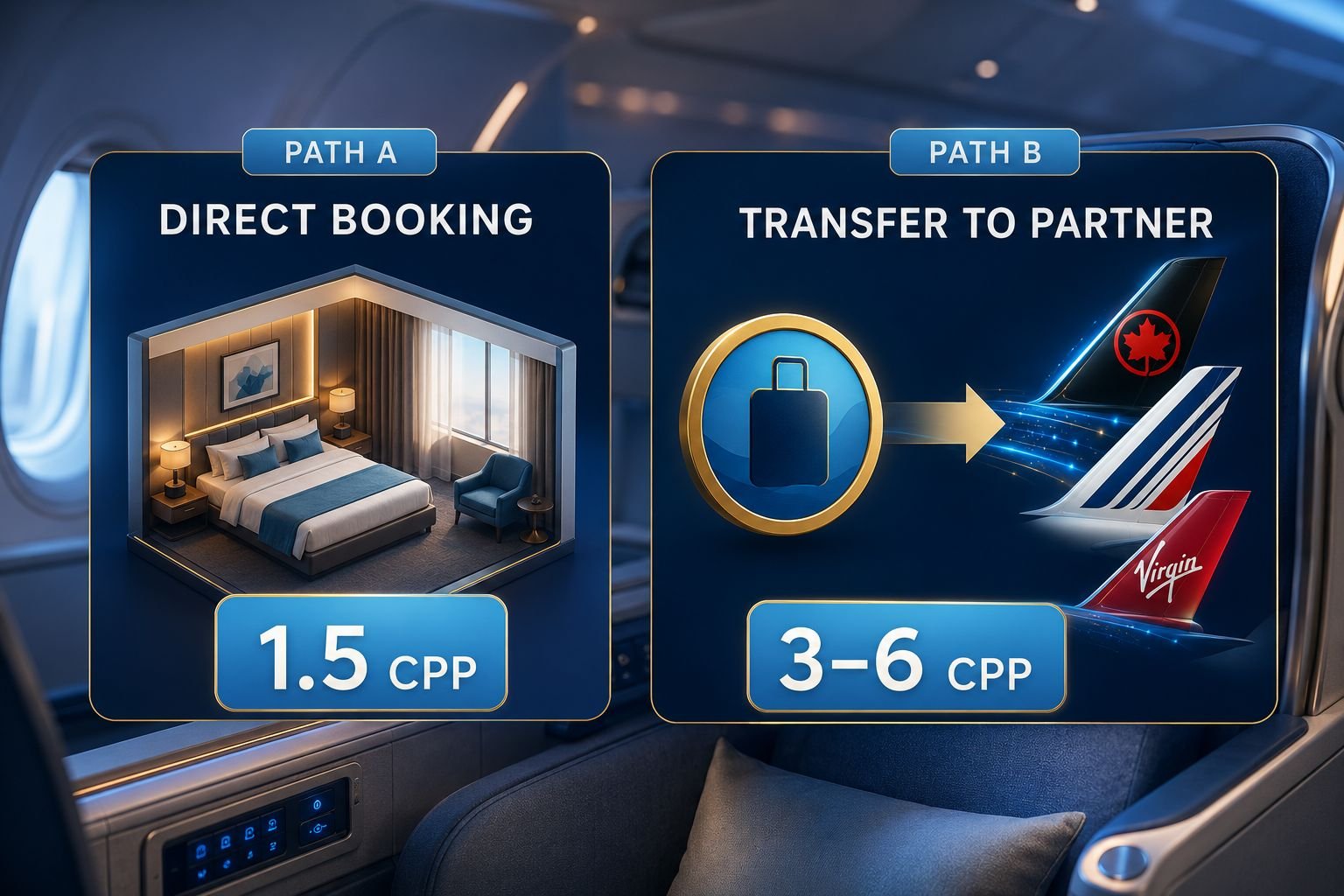
Two redemption paths: Book directly on Rove at roughly 1.3–2.2 cents per mile, or transfer to a partner program and potentially extract 3–6+ cents per mile on premium cabin awards.
18 transfer partners including Air Canada Aeroplan, Flying Blue, Virgin Atlantic, and Accor (at 1:1.5). All airline transfers are 1:1.
Loyalty Eligible rates let you earn Rove Miles and keep your hotel loyalty points and elite night credits on the same stay — something no major OTA offers.
Miles don’t expire as long as your account is active, but Rove is a startup; don’t hoard indefinitely.
U.S. only for now. A U.S. phone number is required to sign up.
Legitimacy check: Backed by Y Combinator, covered by TPG, NerdWallet, Upgraded Points, Frequent Miler, and AwardFares.
Best for: Travelers who want transferable points without a credit card, or who want to layer Rove Miles on top of an existing points strategy.
What Is Rove Miles and Why Does It Exist?
Rove Miles is a transferable loyalty currency that lets anyone earn points on travel and shopping without needing to apply for a credit card. It was founded in 2025 by Arhan Chhabra and Max Morganroth — Y Combinator alumni with Harvard and Wharton backgrounds — and 2026 is its first full year with a mature partner ecosystem.
The program exists to solve a specific problem: the best transferable points currencies — Amex Membership Rewards, Chase Ultimate Rewards, Capital One Miles, Citi ThankYou Points — all require you to hold a specific credit card to earn at scale. If you don’t qualify for a premium card, have no credit history, or simply don’t want another card, you’ve historically been locked out of the most valuable redemptions in award travel.
Rove’s answer is to act as a booking layer on top of your existing payment method. When you book a hotel or flight through Rove’s portal, or shop at one of 13,000+ retailers via their Chrome extension, Rove earns a commission from the merchant and shares it with you as Rove Miles. You pay with whatever card you already carry — and earn Rove Miles on top of that card’s own rewards. This is called stacking, and it’s the program’s foundational premise.
Who Rove Miles is for:
Travelers who want transferable points but don’t hold (or don’t want) a premium travel card
Points enthusiasts who want to layer additional miles on hotel and flight bookings they’re already making
Beginners exploring award travel for the first time, without the commitment of a new credit card
Who it’s not for:
Heavy credit card spenders who already max out Amex or Chase bonus categories — your existing card’s earn rate likely beats Rove’s on everyday spend
Travelers who want lounge access, trip delay insurance, or other card-linked perks; Rove doesn’t offer those
How to Earn Rove Miles (Without Any Credit Card Application)
Rove Miles are earned through three channels: hotel bookings, flight bookings, and online shopping. There is no credit card application, no annual fee, and no credit check.
Hotel Bookings (Up to 25x)
Booking hotels through Rove’s portal is the highest-earning channel. Rates vary by property and rate type, but the program advertises up to 25x Rove Miles per dollar spent. In practice, most bookings fall in the 5–15x range depending on the hotel and whether you select a standard or Loyalty Eligible rate (more on that below).
Flight Bookings (1–10x on 140+ Airlines)
You can book flights through Rove and earn 1–10x miles depending on the airline and fare class. This is a lower earn rate than hotel bookings, but it stacks on top of whatever miles the airline itself credits to your frequent flyer account — plus whatever your credit card earns on the purchase.
Online Shopping Portal (13,000+ Stores)
Rove’s shopping portal and Chrome extension function similarly to portals like Rakuten or Capital One Shopping, except you earn Rove Miles instead of cash back. Earn rates vary by retailer. This is a straightforward way to accumulate miles on purchases you’re already making.
Practical note on stacking: If you book a $300 hotel stay through Rove using your Chase Sapphire Preferred, you earn Chase Ultimate Rewards points on the $300 charge, the hotel’s own loyalty points (if eligible), and Rove Miles on the same booking. That’s three currencies from one transaction.
For a broader look at how stacking fits into a full award travel strategy, see our travel hacking beginner’s guide.
The Loyalty Eligible Trick: Earn Rove Miles AND Hotel Points on the Same Stay
This is Rove’s most distinctive feature for anyone who already holds hotel status or values elite night credits.
Most online travel agencies (OTAs) — Expedia, Hotels.com, Booking.com — book you at a third-party rate. That means the OTA is the merchant of record, and the hotel treats your stay as a non-qualifying booking. You typically earn no hotel loyalty points, no elite night credits, and you receive no status benefits.
Rove’s Loyalty Eligible rates work differently. When you select a Loyalty Eligible rate on Rove, the hotel itself is the merchant of record. The hotel processes the booking as if you booked directly with them. That means:
You earn hotel loyalty points on the stay
Your elite night credits count toward status
You receive status-based perks (room upgrades, late checkout, breakfast, where applicable)
You also earn Rove Miles on the booking
Frequent Miler calls this a “double-dip” — or even a “triple-dip” when you factor in the credit card return on any cash portion of the booking. No major OTA offers this combination.
The tradeoff: Loyalty Eligible rates are not always available for every property, and they may not always be the lowest rate. Always compare the Loyalty Eligible rate against direct hotel pricing before booking. If the rate is within a few dollars of the hotel’s direct rate, the Rove Miles make it a clear winner.
How to Redeem Rove Miles: Direct Booking vs. Transferring to Partners
There are two distinct redemption paths, each serving different types of travelers.
Path 1: Direct Booking Through Rove’s Portal
Book flights or hotels directly on Rove’s platform and pay with your Rove Miles balance. Redemption value typically falls in the 1.3–1.5 cents per mile (CPP) range for flights and 1.5–2.2 CPP for hotels, depending on the property and dates.
This is the simpler path. It works well for travelers who want straightforward value without having to learn partner program rules. If you’re new to calculating cents per point, start here to build a baseline before exploring transfers.
Best for: Beginners, domestic trips, hotel stays where partner programs don’t offer better value.
Path 2: Transfer to a Partner Program
Transfer your Rove Miles to one of 18 airline or hotel partners, then book an award through that partner’s program. This is where the real leverage is.
Current transfer partners include:
Transfer Partners
Transfer ratios and transfer times can change. Please verify details with the issuer before transferring points.
All airline transfers are at a 1:1 ratio. Accor is the exception at 1:1.5, meaning 1,000 Rove Miles become 1,500 Accor points.
Minimum transfer: Most partners require a minimum of 1,000 Rove Miles per transfer. Confirm the minimum for your specific partner before initiating, as requirements can vary.
Why transfers matter: A business class seat to Europe that costs $4,000 in cash might be bookable through Flying Blue for 50,000 miles. If you transferred 50,000 Rove Miles to Flying Blue and used them for that seat, you’d be extracting roughly 8 cents per mile — far above the 1.5 CPP you’d get from a direct booking. That gap is the entire reason transferable points programs exist.
For a deeper look at how this math works across programs, see our guide to redeeming points for flights.
Transfer bonus alert (active as of May 2026): Rove is running a 25% transfer bonus to Air Canada Aeroplan through June 6, 2026. That means 1,000 Rove Miles become 1,250 Aeroplan points during the promo window. See the full breakdown in our Rove Miles Aeroplan transfer bonus guide. Note that Aeroplan is also raising award prices on some partner routes on June 1, 2026, so late May 2026 is a narrow window where the bonus and current award chart overlap.
Important caveat on transfers: Transfers are generally one-way and instant, but they are not reversible. Don’t transfer Rove Miles to a partner program until you’ve confirmed award space is available for the specific flight or hotel you want. Use an award search tool to verify availability before moving any miles.
Is Rove Miles Legit? What You Need to Know Before Signing Up
Rove Miles is a real, functioning loyalty program. Transfers work, bookings process, and miles post. Here’s the evidence:
Y Combinator backing: Rove went through Y Combinator, one of the world’s most selective startup accelerators. This provides credibility and a baseline of operational accountability.
Media coverage: The program has been reviewed by The Points Guy, NerdWallet, Upgraded Points, Frequent Miler, AwardFares, and AwardWallet — all credible sources in the Points and Miles space. None have flagged functional issues with transfers or bookings.
Economics are transparent: Rove earns commissions from hotels and merchants when you book through their portal. It shares a portion of that commission back to you as miles. This is the same model used by cash-back portals like Rakuten — just denominated in miles instead of dollars.
Transfer partners are real programs: Aeroplan, Flying Blue, and Virgin Atlantic are established airline programs with functioning award booking systems. The fact that they’ve agreed to accept Rove Miles as a transfer source is itself a signal of legitimacy.
Risks to understand before signing up:
Startup risk: Rove is a venture-backed company, not a decades-old airline loyalty program. Its terms allow changes at any time, including to earning rates, transfer ratios, and partner relationships. This is standard for any loyalty program, but the risk is higher with a newer company.
Don’t hoard: Given startup risk, the practical advice is to earn and transfer regularly rather than sitting on a large Rove Miles balance. Move miles to established partner programs — like Aeroplan or Flying Blue — where they’re backed by an airline’s balance sheet, not a startup’s runway.
Devaluation risk exists everywhere: Even established programs like Marriott Bonvoy have devalued significantly. Rove is not uniquely risky in this regard, but it’s newer and less predictable.
U.S. only: Requires a U.S. phone number to sign up. Not available internationally as of mid-2026.
Bottom line: Rove Miles is legitimate. The program works as described. The appropriate response to startup risk is not to avoid it — it’s to use it actively and transfer balances to established programs rather than accumulating miles indefinitely.
Real-World Example: What 10,000 Rove Miles Can Actually Get You
Here’s a concrete scenario to illustrate how Rove Miles work from earn to redemption.
Scenario assumptions:
You book a $200/night hotel stay through Rove at a 10x earn rate
You stay for 5 nights: $1,000 total spend
Earn: 10,000 Rove Miles
Option A — Direct booking on Rove:
Use 10,000 miles toward a future hotel stay. At 1.5 CPP average, that’s roughly $150 in travel value. Simple, no partner knowledge required.
Option B — Transfer to Flying Blue:
Transfer 10,000 Rove Miles to Air France/KLM Flying Blue at 1:1. Flying Blue’s monthly promo awards sometimes price short-haul European business class (e.g., Paris to Rome) at 10,000–15,000 miles one-way. If you find a 10,000-mile business class seat that would otherwise cost $400 in cash, you’ve extracted 4.0 CPP — nearly three times the direct booking value.
Option C — Use the Aeroplan transfer bonus (active through June 6, 2026):
Transfer 10,000 Rove Miles to Aeroplan with the current 25% bonus. You receive 12,500 Aeroplan points. Aeroplan prices short-haul North American economy awards at roughly 6,000–10,000 points. That 12,500-point balance could cover a round-trip domestic economy flight worth $250–$350 in cash — well above direct booking value.
The takeaway: Direct bookings are convenient and deliver solid baseline value. Transfers to partner programs can double or triple that value, but require you to understand partner award charts and confirm availability before transferring. For a deeper look at how Rove fits into a broader points strategy, see the Rove Miles advanced program guide.
Getting Started: Your First Steps With Rove Miles
Getting started with Rove is straightforward. Here’s the practical sequence:
Step 1: Create your account
Sign up at Rove Miles with a U.S. phone number. No credit card required for the account itself.
Step 2: Install the Chrome extension
The extension automatically activates Rove’s earning rate when you visit a supported retailer or travel site. This is the lowest-effort way to start accumulating miles on purchases you’re already making.
Step 3: Book your next hotel through Rove’s portal
Before booking a hotel directly or through another OTA, check Rove’s portal. If a Loyalty Eligible rate is available at or near the direct hotel price, book through Rove to earn both hotel points and Rove Miles.
Step 4: Understand your transfer options before you need them
Review Rove’s 18 transfer partners and identify which programs align with airlines or hotels you actually use. You don’t need to transfer anything yet — just know your options. The complete Rove Miles program data hub has the full partner table and current earning rates.
Step 5: Don’t transfer until you have a specific redemption in mind
This is the most common mistake beginners make with any transferable points currency. Transfers are one-way. Only move miles when you’ve confirmed award space for a specific trip. Use an award search tool to verify availability first.
Step 6: Watch for transfer bonuses
Rove has already run a 25% Aeroplan bonus in mid-2026. These promotions change the math significantly. Bookmark our Rove Miles Aeroplan transfer bonus page and check back when you’re ready to transfer.
Frequently Asked Questions
What is Rove Miles in simple terms?
Rove Miles is a loyalty program that lets you earn transferable points on hotel bookings, flight purchases, and online shopping — without applying for a credit card. You earn on top of whatever card you already use, then redeem by booking travel directly or transferring to 18 airline and hotel partners.
Do Rove Miles expire?
No, as long as your account remains active. However, Rove is a startup, and its terms allow changes at any time. The practical advice is to transfer miles to established partner programs regularly rather than holding a large balance indefinitely.
Can I earn Rove Miles and hotel loyalty points on the same stay?
Yes, on Loyalty Eligible rates. When you select a Loyalty Eligible rate through Rove, the hotel is the merchant of record, so the stay counts toward your hotel loyalty program — including points, elite night credits, and status perks — while you also earn Rove Miles on the booking.
What are Rove Miles worth?
Direct bookings through Rove’s portal typically yield 1.3–1.5 cents per mile for flights and 1.5–2.2 cents per mile for hotels. Transfers to partner programs — especially for Business Class awards — can reach 3–6+ cents per mile depending on the route and program.
How many transfer partners does Rove have?
As of May 2026, Rove has 18 airline and hotel transfer partners, including Air Canada Aeroplan, Flying Blue, Virgin Atlantic, Singapore Airlines KrisFlyer, and Accor. All airline transfers are at a 1:1 ratio. Accor transfers at 1:1.5.
Is Rove Miles available outside the United States?
No. As of mid-2026, Rove requires a U.S. phone number to sign up. The program is not available to international users.
How does Rove make money if there’s no credit card or annual fee?
Rove earns commissions from hotels and merchants when you book through their portal or Chrome extension. A portion of that commission is returned to you as Rove Miles. The model is similar to cash-back portals like Rakuten, just denominated in miles.
Should I transfer Rove Miles or book directly?
Start with direct bookings to understand baseline value. Once you’re comfortable with partner program award charts and can confirm availability before transferring, transfers to airline programs will typically deliver significantly better value — especially for premium cabin international flights.
Is Rove Miles a credit card rewards program?
No. Rove Miles is not tied to any credit card. You earn through bookings and shopping, not card spend. This is the program’s core differentiator from Amex Membership Rewards, Chase Ultimate Rewards, and similar bank programs.
What’s the catch with Rove Miles?
The main risks are startup-specific: earning rates and transfer partners can change, and the program has a shorter long-term track record than established bank programs. The practical mitigation is to use miles actively and transfer to established programs rather than accumulating a large idle balance.
Conclusion
Rove Miles fills a genuine gap: it gives anyone access to transferable points without a credit card application, annual fee, or credit check. The stacking mechanic — earning Rove Miles on top of your existing card rewards and hotel loyalty points — is the clearest value proposition, and the Loyalty Eligible hotel rate is a feature no major OTA matches.
For beginners, the right starting point is simple: sign up, install the Chrome extension, and route your next hotel booking through Rove’s portal. Don’t overthink transfer partners yet. Build a balance, learn the earn side, then evaluate transfers when you have a specific trip in mind.
For intermediate travelers already running a points strategy, Rove is most useful as an additive layer — another source of transferable currency that doesn’t require a new card or a hard pull on your credit.
The program is real, the transfers work, and the partner lineup is credible. The appropriate level of caution is “use it actively and don’t hoard” — not “avoid it.”
Practical next steps:
Check the full Rove Miles program hub for the complete partner table and current earning rates
If you’re new to the CPP concept, read the cents per point beginner guide before your first transfer
If you’re ready to transfer, review the Aeroplan transfer bonus details — the 25% bonus runs through June 6, 2026
For a broader view of how Rove compares to Amex, Chase, and Capital One programs, see the best transferable points programs guide


Content on Award Travel Hub is independently created by Award Travel Hub Editorial Desk and, where noted, reviewed by Award Travel Hub Review Desk. Some pages may contain affiliate links, but compensation does not determine our coverage, opinions, or methodology.